




Kabbalah Library
Articles of Baal HaSulam
Gatehouse of Intentions
Letters of Baal HaSulam
Prefaces of Baal HaSulam

Shamati (I Heard)
The Study of the Ten Sefirot
The Writings of the Last Generation
Various Works
Articles of RABASH
Assorted Notes
Letters of RABASH
Prefaces of RABASH
The Social Writings of RABASH
Abridged Versions of Primary Sources
Articles by Kabbalist Dr. Michael Laitman

Ask the Kabbalist
Booklets
Interviews
Lectures
Talks

A Guide to the New World: Why Mutual Guarantee Is the Key to Our Recovery from the Global Crisis

The Psychology of the Integral Society

Unlocking the Zohar

Self-Interest vs. Altruism in the Global Era

Children of Tomorrow: Guidelines for Raising Happy Children in the 21st Century

Bail Yourself Out: How You Can Emerge Strong from the World Crisis
Kabbalah for Beginners
From Chaos to Harmony: The Solution to the Global Crisis According to the Wisdom of Kabbalah

Attaining the Worlds Beyond
Basic Concepts in Kabbalah: Expanding Your Inner Vision
A Guide to the Hidden Wisdom of Kabbalah
Introduction to the Book of Zohar
Kabbalah, Science and the Meaning of Life
The Kabbalah Experience: The Definitive Q&A Guide to Authentic Kabbalah

Kabbalah Revealed: A Guide to a More Peaceful Life
The Path of Kabbalah

The Science of Kabbalah (Pticha)

Interview with the Future
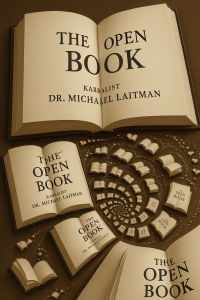
The Open Book

The Point in the Heart: A Source of Delight for My Soul
Zohar for All, Volume 1

Zohar for All, Volume 2
Zohar for All, Volume 3

Zohar for All, Volume 4

Zohar for All, Volume 5

Zohar for All, Volume 6

Zohar for All, Volume 7

Zohar for All, Volume 8
Zohar for All, Volume 9
Zohar for All, Volume 10

Abraham’s Revelation of the Creator

An Essay about Letters

A Prayer before a Prayer
Kabbalists Write about the Wisdom of Kabbalah

The Modern Laws of Global Life
The Proof that Our Generation Is Already the Days of the Messiah
Gems of Wisdom

Let There Be Light

The Benefits of the New Economy
The Kabbalist

Wondrous Wisdom
Kabbalah for Children

With Jacob; They Came Each Man with His Household
What Is, “You Shall Not Plant for Yourself an Asherah by the Altar,” in the Work?
Behold, I Am Setting Before You
Revealed and Concealed
A Prayer for the Poor
And the Lord God Formed Every Beast of the Field
At Midnight
At Night, His Song Is with Me
Unfaithfulness Against the Lord
Repentance
The Adulteress
The Tree of Life and the Tree of Knowledge
The Mixed Multitude
Why Have I Come and There Is No Man?
Death and the Beating of the Grave
The Hermit
Grow Long, and Passed a Razor
Holy, Pure
The Holy Idra Rabah
Fear, Humbleness, and Hassidut
A Priest without a Mate Is Forbidden in the Work
Thus Shall You Bless
Say to Them
When the Priest Raises His Hands
So They Shall Put My Name
And He Counted It to Him as Righteousness
And the Lord Blessed Abraham with Everything
One President a Day
The Blessing of the Priests
670. You Shall Give Him His Wages On His Day
855. Wood and Stone
Editor’s Note
Chapter 1: Man’s Search for Oneness
Removing the Veil of Secrecy
The Tree of Knowledge and Shet
The Garden of Eden, the Tree of Life, and the Tree of Knowledge
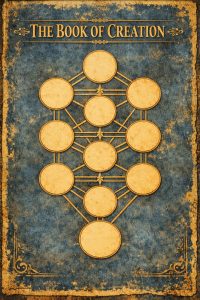
The Book of Creation