

You are here: Kabbalah Library Home / Rav Michael Laitman / Books / The Kabbalah Experience / Chapter 2. The Wisdom of Kabbalah
Rav Michael Laitman, PhD

Chapter 2. The Wisdom of Kabbalah

Kabbalah as a Science

Q: Why is Kabbalah considered a science?

A: Science examines the world with the tools that we have made. The way these tools work is based on our five senses: sight, sound, taste, smell and touch. We cannot invent something new that is unlike what we feel in our senses.

All the information that arrives through these tools and through our senses is analyzed in our brains, creating within us what we think is the image of the world around us. If we could raise the frequency of one of our senses, we would see, for instance, x-rays, or hear sounds that are beyond our current hearing threshold.

In that case, the world around us would appear very different. We would still consider it “our world,” but it would change in respect to the world we perceive today.

It’s quite possible that there are other parallel worlds to our own, other beings that go “through” us, but we don’t feel them because we don’t have the appropriate tools for that. How is it possible to study the objective reality around us, when we can only perceive such a small part of it?

All the fields of science deal with what we perceive through our senses, but Kabbalah deals with acquiring knowledge that exceeds their limitations.

For example, when information in the form of sound approaches us, how do we know it is sound? There are waves around us and some of them press our eardrums, which in turn flex an inner mechanism to bring it back to balance. The brain measures the force and the frequency of the return of the eardrum to its original position, and translates that pressure to information about sound. We perceive this data as a combination of sounds - a tune, a rustle and other such noises.

In other words, our reaction is only a side-effect of pressure that was first activated on us by our surroundings. We don’t know the sounds around us, only those that we feel.

All of our senses are built that way. We never know what’s beyond us, and only react to what our senses perceive. The outer world can be infinite in color and sound, but all we can perceive is what goes through our senses.
All sciences are limited by our five senses, whereas the Kabbalah speaks of what can be acquired with the extra sense called “the sixth sense.” Through it we can feel the reality beyond our senses. If we compare man to a closed box that gets all its information from the outside, and only within the boundaries of our senses, then Kabbalah speaks of what can be taught, seen and heard outside us, beyond the five senses that limit us.

If we have gone through an ordeal, we can empathize with a person who has gone through a similar experience because we have acquired knowledge of this experience and felt emotions from the same experience. As a matter of fact, we have everything it takes to feel the emotions of our fellow human beings.

A person who has not gone through similar experiences cannot empathize with other people and might be indifferent to a friend’s pain. The difference between people and all other parts of nature is only in the ability to sense certain effects from the unfamiliar world outside us.

Our examination of the outer world, which we normally do not attain, is based on the equalization of our inner traits with exterior phenomena. If we develop certain spiritual senses that did not exist in us at birth, we can use them to grasp a higher world--a spiritual, eternal and spacious world that is absent from the conception of ordinary people.
The Kabbalah is a system that develops additional senses through which we begin to feel the spiritual world, as well as our world as we feel it today. In addition to the small portion that we ordinarily perceive, we can move into a completely different field of information. We are born; we feel ourselves in the biological,“protein” body for some time, and then we vanish.
In this world, in such a state, when we feel phenomena, situations and other incidents, we are completely unaware of where they come from. We are often mentally unprepared for the effects they have on us, which are sometimes unpleasant or even tragic.

These all come to us from outside, but because we can only see a fraction of the world, we think it’s sudden or accidental; something unexpected that suddenly comes on stage, but it is only so because we do not see behind the scenes.

How, then, can we properly respond to the incidents that befall us if we cannot see the whole picture? We don’t know what the consequences of our actions are, and we cannot see exactly what our actions are causing. Therefore, we cannot grasp the consequences to everything around us.

We are called “the thinking beings”- people think and are “smart,” the highest degree of creation. But at the same time, we are completely detached from reality and from the truth. When we take pride in being smart, it only proves that the level of our development is very poor and that we are not even aware of our true state.

The more we get a feel of the spiritual world and a deeper sense of the world of truth, the more we can see the order of cause and consequence. We see what happens with us, understand how we should react to it and begin to be a positive and active part of the universe. That is why the Torah says: “Be a man.” We can achieve this by opening our eyes instead of remaining blind.

Of course, if one were “a man,” education would not be needed, because education is only needed to complete what we cannot see for ourselves. If we could clearly see the consequences of our actions, we could commit evil, but it would be clear to us what was right and what was wrong. There would be no room for theories and philosophies. Everything would be so obvious that deception would cease to exist because of the full development of our desires and intentions.

Kabbalah describes the way we can acquire that extra sense which enables us to go out to the objective reality instead of the false one. It describes how that sense evolves. Through it, we receive information about how to begin to act correctly, in light of this newly acquired information.

Kabbalists say that this way, we reach beyond the limitations of time and space and life and death. We see our whole lives, even before birth, as well as our future state after leaving this world.

Thus, we can feel the objective reality while being in a physical body, and can rise to a level where past, present and future merge. The whole mechanism of Providence is clear, and we can begin to take an active part in it. By doing so, we are included in the universe and can judge our actions correctly, where before we had failed to do so.

The Method of the Kabbalah - Advantages

Q: You write that the study of the Kabbalah accelerates the advancement of man’s soul in its journey toward the spiritual. But that acceleration is certainly accompanied by an over-compression of events. In other words, what man should experience in hundreds of years he’ll experience in a few decades. But how strongly?

Moreover, he who studies and attains should contain within him the agony of the whole world, and he should expand his emotional vessels in order to absorb every desire. So what then, is the advantage of Kabbalah?

A: I don’t think that I can accurately convey to you the advantages, but:

  1. There is no other way to attain the Upper World, but the Kabbalah. It is therefore called “The Path of Kabbalah.” You speak of another way - "The Path of Pain." This is not a path, but rather a state where a person temporarily weakens and abandons the vigorous progress of the Kabbalah. One waits on the side of the road, so to speak, before agony prods further movement to return to the path of Kabbalah and persist with it.

  2. The Path of Pain is not another way to advance; it is not even a way, but merely a temporary state until such time as one “gets wiser.” It is only called “a path” for purposes of clarity.

  3. Through the Kabbalah a person reduces pain and can foresee them. The pain itself is the correction. But a Kabbalist replaces the unnecessary pains, which one gets in order to grow wiser and take the path of Kabbalah, with pains of love for the Creator. Mankind doesn’t need the pains of the flesh, but through studying, we can receive only the goal-oriented pains that stem from a most vital need. We don’t need to suffer from petty things before we understand what we should actually yearn for.

  4. Through a special preparation, we may possibly accelerate our ability to sense, analyze, correct and digest the pains of the desire to enjoy. As a result, these go by so quickly that we immediately use them in the opposite way, meaning we turn desires that were meant to give us pleasure into a basis for desires to please the Creator.

A great part of the Kabbalist’s journey is spent in the worlds of ABYA ( Atzilut, Beria, Yetzira, Assiya), where the Kabbalist gradually turns intended and unintended sins into virtues, and thus justifies the works of the Creator and His guidance. In these worlds, the system makes it possible to shorten the process significantly.

Reality in the Eyes of Kabbalah

Q: I read that Kabbalah develops the ability to sense the elements of reality and the spiritual worlds. But I also understand that time and space do not exist; that there are no other worlds and that there is nothing besides the Creator. How then should I properly see reality?

A: Every time people try to understand a new or different reality, they use the attributes and sensations of the world they come from. Through the Kabbalah, they attain a true understanding of the spiritual reality as well as the one they currently sense.

Reality is made of:

  1. Matter

  2. Form dressed in matter

  3. Abstract form (not dressed in matter)

  4. Essence

Because we are made of matter, we can only attain the matter and the form dressed in the matter. We will never be able to attain an abstract form, detached from matter.

Yet, despite the fact that we cannot attain two of these four types, they do exist and clothe one another: The essence comes first. The abstract form dresses over the essence, over that comes the form that is dressed in matter, and the matter dresses over all of these.

Kabbalah is a science about the conduct of reality. Man is the subject of the experiment, and thus the science is attained in us. The sensation of the traits of the Creator is the form that is dressed in the matter. The spiritual path is a gradual acquisition of a truer and truer form, and ever-closer traits to those of the Creator. Man can only increase the pace of the acquisition of the Upper traits. That is why Kabbalah was given to us.

Q: What about the lack of sensation of time?

A: You’re right; it’s hard to understand the lack of the feeling of time. But “time” in spirituality is no more than the changing of emotions. In this world, too, we feel how time“flies” or“stands still,” but when we sleep, time still goes by, unlike spirituality.

In spirituality, a “moment” is the passage from one trait to the next in the space of changing traits that grow ever closer to the Creator.

The confusion you feel now is felt by anyone who begins to think and tries to compare the corporeal concepts to the little knowledge they have acquired about spirituality. That time will pass. Don’t be afraid of periods of confusion, despair, sensations of failure and so on. They are all necessary so that in the future, you’ll be able to feel the exact opposite: you will experience achievement, perfection, completeness and light.

The Ari and Kabbalah in Modern Times

Q: You said that the modern Kabbalah was created by the Ari, and was later renewed by Rabbi Yehuda Ashlag. How can that be? We know that the Torah was given to us from heaven and that it doesn’t change; why then does Kabbalah change, and moreover, how can people change it? Isn’t Kabbalah a part of the Torah?

A: The whole of the Torah relates only to the spiritual world. It explains it in the language of pictures, but not a single word of it speaks of our world. It does, however, make use of words to explain the structure of the spiritual world and how it dominates us.

Because the spiritual world is the world of emotions and has no words, we use languages such as the language of the Bible (Pentecost), the language of legends ( Agada), the language of the Talmud (Jewish religious laws), and the language of the Kabbalah ( Sefirot), which is the most precise of all, in order to explain and describe that world. For that reason, most Kabbalists use the language of the Kabbalah.

Within the Kabbalah are several sub-languages as well: the language of the Lights, the language of the vessels, Gimatria (use of letters as numerals), matrix, drawings, etc.

Because in each generation new souls descend to this world, each generation needs its own Kabbalah. That is why the Creator sends us a Kabbalist who rewrites the Kabbalah in each generation and fits it to the new generation.

The Torah does not change because it speaks of technical existence. But unsuitable rules were canceled over time. For example, today there is no Temple and therefore none of the rules linked with it or with the holiness of the land apply today.

Kabbalah and Judaism

Q: Is the difference between Judaism and Kabbalah that Judaism is a religion, and Kabbalah is a wisdom based on rationality and understanding?

A: Kabbalah is the wisdom of the revelation of the Creator, the system of the attainment of the Upper revelation, a sublime truth and superior knowledge. Religion does not deal with any of that.

A religious person must know how to follow rules and live within their boundaries. Kabbalah, however, leads to the attainment of the Upper World.

Ritual

Q: How does Kabbalah relate to customs and rituals of Judaism?

A: Before the soul is revealed, man doesn’t feel any inner need for spiritual development. At that stage, man must only obey laws and customs, but does not belong to spirituality. The part that does belong to spirituality is our effort to correct self from the aim “for ourselves” to the aim“for the Creator.”

Corrected aims are hidden because no one can see what is corrected in man. These corrections do not bear any external manifestation, but rather change our personal relationship with the Creator. Hence, the concealment.

We perform the acts that concern morality and customs while under the influence of corporeal pleasures, such as sex, money, control, fame, respect, and education, until we develop the aspiration toward the Creator.

When that yearning first appears, the technical acts that belong to the ritual and moral part become less important, and we establish a personal contact with the Creator. That becomes the most important thing in our lives, and we are then changed from an ordinary person into a Kabbalist.

However, even when one becomes a great Kabbalist, the person continues to perform the same mechanical Mitzvot as an ordinary believer would. These two are not connected. You can ask great experts in Mitzvot, great rabbis, and they will tell you that they don’t know Kabbalah. You don’t have to know Kabbalah in order to keep Mitzvot.

Two Sets of Rules

Q: Judaism or Kabbalah? That is the question!

A: Judaism is a collection of religious rules that dictate how to conduct ourselves in our world. Other than what we must know, such as how to provide for our livelihood, how to behave, dress, or how to raise a family, Kabbalah teaches something more. The Kabbalah tells what we must do besides providing for the natural needs on the corporeal-human level. A person must observe 613 laws.

Why? There is no rational answer. These laws are not even rational. From a scientific or physiological perspective there is no justification to the prohibition against eating pig’s meat, or not driving on Shabbat (Saturday).

The wisdom of Kabbalah does not relate to these laws or to anything else that concerns corporeal life. It teaches what is beyond this world, and how to get there. When one begins to inquire into the Upper World and enters it, one discovers that it is comprised of 613 spiritual particles. Their consequences in this world are called the “613 Mitzvot,” the laws of the Torah.

Q: So if they do not change anything here, why do we still have to keep them?

A: If we observe them in the flesh, we do it unconsciously, and by that we somehow equalize with the 613 Upper Laws, and for that reason we get a certain amount of Light from above. That spiritual Light does not develop us, but guards us, which is why it belongs to the degree of the still, which does not change.

A Kabbalist who attains the Upper World also attains the inner meaning of the 613 laws of the Upper World. Who gave us those laws? Moses. Where did he get them? Not from our world, but from the attainment of the Upper World.

There has always been tension between those who observe the laws solely at the level of this world, and those who want to observe them in the true spiritual form. Those who observe them only at the level of this world assume that mere observance is enough, and regard themselves as dismissed from the upper layer, simply because they do everything “right.”

However, those who want to observe them in the Upper World feel that the orthodox way of life does not satisfy them or give them a sense of fulfillment.

Torah is Kabbalah

Q: What is the connection between Torah and Kabbalah?

A: Torah is Kabbalah. It speaks only of spiritual laws, of the Creator and the events that take place in the Upper World, while using familiar words from our everyday life. It does not say a single word about our corporeal life, but of man’s way to the Creator, and the inner change.

The Torah should lead us to the Upper World, the purpose of our journey here. That is what makes it holy and unique. Moses is considered to be the foremost Kabbalist. Although there were Kabbalistic books before him, he was the first to compose a book of Torah (instructions) about man’s path from down to up, from our world to the spiritual world. He described the way in general terms, and for the first time in history, the system of the worlds was described in a literary tongue.

Kabbalists use four languages to describe the Upper World to humanity: the language of the Bible (history), the language of the Halacha (Jewish law), the language of Agada (legends and tales), and the language of Kabbalah. Without exception, they all speak about the Upper World.

For example, when you open the Zohar, you find an explanation of the text of the Torah, but in a different language--that of the Kabbalah. The Zohar is the interpretation of that Torah (writing the same thing under a different label is called interpretation - perush). So we see that the only difference between the Torah and the Zohar is the language.

Everything that happens in the Upper World, descends – in due time – to our world, and begets its consequences here. The Upper Forces and their consequences, meaning the objects of our world, are linked by “threads,” so that from each of the Upper Forces is a consequence that extends to our world, the corporeal object that relates to it, and the thread by which the lower object is manipulated.

Therefore, in order to explain the structure of the Upper World, Kabbalists have chosen to name the Upper Forces by names and appellations from our world. Thus the Upper Object gets its name from the corresponding object in the corporeal world. This language is called “the language of the branches,” where the Upper Power is the root, and the physical object is the branch.

If I want to describe what happens in the spiritual world, I speak in terms of this world, and you would think I am talking about this world. But in fact, I mean to speak only of what happens in the spiritual world. This is precisely the way the Upper Worlds are described in our holy books.

Why are they called holy? Because they speak of the Upper Worlds. When we read the Torah we look at it as a“historical novel,” but when a Kabbalist reads in it, he sees completely different things.

Q: What is the difference between the study of Torah and the study of Kabbalah?

A: There is no difference. The Torah speaks only of the structure of the Upper World, and says nothing of what happens in our world. It only talks about the structure of the Upper World, but it does it in the language of our world, which is why we think we understand it.

The Torah is called “holy” not because it speaks of the journeys of a primordial nation, or about indecent acts. It is holy because it talks about holy things. The term “holy” (Hebrew: Kadosh) means separated, unique, distinct.

Though you do not see the spiritual world behind the stories when you read them, both Kabbalah and the Torah speak of special, spiritual matters, about matters that reach beyond our world. The difference between them is only in the language, but the essence remains the same. Kabbalah speaks of the same issues as the Torah, but uses a technical language of Sefirot, worlds, Partzufim, ascents and descents.

The difference between the two languages can be compared to the different way we relate to music. Ordinary people listen to music, enjoy it and that’s the end of it. When musicians listen to music, they begin to analyze it by notes, tonality, rhythm, etc. A sound technician would examine it for the quality of the sound, filters, frequencies, without any reference to the music and the beauty of it. A mathematician will express it in a formula, in such a way that it would be impossible for anyone else to see the soul behind the dry mathematical facts. Here too, it all depends on which words we use to express what we feel.

The difference between Kabbalah and Torah is precisely in the manner, the language, in which they speak of the spiritual worlds. The Kabbalah speaks of them in technical terms, hence the name “the wisdom of Kabbalah,” the “science of Kabbalah,” whereas the Torah speaks in a more emotional, yet concealed, language.

The Talmud also speaks about the laws of the spiritual world, but in the language and words of laws of our world, such as: you mustn’t eat this or do that. The Talmud speaks only about the laws of the spiritual world, while in our world those descriptions are baseless and the laws don’t even apply.

But if we want to live in our world according to the laws of the Upper World, we observe them in the flesh. We observe them because we want to somehow adapt ourselves to them, imitate them in some way. But it is completely untrue that by so doing, we affect the Upper Worlds.

By doing something in our world, with my hands or legs, I change nothing in the Upper World. The Talmud, Gmarah and the Torah speak only of the Upper Worlds. The difference between them and the Kabbalah is only in the language.

The Language of the Kabbalah

Q: What language do Kabbalists use among themselves?

A: Kabbalists don’t invent their own language. They share the same feelings about the spiritual world. For every feeling about the spiritual world, there is a name. Such a name cannot be changed.

For example, there are twenty-two names, or attributes, involved in the creation of the world. These are marked accordingly as Hebrew letters. Their combinations render a spiritual sensation of an object which can be described by the physical terms of this world.

The description of the spiritual world is the description of man’s soul, the description of the degrees of its nearness to the Creator and its feelings of closeness. The more the soul feels the Creator, the nearer it is to Him.

Kabbalah divides the collective soul into parts and gives each part a unique name relating to its traits and describing its operations. Although it is the language of emotions, it is an accurate one.

Kabbalah is the “engineering of the soul.” But how can we use such accurate research and descriptions if our language is inaccurate, limited and worldly? For that purpose, Kabbalists established a unique language for their science: “the language of the branches.”

Any created being, whether still, vegetative, animate or speaking, as well as anything that has happened, is happening, and will happen, and every object and its guidance, all come from the Creator and go through all the spiritual worlds to a state where He is no longer revealed in our world.

But Providence is renewed perpetually, from Above downward to our world. Anything that exists in our world necessarily begins in the Upper World and gradually descends to ours. Therefore, whatever exists in our world is a result of the world above it. There is a direct link of cause and consequence between the objects of our world and their origin in the Upper World.

Kabbalists accurately discern that link between the Upper Object and this world’s object. Anything that exists in our world is an outcome, and is under the guidance of the Upper One. Therefore, Kabbalists can clearly say what is linked with what and call the objects (the roots in the Upper Worlds) by the names of their worldly outcomes: “branches.” Hence the name,“the language of the branches.”

Furthermore, this link of spiritual root and worldly branches undergoes a continual process of renewal. From the dawn of creation to its end, there is an ongoing process of creation, corrections, and ascents.

This process is run by a program that comes down to our world with its every detail fixed, and determines everything we experience. Each object goes through its own root, although it does mingle with others, but it never disappears and always remains consistent with itself. Of course, as a result, it is impossible to swap one name for another.

In order to find an accurate, yet secret language, we need to use only those words that describe the Upper Spiritual Root, as the Kabbalists have shown us.

The Kabbalists who discovered this language accurately describe for us a spiritual world in words we can understand. There simply cannot be another language. How is it possible to take words from our world and use them to define spiritual concepts? We have to learn to follow the rule that everything we read in the Kabbalah and the Torah are terms that define our spiritual roots, not worldly objects. We must never confuse them!

What stands behind those words are only spiritual objects, or roots, which are in no way connected with our world. The entire Torah is comprised of the names of the Creator; thus, it is called “the work of God.”

When the Torah denominates an object or an act, it expresses the spiritual root, which generates that object or action. In our world, we name objects in much the same way. To reiterate, the Torah is a description of the creature’s nearing to the sensation of the Creator and how He is found in those emotions .

Kabbalists have used this language to convey and explain information, and put it in writing in the form of words and signs of this world. Just as mathematicians use formulas to communicate ideas, when Kabbalists write or read, they feel what they are talking about, what is implied in these words in the language of the Kabbalah.

To summarize: a word is a sign that expresses a certain spiritual object. This, in turn, expresses a certain feeling. While reading, a Kabbalist can reproduce that feeling, just as a musician reproduces a melody. One does not need words in order to understand the language of music.

About “the Language of the Branches”

Q: You wrote in one of your articles: “There is a singular, reciprocal link between a spiritual root and a corporeal branch.” How does that mesh with the fact that there are a great many languages in the world, and only the Hebrew language is the one that creation leans on? Are all other languages an incorrect reflection of the spiritual world?

A: You will be able to find a detailed explanation in The Study of the Ten Sefirot, Part I - Inner Reflection.

A language is only a printout of information that is absorbed in a vessel and felt in it as an action of the Light, the pleasure. In fact, we have no real need for any language because we already have those sensations within us.

However, when we want to convey our feelings to others, we need to present them in a form that would be understood by the person we want to speak to about our feelings. That form is called a “language,” and it doesn’t matter what language is used. Kabbalists chose Hebrew and through it they conveyed the information desired. They also made use of Aramaic, which was a spoken language in ancient Persia.

The Book of Zohar also uses foreign (Greek) words that were used very freely in Israel, so we, like the Kabbalists, use them as well. I, too, asked my rabbi that same question, and he said that any language can be modified to convey spiritual information, but since Kabbalists described everything in Hebrew, they built a dictionary--“the link between the root and the branch”-- that today is the basis for this whole science.

The Hebrew language is also called the “holy tongue” because it leads to holiness, to the attributes of the Creator.

Now, there still remains the question why, until today, Kabbalists were either Jews or people who converted to Judaism (proselytes). The reason lies in the uniqueness of their souls. The collective soul of “Adam” consists of 600,000 parts, or 600,000 souls, separated by the intensity of their will.

Before the sin of the first man, every desire was aimed at pleasing the Creator; each was a desire to give to the Creator. But as a result of the sin of the First Man, desires changed from“pleasing the Creator” to pleasing themselves. This is called “a fall” from a spiritual degree to a corporeal one; from an aim to give to an aim to receive.

Before the collective soul was broken, all its parts (souls) were connected by a single intent--“for the Creator.” After the breaking, each part that departed from the soul acquired the intent“for itself,” and the parts were separated. Now, they cannot understand or feel one another.

The correction of the souls is focused on changing the intent from “for myself” to its former state of “for the Creator.” It is a gradual process. Souls are separated from one another by the intensity of their desire. The smaller the desire, the easier it is to change the intent. Therefore, the correction begins with the smallest desires and ends with the greatest.

All desires, in the order of their correction, form a line or a chain: the smallest desires come first, then the greater ones. They are generally divided into two groups: “ GalgaltaVeEynaim” ( GE) and “ Awzen, Hotem, Peh” ( AHP). At first, the GE are corrected and then come the AHP. Souls (desires) that are related to GE are called “Jews”; souls (desires) that are related to AHP are called “Gentiles .”

Souls dress in corporeal bodies in our world. Therefore, there are groups of people in our world that connect by the types of their soul and their desires (in fact, this is how nations and peoples are formed). Because the Jews must be the first to correct, there is pressure on them from Above, by the Upper Guidance-the Creator - in order to bring them to correction. The Creator uses all the means of this world (see Introduction to the Zohar, item 66 through the end).

Because the souls that are called “Jews” must be corrected before all other souls, then in our world, in groups of people with a Jewish type of soul there are Kabbalists. Those are people who came out to the spiritual world and express their impressions and the method of correction in their own mother tongue. That is why Kabbalah is expressed in the language of the Jews.

Kabbalah is Not a Religion

Q: Is there an equivalent to Kabbalah in other religions?

A: There is no equivalent to Kabbalah in other religions because the wisdom of Kabbalah is not a religion, but a science. It does not relate to religions, beliefs, extrasensory methods, or even Judaism. Any orthodox Jew will answer the question, “Do you know the wisdom of Kabbalah?” by saying that not only do they not know it, but they do not think there is any need to know it. And the response will be correct, as the wisdom of Kabbalah is not necessary for those who are occupied with religious rituals.

Moreover, the wisdom of Kabbalah intensifies both the desire to receive and the desire for knowledge, based on self-awareness and the attainment of the Upper World. Other religions, however, are built on self-restriction and abstemiousness.

The world, religions and the science of Kabbalah

Q: Upon multiple readings of your books, I noticed that certain places in the text seemed very familiar. When I tried to analyze them, I became convinced that some Kabbalistic concepts form the basis of various global religions. Though Kabbalah is not a religion, it seems to have the potential to unite the more progressive representatives of global religions (a topic frequently discussed in the Vatican). Do you foresee such a possibility?

A: Kabbalah is not intended to unite religions, since it has nothing to do with them. Kabbalah is a science studying the essential core of man, the Higher World, the entire universe, and the Creator. The outcome of that study is the discovery that mankind wishes to become like the Creator.
Religions, however, are combinations of rituals designed by humans to support them in their earthly existence. Specifically, it is the “opium for the people,” a method of pursuing psychological comfort. That is why Baal HaSulam said that the only optimal religion is “Love thy neighbor as thyself,” since it leads to uniting with the Creator.

What we call “religion” is nothing more than a way to create feelings of stability and comfort within our shaky existence.

Meaning of “Kabbalah”

Q: What are the sources you usually cite regarding the meaning of Kabbalah?

A: The Kabbalist Rabbi Yehuda Ashlag, author of the Sulam commentary on the Zohar, begins his article, “The Essence of the Wisdom of Kabbalah,” with the following definition: “… this wisdom is no more and no less than a concatenation of roots that descend by way of cause and consequence, with fixed, determined rules, that combine to one exalted goal being the ‘the revelation of His Godliness to His creatures in this world.’”

Genuine Books

Q: What do the books of Kabbalah describe?

A: The text in genuine books of Kabbalah describes precisely the way the mechanism that operates reality works. Using charts and formulas, it depicts the “control room of reality” in a form much like a user’s manual. These visuals teach us how the laws work in spirituality, and how we can influence them with mind and will, consequently affecting the results that return to affect us.

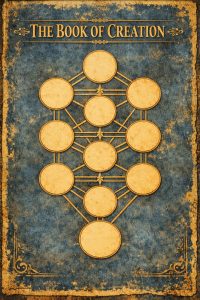
The Book of Creation

Q: Rabbi Laitman, when you say that “ Sefer Yetzira” (“The Book of Creation”) was written by Abraham the Patriarch, should we imagine one man who reached the spiritual level called, “Abraham,” or was it Abraham, the historical figure.

In the second case, if Abraham wrote the book before Moses, then how is the name of the prophet, Yehezkel (Ezekiel), mentioned there (Mishnah 8, P.1)? This prophet lived centuries after Abraham did.

A: The Book of Creation was supposedly written by Abraham. This is the opinion of Judaism, not my own. I actually never say anything on my own and can always provide a reference for my words. That is why my adversaries do not oppose me, they oppose Kabbalah!
Baal HaSulam says in his letters that Sefer Yetzira was written by some other Kabbalist. Regarding the time, this is a question only for you and not for Abraham or another Kabbalist. However, nothing will help until you, too, see “from the beginning of the world to its end.” The Kabbalist mastering a certain spiritual level sees, feels and bonds with everyone on that level regardless of whether it already happened in our world or is yet to come.

The spiritual world is everlasting; it is timeless. Hence the commentaries on the Torah, even those that are not Kabbalistic, often are written along such lines as, “Abraham said….”

But how could the author have possibly known what Abraham said, if he never wrote it anywhere? The answer is, he knows it from having attained the same spiritual level that Abraham reached when he said it! In fact, the answer to all questions can only exist in one’s own attainment of the Higher World.

The Book of Zohar

Q: What is the source of the name - Zohar?

A: Zohar means “splendor,” as it says: “The righteous sit with their crowns on their heads, and delight in the splendor of Divinity.” The sensation of the Creator (the Light) in the collective soul is called “Divinity,” according to the Zohar. In any place where the books of Kabbalah say, “so it was written in the book…” this always refers to the Zohar. All the others are seemingly not considered books because the word “book” (Sefer in Hebrew) comes from the word Sefira, which comes from the word “sapphire,” radiance, a revelation (of the Light, the Creator). This is found only in the Zohar.
Q: There have been many debates about the Zohar over the years. What is the essence of these universal secrets? How can it be written in familiar books, but still remain a mystery? When will I be able to buy the Zohar at a bookstore, read it and discover its secrets for myself?

A: When we speak of spiritual concepts, we must first understand that they are unbounded by time and space, and that there are no words to describe them. This is because everything we feel is bounded by time, space and motion.
Once movement stops, our lives also stop. We cannot picture something motionless, disconnected from time and without volume. For example, the universe exists in a certain space. If we take it out of that space, there will be a void and we will not be able to describe it.

In spirituality, there aren’t any bodies, there is no time, there is no distance and therefore spirituality is disconnected from the descriptions and inventions of mankind; spirituality is also disconnected from our structure, our nature and our senses.

Q: Why can’t I study Kabbalah directly from the Zohar?

A: The Zohar is an important Kabbalistic book, but it is written in a concealed way, making it impossible to understand until a person is in the spiritual world. Because of that, today we do not start with The Book of Zohar. Instead, there are introductions and books of Baal HaSulam that teach us how to understand what is written in the Zohar.
The Book of Zohar is not a book through which one can attain spirituality; it was written for those who have already attained spirituality. In order to understand it properly, we need to study several other books first, such as: Preface to The Wisdom of Kabbalah, Introduction to The Book of Zohar, Preface to The Book of Zohar and Foreword to The Book of Zohar. Without first acquiring clear and correct knowledge through those introductions, the book will remain completely abstruse to us.
Q: The Zohar was written in the second century BC, but was first discovered in approximately the 13th century. Why did it take so long to be discovered?

A: Baal HaSulam relates to this question in the Introduction to The Book of Zohar (item 61): “We must also ask why was the commentary to the Zohar not revealed before the time of the Ari. Why was it not revealed to his predecessors? And most perplexing of all, why were the words of the Ari and the commentary to the Zohar not revealed until today?”

In order to make it easier to understand, let me explain the words of Baal HaSulam in simpler words.

First, why was the Zohar hidden? The answer is that the world has gone through three phases of development during its 6000 years of existence. The first 2000 are called, Tohu ; the middle 2000, Torah; and the last 2000 - the days of the Messiah.

During the first 2000 years the souls, that descended were sublime souls with small Lights. They were not even given the Torah because for these souls, simply existing was enough to correct them.

In the next 2000 years, coarser souls descended that needed a greater Light for their correction, the Light of the Torah. Toward the end of the 6000 years, in the remaining third, the coarsest souls descend. Those need the greatest Lights for their correction - the Light of the Kabbalah. Kabbalah was not needed prior to that, just as the Torah was not needed in the first two thousand years.

During the time of the Ari (end of 16th century), we grew closer to the end of the correction of the main part, the third and last phase of the development of the souls. As a result, the sublime wisdom was revealed through the soul of the Ari. The souls of the first generations were higher than those of the last, but the greater the correction that is needed, the greater the consequent attainment and adhesion.

During the last 2000 years, especially from the time of the Ari, the souls that descend to this world become increasingly coarser and more egotistical. They must therefore study and implement Kabbalah for their correction.

Q: Why does the Zohar have only stories and fables in it, and why is the language so old fashioned if it was intended for us?

A: The Zohar was written like that on purpose, as the book itself will tell you. Only people who have already grasped the spiritual reality can know what is written there and see the text as a cohesive story. They see the pictures and identify the picture and the story as one. We cannot do that because we still don’t have the spiritual vision, which is why the Zohar appears to be a bundle of fables and stories.

The writings of the Ari, however, aim at more developed souls from later cycles, and therefore appear different to us. But the most suitable for us are the writings of Baal HaSulam. These are intended for our generation, which is why they appear to us as systematic textbooks, as in any science, much like the ones we study at university.
They offer questions and answers, interpretations of the meaning of the words, and a clear division of issues, which differ by topic. They also show how to perform the relevant topic of discussion. There are special articles that go along with these books that specify how a person should personally relate to one’s study.

Thus, our generation has no problem approaching the immediate study of Kabbalah. Unlike all other sciences, this wisdom demands no prior study. It is enough for a person to feel that life is difficult, to have a sense of restlessness, and to see life as meaningless. Then, one can start studying the books and begin to advance.

In his Introduction to The Study of the Ten Sefirot, the most complex text in the study of Kabbalah, in the second item, Baal HaSulam specifies the person to whom he is writing the book. He aims it at only those who feel the burning question, “What is the meaning of my life?”
He adds further in item 155 that by studying, even though the person does not understand the content of the book, it is sufficient to learn simply to escape the pain. Then, the text will open to the student who will begin to see how to behave in order to have a better life.

The Ari and The Study of the Ten Sefirot

Q: Rabbi Laitman, what is your attitude toward the books of the Ari? Is The Study of the Ten Sefirotthe only book on Kabbalah that you consider holy?

A: The book, Sha’ar HaGilgulim, describes how the Ari at his deathbed forbade all his disciples except Chaim Vital to study Kabbalah. Chaim Vital did not fully attain Kabbalah at that time, and therefore decided not to edit or publish the writings of the Ari.
Three generations later, Rabbi Tzemach, Rabbi Paprish and Chaim Vital’s son, Shmuel, began to dig out the Ari’s writings little by little, sort them out and publish them in book form. However, none of them possessed the entire collection, and therefore could not correctly understand and compile Ari’s system of Kabbalah.

Baal HaSulam writes in a letter that due to the above reason, no one (!!!) could understand what the Ari wished to pass on to us until the time of Baal HaSulam. Only in The Study of the Ten Sefirot was the system rendered complete. For that reason, we do not study the other books that Rabbi Tzemach, Rabbi Paprish and Shmuel Vital published, although we sometimes take this or that excerpt from them, as was done by Baal HaSulam in The Study of the Ten Sefirot . Besides The Study of the Ten Sefirot , no other books (here I don’t mean articles and letters on the spiritual work) contain any systematic compilation of the science of Kabbalah.

There are no other ways.

Q: You can’t say there are no other ways except for Kabbalah! It would be more accurate to say that ALL roads lead to the Creator, but Kabbalah is the shortest of them.

A: How can one know that Kabbalah is the shortest way, that it is actually the road leading to the goal?

One travels on the road of Kabbalah relying only on the Kabbalists and on the subconscious sensation of one’s heart. There is no other way. No one is able to see it in advance. The point in our hearts, the aspiration for the Higher World, feels that only Kabbalah can provide the expected answer. You may also choose to trust the Kabbalists who discovered it for themselves and described it for you. It is up to you.

Changing My Destiny

Q: How is the method of Kabbalah different from other methods of attaining spirituality?

A: Except for the Kabbalah, all other methods were developed by man. Humanity has been searching for thousands of years for the way to attain spirituality. Those searches promoted the development of philosophy and other methods for spiritual elevation and enlightenment. But in the end, humanity has found nothing.

Through the Kabbalah, people begin to clearly see what kind of world they live in, and what influences them. They begin to obtain forces with which they can shape nature correctly. They also recognize their own influence, and nature’s response to it.

Only the Kabbalah can give us the knowledge of what our future desires will be, how they can be acquired and what knowledge and powers are needed for that. This is all we need to live safely and confidently.

So, is there anything more important to us? If we don’t understand the necessity to study Kabbalah, there will be tougher and tougher situations, until we do feel the need to study, because the necessity to study Kabbalah comes when there is no other choice.

Q: What is Spirituality?

A: Although everyone feels as if they know what spirituality is, they have, in fact, no connection with the spiritual world, or any idea of it. They think that the spiritual world can be understood through music, science or popular psychology. But the spiritual world can be understood only through the study of the wisdom of Kabbalah.

This is a clear and concise method that must be taught by a genuine spiritual guide. No music or any dubious psychological experiences can help one attain the spiritual world. You can call what you discover with meditation or special music or exercises a “spiritual world,” but that is not the spirituality to which I’m referring.

The spiritual world I am referring to can only be revealed with the wisdom of Kabbalah. The study of the method of Kabbalah is a complex system comprised of man’s own work, by which he draws upon himself a special Light.

That Light is a special force that awakens the spiritual desire in us, a desire to get away from the crowd and from the world at large. It is a wish to continue living in this world only physically, in the animate body, whereas everything that has to do with the mind, the desires, should operate on a different frequency altogether, as if one were breaking through an invisible barrier to another world.

Such spiritual attainment cannot be seen, presented, or made apparent to anyone. People who have not experienced it cannot feel or comprehend the explanations. It is a unique feeling and completely intimate, a sensation that is attained through the study of the wisdom of Kabbalah.

The wisdom of Kabbalah is a method to discover and attain the spiritual world, advancing over many spiritual degrees, cycles, and spiritual states. Although music can be Kabbalistic, it is only a byproduct, just as there are byproducts to chemical processes such as a rise in temperature, decrease in pressure, etc. When we strive to attain a certain result, we will receive certain byproducts along the way.

Q: Does that mean there is no Kabbalistic music?

A: A Kabbalist can express emotions in music, in writing, by creating new teaching methods, or by presenting new elements into the process of study. However, music and songs are only supplementary means of expression. Man’s real attainment is possible only through a system called “the wisdom of Kabbalah.”

The Sixth Sense

Q: Is there such a term as a “sixth sense” in Kabbalah?

A: Only through the system of Kabbalah can one develop the sixth sense. It is because all other methods are based on limitations. A person must lower self to the level of a plant and even to the degree of still (inanimate).

Every other system is based on suppressing the desire to receive: we try to eat as little as possible, breath as little as possible, and think only one thought; close ourselves, isolate ourselves, and live in secluded places.

The wisdom of Kabbalah, however, is completely opposite: it develops the will to receive, intensifies it as much as possible, and makes it even more“egoistic.” All other systems aim man toward restrictions and abstemiousness, which is why they cannot be used in order to receive a more comprehensive reality, and work freely in it.

Those who restrict themselves believe they can feel something, but in fact, all they feel is the disappearance of their own egos, nothing more. They may, indeed, feel better because they erase all their desires. It is as though they rise above them, so they feel perfection.

But this does not happen because they rise, but rather because their needs seem to have been reduced. Perhaps this seems more “spiritual,” but it is not real development, but in fact, regression. Reduction actually opposes the principal law of nature, which is to develop, expand, and bring about the correction of human nature, inducing a sensation of completion and satisfaction.

Make Your Own Choices and Believe No One

Q: Lately, there have begun to appear various study groups for Kabbalah. Is it worthwhile checking them out?

A: It is always worthwhile to explore, at least once, who studies and how they study Kabbalah. It will also help you to get to know yourself. That is why I would advise you to check things out, and afterwards make up your mind.

It is not wise to hide from yourself deductions that you might later on discover. In Kabbalah, you mustn’t hide anything from yourself, or you will become used to lying to yourself. This will divert you from your inner struggle with yourself and you could begin to camouflage the drawbacks, ignoring and perhaps even erasing them.

Q: Why are there so many trends in Kabbalah?

A: The time is approaching when the uniqueness of the Kabbalah and the system of Rabbi Yehuda Ashlag will become widely known. In the meantime, there is room for everyone, for all trends. In fact, all other systems exist only to reveal their futility, thus emphasizing the genuineness of the wisdom of Kabbalah.

The souls that descend to our world are at various stages of development. Some have not acquired a true desire for genuine Kabbalah. There are also people who come to us, and later leave for orthodox religion. I believe we should let people choose their way for themselves.

When I came to my rabbi, I said, “I have studied with quite a few Kabbalistic rabbis. How can I be certain that this is my final stop?” I was thirty-three at the time, and my life stretched ahead of me. My rabbi was already 75.

He replied, “I have no answer for you, it is something that a person feels in his heart. You should believe no one. And I advise you – what you feel in your heart is the most correct. That will bring you where you should go. But you must never agree with anything. Criticize and doubt everything. The most important objective is to be freed from prejudice, from education and from public opinion. Free yourself from anything extraneous and try to absorb the way your nature tells you. That would be the truest, because any education and any external opinion is coercion.”

The Science of Reality

Q: Isn’t Kabbalah another form of mysticism, like many others in the world?

A: No. People want to label Kabbalah as mysticism, blessings, curses, charms, etc. These labels became linked with Kabbalah because it was forbidden to study. But that is really the case. Even the holy Ari writes that it is prohibited to use charms and blessings, because they have nothing to do with Kabbalah.

Kabbalah is a science that teaches the law of reality, of which we are a part. Through this science, we discover those rules and the spiritual world, which is the reason for everything that happens here with us. They are collective rules, which encompass the laws of all the sciences in our world.

Kabbalah is not another belief, or some imaginary view of life unseen; instead, it offers exact, clear laws that depict the structure of the Upper Worlds.

It is when we study Kabbalah that we first acquire knowledge of the world outside our own. We discover the Upper, Spiritual World. Then, we gradually attain the ability to affect it. Through tests and experiments, we learn how to do it, and then we enter the comprehensive reality.

At this point, we begin to work not from within our own bodies, but from our souls, which are our true essence. After all, “man” is not the physical body that is replaced at the beginning of each new life; it is the soul that we, as yet, do not feel.

The purpose of creation is that we will act from within our souls, from the Upper World, and live at the highest degree possible, rather than in the lowest (our world), which is beastliness alone. By discovering our souls, we attain contact with the Upper World, and thus achieve a whole, complete, eternal and blissful life.

Q: Is Kabbalah a mystical experience?

A: It is not a mystical experience. It is something that students learn as rules that they are part of, which they must abide by. These laws are active in all levels of nature – still, vegetative, animate and speaking.

Q: Is Kabbalah just a theory, or has it been tested in practice?

A: It is not a theory. With Kabbalah, a person actually acquires knowledge. You might say that it involves a lot of mathematics and dry rules. It has nothing to do with psychology or other imaginary fantasies. There is a good reason for the name, “The Wisdom of Kabbalah” (the wisdom of receiving): it is a wisdom that teaches one how to receive.

Those who acquire knowledge about the laws of reality begin to use and consequently increase their egos . Unlike other religions and mystical methods, the study of Kabbalah does not require one to nullify one’s ego and cancel one’s desires. There is no requirement to fast or to mortify self.

One does not have to leave everyday life or abandon family duties. Nor does one float in the air, or practice breathing exercises in order to attain tranquility.

Quite the contrary, students build their egos and turn them into vessels to help them attain the sublime goal. To study Kabbalah, and understand how the Upper World operates, one must be at the center of that world and act from within it.

Therefore, one must perform all one’s mundane duties. The attainment of the spiritual reality must be in one’s corporeal senses, closely connected with one’s normal life.

Opening a Book for the First Time

Q: Should a person spend one’s whole life in a university of Kabbalah and study complex theories?

A: That sounds very nice, but it doesn’t work that way. In the study of Kabbalah, we really study our own inner structure, how our emotions are built, and the structure of our souls.

Within us is a key to the understanding of that science; all we must do is study from genuine books of Kabbalah in order to find what is already within us.

Even if we understand nothing of this science, the minute we open a book, our hearts and souls begin to open up. We receive spiritual knowledge about spirituality in a natural way, just as we feel bitterness or sweetness, or heat and cold. There is no need to go to school to feel such things.

The study is only a method that helps us open our souls, our still dormant spiritual senses. Then, when the heart and soul open, we are moved emotionally and naturally to learn about the reality in which we exist.

I am talking about a tangible attainment that does not require any prior wisdom and knowledge, or any philosophizing. It is a method that develops the sensation in the heart, a method for discovering the spiritual world, for receiving impressions with the laws that actually exist in nature, that we still cannot feel, though they continuously act upon us.

I act on the world around me by sitting, speaking, thinking or feeling. All my desires and thoughts go through the entire reality and return to me through the Upper, Spiritual World.

However, because I still haven’t made contact with the Spiritual Forces, I don’t know how they return to me, and if I harm or benefit myself. In the study of Kabbalah, we learn how to influence reality correctly, to benefit ourselves, and get accurate feedback from reality. That is the science involved, and today it can be revealed to anyone who seeks it.

.

Back to top
Site location tree