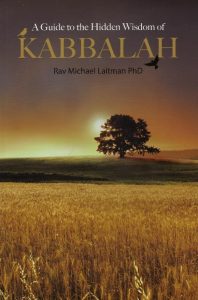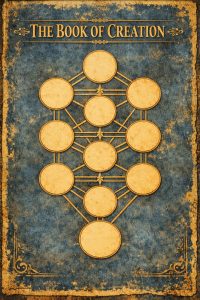




A Guide To The Hidden Wisdom of Kabbalah

Rav Michael Laitman, PhD

About the Book

The Kabbalist Rabbi Laitman, who was the student and personal assistant to Rabbi Baruch Ashlag from 1979-1991, follows in the footsteps of his rabbi in passing on the wisdom of Kabbalah to the world. This book is based on sources that were passed down by Rabbi Baruch’s father, Rabbi Yehuda Ashlag (Baal HaSulam), the author of “the Sulam,” the commentaries on The Book of Zohar, who continued the ways of the Ari and Rabbi Shimon Bar Yochai and many great Kabbalists throughout the generations before them. A unique method of study that was also passed down in the same manner provides individuals with precise tools and an appropriate atmosphere for embarking on a highly efficient path of self-discovery and spiritual ascent. The focus of these studies is primarily on initiating profound inner processes that individuals undergo at their own pace, with no regard to race, age, gender, marital status or religious affiliation.

With the goal of this book being to assist individuals in confronting the first stages of the spiritual realm, we have included ten complete Kabbalah lessons that can be used for spreading this wisdom to anyone seeking practical guidance to understanding the world we live in. This unique method of study, which encourages sharing this wisdom with others, not only helps overcome the trials and tribulations of everyday life, but initiates a process in which individuals extend themselves beyond the standard limitations of today’s world.


Benzion Giertz

Executive Editor

Acknowledgements

I express a special note of gratitude to C. Marce for translating the Ten Kabbalah Lessons section of this book and wish to extend our thanks to C.D. Borkum for making a major contribution to its overall editorial content and style, and for all of the time and effort put into this text prior to its publication.

And finally, thanks to J. Kersen for reviewing this entire book and for the many helpful suggestions.


Benzion Giertz

Executive Editor

Introduction

While it is great and worthwhile publicizing that there is an incomparably wonderful quality to studying Kabbalah wisdom, even though they do not know what they are studying, it is the tremendous desire to understand what they are studying that awakens the lights surrounding their soul.

Rabbi Yehuda Ashlag

"Introduction to the Study of the Ten Sefirot"

Kabbalists throughout the generations referred to our time as the turning point, after which mass apprehension of the spiritual realm would begin. Kabbalah is gaining popularity, despite the fact that very few people really understand what it is about, why it is called a secret science, how people come to it, etc. However, the eagerness is already felt among the masses, exactly as the great Kabbalists prophesized many centuries ago.

Rabbi Michael Laitman


The laws of nature, our place in the world and our behavior have been studied by scientists and philosophers for thousands of years.

Along with logical assumptions, science uses quantifiable research and data. Yet our scientists and researchers have discovered that the more they advance in their research, the more obscure and confusing they find the world to be.

Science has undoubtedly brought enormous progress into the world, yet it is limited. Scientific tools cannot measure man’s inner world, his soul, behavior and sources of motivation. Man, the major component of the creation, is still left without knowledge about his role in this universe.

Man has always looked for answers to the basic questions of life: Who am I? What is the purpose of my being here? Why does the world exist? Do we continue to exist after our physical being has completed its tasks?

In this world of constant pressure, some find temporary satisfaction in Eastern techniques, measures aimed at relaxation, or reducing suffering by minimizing personal expectations and desires. Various forms of meditation, nutrition, and physical and mental exercise quiet man’s natural instincts and enable him to feel more comfortable from the point of view of his physical state. This process teaches him to lower his expectations, yet leaves him in conflict with his true desires.

Our life experience teaches us that we have unlimited desires – and only limited resources to satisfy them. This is the primary reason there is no way to completely satisfy all our desires and therefore avoid suffering. That is the subject of Kabbalah. Kabbalah answers the basic questions of life and guides us toward achieving unlimited satisfaction on a daily basis.

The essential questions of man’s being add another dimension to human suffering. They do not allow us to feel satisfied even when this or that goal has been fulfilled. When one attains the goal he strives for, he immediately feels he’s missing yet another pleasure. This prevents him from enjoying his achievements, and his suffering is renewed. In retrospect, he sees that he has spent most of his time making an effort to achieve his goals, and has gained very little pleasure from the successes themselves.

Everyone, each in his own way, tries to answer these questions from the sources of information at his disposal. Each one of us formulates our own perception of the world based on our experience. Reality and everyday life constantly put this perception to the test, making us react, improve, or otherwise change it. With some of us, this process occurs on a conscious level; with others it happens unconsciously.

Kabbalah reaches out to all those who are seeking awareness. It teaches you how to add an essential feeling of the spiritual sphere – the sixth sense – that will affect your life in this world. This will allow you to perceive the upper world – the Creator – and to gain control over your life.

The Bible, The Zohar, The Tree of Life and other authentic spiritual sources were set down in order to teach us how to progress in the spiritual realms, to study them and to receive spiritual knowledge. They explain how to set out on a path to spiritual ascent in this world. Over the generations, Kabbalists have written many books in various styles, each in accordance with the era in which they lived.

In total, four languages were created to introduce us to our spiritual reality: the language of the Bible (which includes the Five Books of Moses, the Prophets and the Scriptures), the language of legends, a legalistic language, and the language of Kabbalah, which describes the spiritual upper-worlds system and how to reach it. The differences in languages simply present various perspectives on the same subject in different formats – each suiting the generation it was intended for.

The Kabbalist Baal HaSulam writes in his book Fruits of the Wise:

The inner wisdom of Kabbalah is the same as that of the Bible, The Zohar and the legends, with the only difference between them being the manner of the logic. It is rather like an ancient tongue translated into four languages. It is self-evident that the wisdom itself did not change at all due to the change in language. All we need to consider is which is most convenient and widely accepted for conveyance.

By reading this book, you will be able to take your first steps in understanding the roots of human behavior and the laws of nature. The contents present the essential principles of the Kabbalistic approach and describe the wisdom of Kabbalah and the way it works. A Guide to the Hidden Wisdom of Kabbalah is intended for those searching for a sensible and reliable method of studying the phenomena of our world, for those seeking to understand the reasons for suffering and pleasure, for those seeking answers to the major questions of life.
Part I. The Need for Kabbalah in Our Daily Lives

Chapter 1. What Is Kabbalah?

Kabbalah is an accurate method to investigate and define man’s position in the universe. The wisdom of Kabbalah tells us the reason why man exists, why he is born, why he lives, what the purpose of his life is, where he comes from and where he is going after he completes his life in this world.

Kabbalah is a method of reaching the spiritual world. It teaches us about the spiritual world, and by studying it, we develop another sense. With the help of this sense we can be in touch with the upper worlds.

Kabbalah is not a theoretical study, but a very practical one. Man learns about himself, who he is, what he is like. He learns what he needs to do to change himself stage by stage and step by step. He conducts his research through his inner self.

All experimentation is conducted on himself, within himself. That is why Kabbalah is called “The Hidden Wisdom.” Through Kabbalah a person undergoes internal changes that only he feels and knows are taking place. This activity occurs within a person; it is unique to him, and only he knows about it.

The word Kabbalah comes from the Hebrew word lekabbel, to receive. Kabbalah describes the motives of actions as “the desire to receive.” This desire refers to receiving various kinds of pleasure. In order to receive pleasure, a person is usually willing to invest great effort. The question is, how can one attain the maximum amount of pleasure while paying a minimum price for it? Everyone tries to answer this question in his own way.

There is a certain order to the way the desire to receive develops and grows. In the first stage, man lusts after physical pleasure. Then he seeks money and honor. An even stronger desire makes him thirst for power. He may later develop a desire for spirituality, which is at the peak of the pyramid. A person who recognizes how great his desire for spirituality begins to seek ways of satisfying this desire.

The passage through the stages of the desire to receive makes a person become familiar with his abilities and limitations.

Kabbalah deals with the upper worlds, the roots of our feelings and thoughts, which we cannot grasp. Since we have no control over the worlds, we do not know how and why our feelings and thoughts are created. We wonder at experiences such as sweet, bitter, pleasant, rough and so forth. We are unsuccessful at building scientific tools to examine our feelings, even in the field of psychology, psychiatry and other social disciplines. Behavioral factors remain hidden from our understanding.

Kabbalah is a system for scientifically evaluating our feelings: It takes the total of our feelings and desires, and provides an exact scientific formula for each and every phenomenon, at each level, for every type of understanding and feeling.

This is the work of feelings combined with intellect. It uses, for beginning students, geometry, matrices and diagrams. When studying Kabbalah, they recognize each of their own feelings and begin to understand it. They know what name it should be given according to its power, direction and character.

The wisdom of Kabbalah is an ancient and proven method. Through it, man can receive higher awareness and attain spirituality. This is really his goal in this world. When a person feels a desire for spirituality, he starts to feel a longing for it, and can then develop the desire through the wisdom of Kabbalah that has been provided by the Creator.

Kabbalah is a word that describes the aim of the Kabbalist: to attain everything man is capable of, as a thinking being, the highest of all creatures.

Chapter 2. Why Study Kabbalah?

When an ordinary person studies the writings of the Kabbalists, he learns about what was formerly hidden from him. Only after acquiring the sixth sense through study does he begin to feel and see what was previously unrevealed.

Everyone has a natural ability to develop this sixth sense, and that is the reason Kabbalists transmit their knowledge of the structure of the upper, spiritual world. [See the chapter on "Sensing Reality Through Kabbalah."]

When a person is exposed to Kabbalistic materials, he may not at first grasp what he is reading. But if he wants to understand, and tries to do so in the proper manner, he invokes what is called the Surrounding Light, the light that corrects him; and very gradually he is shown his spiritual reality. The terms “to correct” and “correction” are used in Kabbalah to describe a change in the desire to receive, i.e., to acquire the qualities of the spiritual world and of the Creator.

Everyone has this sixth, still-dormant spiritual sense; this is called the point of the heart. Opposite it stands the light, which will eventually fill the point, the sixth sense, when it develops.

The sixth sense is also called the spiritual Vessel ( Kli), and it continues to exist even without material reality. The spiritual Vessel of the ordinary person who has never studied Kabbalah is not sufficiently developed to feel the spiritual world. When he studies the original Kabbalah writings in the proper way, this light enlightens the point of the heart and begins to develop it. The point then begins to widen and it expands sufficiently to allow the Surrounding Light to enter it. When the light enters into the point of the heart, it gives a person a spiritual feeling. This point is the person’s soul.

Nothing is possible without help from the upper world, without the Surrounding Light descending from above and gradually lighting the way for a person. Even when we do not recognize this light, there is a direct connection between the point of the heart and the light due to fill it, as planned from above. Studying Kabbalah books enables a person to connect to the source of the light, and gradually come to feel a desire for spirituality. This process is called segula (remedy).

Rabbi Yehuda Ashlag wrote in the Introduction to the Study of the Ten Sefirot:

Accordingly, why did the Kabbalists instruct everyone to study Kabbalah? While it is great and worthwhile publicizing that there is an incomparably wonderful quality to studying Kabbalah wisdom, even though they do not know what they are studying, it is the tremendous desire to understand what they are studying that awakens the lights surrounding their soul. That means that every person is assured the possibility of eventually attaining all the wonderful achievements the Creator intended for us in planning Creation.

Those who do not attain them in this incarnation will do so in another, until the Creator’s intention is fulfilled. Even if a person does not achieve this completion, the lights are destined to be his; the Surrounding Lights wait for him to prepare his Vessel to receive them. Therefore, even when he lacks the Vessels, when a person is engaged in this wisdom and recalls the names of the lights and Vessels waiting and belonging to him, they will shine on him but only to a certain degree. But they will not penetrate his inner soul, since his Vessels are not yet ready to accept them. Kabbalah is the only means to create the Vessel to receive the light of the Creator. The light he receives when he is engaged in the wisdom imparts to him a grace from above, bestowing an abundance of holiness and purity on him, bringing him closer to reaching completion.

Kabbalah is special in that it gives a person a taste of spirituality while he is studying, and from that experience he comes to prefer spirituality to materialism. In proportion to his spirituality, he clarifies his will and learns to distance himself from things he was once attracted to, much as an adult is no longer attracted to childish games.

Why do we need Kabbalah? Because Kabbalah is given to us as a springboard for change. It is given to us so that we can know and perceive the Creator at any given moment throughout the day. These are the only reasons why the wisdom of Kabbalah was provided. Whoever learns Kabbalah in order to alter himself and improve himself, in order to know the Creator, reaches the stage in which he begins to see he can improve, and fulfill his true destiny in this lifetime.

Chapter 3. Who Is a Kabbalist?

The Kabbalist is a researcher who studies his nature using a proven, time-tested and accurate method. He studies the essence of his existence using tools we can all utilize – feelings, intellect and heart.

A Kabbalist looks like an ordinary person. He need not have any special skills, talents, or occupation. He need not be a wise man or wear a holy expression. At some point in his life, this ordinary person decided to look for a way in which he would find credible answers to the questions that were troubling him. By utilizing a distinct method of learning, he was successful in acquiring an extra sense – a sixth sense – which is the spiritual sense.

Through this sense, the Kabbalist feels the spiritual spheres as a clear reality, just as we feel our reality here; he receives knowledge about the spiritual spheres, the upper worlds, and the revelation of higher forces. These worlds are called upper worlds, since they are higher than and beyond our world.

The Kabbalist ascends from his current spiritual level to the next one. This movement brings him from one upper world to the next. He sees the roots from which everything that exists here has developed, everything that fills our world, including ourselves. The Kabbalist is simultaneously in our world, and in the upper worlds. This quality is shared by all Kabbalists.

Kabbalists receive the real information that surrounds us, and feel this reality. Therefore, they can study it, be familiar with it, and teach us about it. They provide a new method through which we can meet the source of our lives, leading us to spirituality. They use books that are written in a special language. We must read these books in a special way, so they become a Vessel for discovering the truth for us as well.

In the books they have written, the Kabbalists inform us about the techniques based on man’s personal experiences. From their all-encompassing point of view, they have found the way to help those who would follow, and then climb the same ladder as they did. Their method is called the wisdom of Kabbalah.

Chapter 4. The History of Kabbalah and The Zohar

The first Kabbalist we know of was the patriarch Abraham. He saw the wonders of human existence, asked questions of the Creator, and the upper worlds were revealed to him. The knowledge he acquired, and the method used in its acquisition, he passed on to coming generations. Kabbalah was passed among the Kabbalists from mouth to mouth for many centuries. Each Kabbalist added his unique experience and personality to this body of accumulated knowledge. Their spiritual achievements were described in the language relevant to the souls of their generation.

Kabbalah continued to develop after the Bible (the Five Books of Moses) was written. In the period between the First and SecondTemples (586 BCE – 515 BCE), it was already being studied in groups. Following the destruction of the SecondTemple (70 CE) and until the current generation, there have been three particularly important periods in the development of Kabbalah, during which the most important writings on Kabbalah study methods were issued.

The first period occurred during the 2nd century, when the book of The Zohar was written by Rabbi Shimon Bar Yochai, “the Rashbi.” This was around the year 150 CE. Rabbi Shimon was a pupil of the famous Rabbi Akiva (40 CE – 135 CE). Rabbi Akiva and several of his disciples were tortured and killed by the Romans, who felt threatened by his teaching of the Kabbalah. They flayed his skin and stripped his bones with an iron scraper (like today’s currycomb) for cleaning their horses. Following the death of 24,000 of Rabbi Akiva’s disciples, the Rashbi was authorized by Rabbi Akiva and Rabbi Yehuda Ben Baba to teach future generations the Kabbalah as it had been taught to him. Rabbi Shimon Bar Yochai and four others were the only ones to survive. Following the capture and imprisonment of Rabbi Akiva, the Rashbi escaped with his son, Elazar. They hid in a cave for 13 years.

They emerged from the cave with The Zohar, and with a crystallized method for studying Kabbalah and achieving spirituality. The Rashbi reached the 125 levels man can achieve during his life in this world. The Zohar tells us that he and his son reached the level called “Eliyahu the Prophet,” meaning that the Prophet himself came to teach them.

The Zohar is written in a unique form; it is in the form of parables and is presented in Aramaic, a language spoken in biblical times. The Zohar tells us that Aramaic is “the reverse side of Hebrew,” the hidden side of Hebrew. Rabbi Shimon Bar Yochai did not write this himself; he conveyed the wisdom and the way to reach it in an organized manner by dictating its contents to Rabbi Aba. Aba rewrote The Zohar in such a way that only those who are worthy of understanding would be able to do so.

The Zohar explains that human development is divided into 6,000 years, during which time souls undergo a continuous process of development in each generation. At the end of the process souls reach a position of “the end of correction,” i.e., the highest level of spirituality and wholeness.

Rabbi Shimon Bar Yochai was one of the greatest of his generation. He wrote and interpreted many Kabbalistic subjects that were published and are well known to this day. On the other hand, the book of The Zohar, disappeared after it was written.

According to legend, The Zohar writings were kept hidden in a cave in the vicinity of Safed in Israel. They were found several hundred years later by Arabs residing in the area. A Kabbalist from Safed purchased some fish at the market one day, and was astonished to discover the priceless value of the paper in which they had been wrapped. He immediately set about purchasing the remaining pieces of paper from the Arabs, and collected them into a book.

This happened because the nature of hidden things is such that they must be discovered at a suitable moment, when suitable souls reincarnate and enter into our world. That is how The Zohar came to be revealed over time.

The study of these writings was conducted in secret by small groups of Kabbalists. The first publication of this book was by Rabbi Moshe de Leon, in the 13th century in Spain.

The second period of the development of Kabbalah is very important to the Kabbalah of our generation. This is the period of “the Ari,” Rabbi Yitzhak Luria, who created the transition between the two methods of Kabbalah study. The first time the pure language of Kabbalah appeared was in the writings of the Ari. The Ari proclaimed the start of a period of open mass study of Kabbalah.

The Ari was born in Jerusalem in 1534. A child when his father died, his mother took him to Egypt where he grew up in his uncle’s home.

During his life in Egypt, he made his living in commerce but devoted most of his time to studying Kabbalah. Legend has it that he spent seven years in isolation on the island of Roda on the Nile where he studied The Zohar, books by the first Kabbalists, and writings by another rabbi of his generation, “the Ramak,” Rabbi Moshe Cordovero.

In 1570, the Ari arrived in Safed, Israel. Despite his youth, he immediately started teaching Kabbalah. His greatness was soon recognized; all the wise men of Safed, who were very knowledgeable in the hidden and revealed Wisdom, came to study with him, and he became famous. For a year-and-a-half his disciple Rabbi Chaim Vital committed to paper the answers to many of the questions that arose during his studies.

The Ari left behind a basic system for studying Kabbalah, which is still in use today. Some of these writings are Etz Hachayim (The Tree of Life), Sha’ar HaKavanot (The Gateway of Intentions), Sha’ar HaGilgulim (The Gateway of Reincarnation), and others. The Ari died in 1572, still a young man. His writings were archived according to his last wish, in order not to reveal his doctrine before the time was ripe.

The great Kabbalists provided the method and taught it, but knew that their generation was still unable to appreciate its dynamics. Therefore, they often preferred to hide or even burn their writings. We know that Baal HaSulam burned and destroyed a major part of his writings. There is special significance in this fact that the knowledge was committed to paper, and later destroyed. Whatever is revealed in the material world affects the future, and is revealed easier the second time.

Rabbi Vital ordered other parts of the Ari’s writings to be hidden and buried with him. A portion was handed down to his son, who arranged the famous writings, The Eight Gates. Much later, a group of scholars headed by Rabbi Vital’s grandson removed another portion from the grave.

Study of The Zohar in groups started openly only during the period of the Ari. The study of The Zohar then prospered for two hundred years. In the great Hassidut period (1750 – to the end of the 19th century), almost every great rabbi was a Kabbalist. Kabbalists appeared, mainly in Poland, Russia, Morocco, Iraq, Yemen and several other countries. Then, at the beginning of the 20th century, interest in Kabbalah waned until it almost completely disappeared.

The third period of the development of Kabbalah contains an additional method to the Ari’s doctrines, written in this generation by Rabbi Yehuda Ashlag, who authored the commentary of the Sulam (ladder) of The Zohar, and the Ari’s teachings. His method is particularly suited to the souls of the current generation.

Rabbi Yehuda Ashlag is known as "Baal HaSulam" for his rendition of the Sulam of The Zohar. Born in 1885 in Lodz, Poland, he absorbed a deep knowledge of the written and oral law in his youth, and later became a judge and teacher in Warsaw. In 1921, he immigrated to Israel with his family and became the rabbi of Givat Shaul in Jerusalem. He was already immersed in writing his own doctrine when he began to pen the commentary of The Zohar in 1943. Baal HaSulam finished writing his commentary of The Zohar in 1953. He died the following year and was buried in Jerusalem at the Givat Shaul cemetery.

His eldest son, Rabbi Baruch Shalom Ashlag, "the Rabash," became his successor. His books are structured according to his father’s instructions. They gracefully elaborate on his father’s writings, facilitating our comprehension of his father’s commentaries as handed down to our generation.

The Rabash was born in Warsaw in 1907 and immigrated to Israel with his father. Only after Rabbi Baruch was married did his father include him in study groups of selected students learning the hidden wisdom of Kabbalah. He was soon allowed to teach his father’s new students.

Following his father’s death, he took it upon himself to continue teaching the special method he had learned. Despite his great achievements, like his father, he insisted on keeping to a very modest way of life. During his lifetime he worked as a cobbler, construction worker and clerk. Externally, he lived like any ordinary person, but devoted every spare moment to studying and teaching Kabbalah. The Rabash died in 1991.

Rabbi Yehuda Ashlag, the Baal HaSulam, is the recognized spiritual leader for our generation. He is the only one in this generation who has written a fully comprehensive and updated commentary of The Zohar and the writings of the Ari. These books, with the addition of his son Rabbi Baruch Ashlag’s essays, are the only source we can use to assist us in further progress.

When we study their books, we are actually studying The Zohar and the Ari’s writings through the most recent commentaries (of the past 50 years). This is a life belt for our generation, since it enables us to study ancient texts as if they had been written now, and to use them as a springboard to spirituality.

Baal HaSulam’s method suits everyone, and the sulam (ladder) he built in his writings ensures that none of us need fear studying Kabbalah. Anyone learning Kabbalah is assured that within three to five years he will be able to reach spiritual spheres, all realities and divine understanding, the name given to that which is above and beyond us and not yet felt by us. If we study according to the books of Rabbi Yehuda Ashlag, the Baal HaSulam, we can reach true correction.

The study method is constructed to awaken in us a desire to understand the upper worlds. We are given a greater desire to get to know our roots and to connect with them. We are then empowered to improve and fulfill ourselves.

All three great Kabbalists are of the same soul: first appearing as Rabbi Shimon, on a second occasion as the Ari, and the third time as Rabbi Yehuda Ashlag. On each occasion, the timing was ripe for further revelation because the people of that generation were worthy, and the soul descended to teach the method suitable for that generation.

Each generation is increasingly worthy of discovering The Zohar. What was written by Rabbi Shimon Bar Yochai and hidden was later discovered by the generation of Rabbi Moshe de Leon, and then by the Ari, who started to interpret it in the language of Kabbalah. These writings were also stored away and partly rediscovered when the timing was right. Our generation is privileged to learn from the Sulam, which enables everyone to study Kabbalah and to correct himself now.

We see that The Zohar speaks to each generation. In each generation it is more revealed and better understood than in the generation before. Each generation opens the book of The Zohar in a unique way, suited to the roots of its particular soul.

Importantly, at the same time, an attempt is made to conceal Kabbalistic writings so that those feeling the need to seek them will discover them by themselves. The Kabbalists evidently know that the process of change requires two conditions: correct timing and maturity of the soul. We are witnessing a very interesting occurrence, characterized by the breakthrough and signaling of a new era in the study of Kabbalah.

Chapter 5. Who Can Study Kabbalah?

Whenever Kabbalah is discussed, statements are tossed about such as: One can go mad studying Kabbalah; it is safe to study Kabbalah only after the age of 40; a man must be married and have at least three children before embarking on its study; women are forbidden to study Kabbalah, etc.

Kabbalah is open to all. It is for those who truly wish to correct themselves in order to attain spirituality. The need comes from the soul’s urge to correct itself. That is actually the only test to determine whether a person is ready to study Kabbalah: the desire to correct oneself. This desire must be genuine and free of outside pressure, since only one’s self can discover one’s true desire.

The great Kabbalist, the Ari, wrote that from his generation onwards Kabbalah was intended for men, women and children, and that all could and should study Kabbalah. The greatest Kabbalist in our generation, Yehuda Ashlag, Baal HaSulam, left a new study method for this generation. It is suitable for anyone wishing to embark on the study of Kabbalah.

A person finds his way to Kabbalah when he is no longer satisfied by material reward and hopes studying will provide answers, clarification and new opportunities. He no longer finds solutions in this world to the significant questions concerning his existence. More often than not, the hope of finding answers is not even cognitive; he simply takes an interest and finds it necessary.

Such a person has questions: Who am I? Why was I born? Where do I come from? Where am I going? Why do I exist in the world? Was I already here? Will I reappear? Why is there so much suffering in the world? Can it somehow be avoided? How can I attain pleasure, completeness, peace of mind? Unconsciously, he feels the answers to these questions can be found only beyond the realm of this world.

The one answer to these questions is to know and feel the upper worlds, and the way to do so is through Kabbalah. Through its wisdom, man enters the upper worlds with all his feelings. They are worlds that provide all of the reasons for his existence in this world. He takes control of his life, thereby attaining his goal – tranquility, pleasure and completeness – while he is still in this world.

In the Introduction to the Study of the Ten Sefirot it is written: “If we put our hearts into answering just one famous question, I am sure all questions and doubts will disappear from the horizon and we will find they are gone. And that tiny question is – What is the point of our lives?”

Anyone attracted to the study of Kabbalah due to this question is welcome to study Kabbalah. The one who reaches serious study feels this question and asks himself constantly: “What is the point of our lives?” This is what urges him to search and find answers.

People want quick cures. They want to learn about magic, meditation and healing associated with Kabbalah. They are not truly interested in the revelation of the upper worlds, or in learning the methods of reaching spiritual realms. This does not qualify as a genuine desire to study Kabbalah.

When the time is right and the need is there, a person will look for a framework of study and will not be satisfied until he finds one. Everything depends on the root of man’s soul and that point of his heart. A true desire within his heart to discover and feel the upper worlds will lead him to the way of Kabbalah.

Chapter 6. How To Study Kabbalah

Several hundred years ago, it was impossible to find Kabbalah books or books on this subject. Kabbalah was transmitted solely from one Kabbalist to another, never reaching the ordinary person. Today, the situation is reversed. There is a desire to circulate the material among all, and to call on everyone to participate in its study. When studying these books, the desire for spirituality grows, whereby the light surrounding us, the real world hidden from us, starts to reflect on those people who wish to be closer to the special charm of spirituality, and they start to desire it even more.

Kabbalists prohibited the study of Kabbalah by people who had not been prepared for it, unless they did so under special circumstances. They treated their students cautiously to ensure they studied in the proper manner. They limited students by certain criteria.

Baal HaSulam describes these reasons at the beginning of his Introduction to the Study of the Ten Sefirot. However, if we understand these restrictions as conditions for the proper comprehension of Kabbalah, we will see that they are intended as a way to prevent students from deviating from the correct way.

What has changed is that we now have more of a language, better conditions and a stronger determination to study Kabbalah. Because souls feel the need to study Kabbalah, Kabbalists such as Baal HaSulam have written commentaries that enable us to study free of errors. Everyone can now learn Kabbalah through his books.

To study Kabbalah in the proper way, it is recommended that the student focus solely on the writings of the Ari, Baal HaSulam and Rabash in their original versions.

The primary objective of Kabbalah is to achieve spirituality.

Only one thing is necessary – proper instruction. If a person studies Kabbalah in the right way, he progresses without forcing himself. There can be no coercion in spirituality.

The aim of study is for a person to discover the connection between himself and what is written in the book; this should always be borne in mind. That is the reason Kabbalists wrote down what they experienced and achieved. It is not in order to acquire knowledge of how reality is built and functions, as in science. The intention of the Kabbalah texts is to create an understanding and assimilation of its spiritual truth.

If a person approaches the texts in order to gain spirituality, the text becomes a source of light and corrects him. If he approaches the texts in order to gain wisdom, it is for him mere wisdom. The measure of inner demand is what determines the measure of strength he gleans, and the pace of his correction.

That means that if a person studies in the proper manner, he crosses the barrier between this world and the spiritual world. He enters a place of inner revelation and reaches the light. That is known as the beautiful sign. If he does not achieve this, it is a sign that he has been negligent in the quality or quantity of his efforts; he did not make a sufficient effort. It is not a question of how much he studied, but a question of how focused he was on his intentions, or if he lacked something. However, if he reaches this desire to correct himself, he can attain spirituality. Only then will the heavens open for him to allow his entry into another world, another reality, another dimension. He reaches this stage by studying Kabbalah in the right way.

Embracing Kabbalah does not work by merely avoiding nice things so that one’s desire will not be kindled. Correction does not come from self-punishment, but rather as a result of spiritual achievement. When a person achieves spirituality, the light appears and corrects him.

This is the only way a person changes. Any other way is hypocritical. He is mistaken if he believes that by putting on a nice appearance he will achieve spirituality. Inner correction will not follow, since only the light can correct. The purpose of studying is to invite the light that corrects one. Therefore, a person should work on himself only for that purpose.

If there is any pressure, or any obligatory rules or regulations, it is a sign that it is man-made and is not an action intended by the upper worlds. In addition, inner harmony and tranquility are not prerequisites for attaining spirituality; they will appear as a result of the correction. But a person should not believe this can happen without an effort on his part.

The Kabbalah way absolutely rejects any form of coercion. It grants a person an inkling of spirituality, bringing him to prefer it to materialism. Then, in relation to his spirituality, he clarifies his desire. Accordingly, he retreats from material things as his attraction to or necessity for them disappears.

Studying Kabbalah incorrectly, even with the best intentions, can distance a person from spirituality. This type of student will only fail.

Among the languages of the study of spiritual worlds, between the Bible (which includes the Five Books of Moses, the Prophets and the Scriptures) and Kabbalah, the latter is the most useful and direct. Those who learn it cannot err in their understanding. It does not use names from this world, but possesses a special dictionary directly indicating the spiritual tools for spiritual objects and forces, and the correlation between them.

It is therefore the most useful language for the student to make inner progress and to correct himself. If we study the writings of Baal HaSulam, there is no danger of becoming confused.

Spirituality can be attained by studying the right books, i.e., books written by a true Kabbalist. The Bible’s texts are Kabbalah texts. They are books Kabbalists wrote to one another to exchange ideas and to assist each other in learning. A person whose spiritual feelings have grown can see how these books assist him in continuing his growth and development. It is like being led by a tour guide in a foreign country. With the aid of the guidebook, the traveler becomes oriented and better understands his new whereabouts.

We need books that are suited to our souls, books by the Kabbalists of our generation or the previous one, since different souls descend in each generation and require different teaching methods.

A student in search of a Kabbalah teacher must do so with care. There are so-called Kabbalists who teach incorrectly.For example, it is sometimes claimed that wherever the word “body” is written it refers to our physical body, that the right hand symbolizes charity and the left, bravery. This is exactly the strict prohibition rendered by the Bible and Kabbalists in “Thou shall not make a sculpture or a picture.”

Why are there those who teach and interpret this way? First of all, they themselves do not comprehend the kabbalistic language of branches. [See the chapter on “The Language Of Kabbalists: Branches.”] If there were a direct connection between spiritual forces and our physical bodies, it would have been possible to teach people to succeed in life, and to cure the body by physical means under the guise of spirituality.

It is important to join the right study group in which to explore the writings of a real Kabbalist. This should be done under the guidance of a Kabbalist.

The group provides strength. Everybody has at least a small desire for materialism, and an even smaller desire for spiritualism. The way to augment the will for spiritualism is through joint desire. Several students together stimulate Ohr makif (Surrounding Light). Although the physical body separates people, it does not affect spiritualism, since in spiritualism, the point of the heart is shared by all, resulting in a much greater result.

All of the Kabbalists studied in groups. Rabbi Shimon Bar Yochai held a group for students, and so did the Ari. A group is vital in order to progress. It is the primary tool of Kabbalah, and everyone is measured by his contribution to the group.

It is essential to receive from a true Kabbalist who himself studied under the guidance of a Kabbalist. A group does not eliminate the need for a Kabbalist; it is impossible without a Kabbalist since it is he who directs the group.

The texts and the Kabbalist help the student so that he does not deviate from the correct way of studying. He works on himself and on his inner being. No one knows the others’ place in the group, nor his level of spirituality. The books, the group and the Kabbalist simply help him to stay on course and increase his will for spirituality, instead of following other desires or worthless endeavors.

To help students avoid failure, a list of questions and answers and an index of words and expressions is provided. During study sessions, attention is drawn to spiritual truth, not to the depth or measure of comprehension. What is important is that the student is motivated to make spiritual progress, and not merely to advance intellectually.

It is true that people are attracted to the wisdom of Kabbalah in the hope of becoming more successful. We are all made of the desire to receive pleasure. It is our basic makeup, but with proper instruction some of us attain spirituality and eternity. Others, without the proper instruction, live under the illusion that they have achieved something spiritual. In fact, they lose their chance of attaining spirituality in this lifetime.

Chapter 7. Spirituality and Kabbalah

Man is incapable of making a move without there being some advantage in it for him. In order to act, he must first see how he may gain from it. This gain serves as the fuel that gets him moving. The fuel is either the immediate or future gain he envisages. If a person does not feel there is any profit, he will immediately halt his actions. That is because man cannot exist without feeling he will gain something.

The Kabbalah teaches man how to receive. In order to attain spirituality a person must expand his will to receive. He must expand his will to absorb all worlds, including this one. This is the purpose for which he was created. It is not necessary to become a monk or ascetic, or steer away from life. On the contrary, Kabbalah obliges man to marry, bear children and work and live a full life. Nothing has to be given up; everything was created for a reason, and man need not withdraw from life.

When a person begins to study Kabbalah, he may have no spiritual feelings, and therefore he embarks on the learning process with the aid of his intellect. We are supposed to open our heart through our intellect. When the heart develops, we feel what is right and what is not, and are naturally drawn to the right decisions and actions.

The Kabbalists begin by teaching spirituality in small doses, to allow the students to expand their will to receive more light, more awareness, more spiritual feeling. Increased will brings with it a greater depth, understanding and attainment. A person then reaches the highest level of spirituality he can attain, to the roots of his soul.

Chapter 8. Reincarnation and Kabbalah

None of us are new souls; we all have accumulated experiences from previous lives in other incarnations. In each generation over the past six thousand years, souls have descended that were here on previous occasions. They are not new souls, but souls of a different kind that attained some form of spiritual development.

Souls descend to earth in a special order: They enter the world cyclically. The number of souls is not infinite; they return again and again, progressing toward correction. They are encased in new physical bodies that are more or less the same, but the types of souls that descend are different. This is referred to nowadays as reincarnation. Kabbalists use another term: the development of generations.

This intertwining, the connection of the soul and body, assists in the correction of the soul. Man is referred to as “soul,” not “body.” The body itself can be replaced, just as organs can now be replaced. The body is useful only in that it serves as an encasement through which the soul can work. Each generation physically resembles the previous one, but they are different from one another because each time the souls descend with the added experience of their previous lives here. They arrive with renewed strength obtained while they were in heaven.

Thus, each generation possesses different desires and goals from the previous one. This leads to the specific development of each generation. Even a generation that does not reach the desire to know true reality or God-like recognition accomplishes the task by the suffering it endures. That is its way of making progress toward true reality.

All souls are derived from one, called Adam HaRishon (the soul of the first man). This does not refer to Adam as a mere personality from the Bible. It is a concept of spiritual, inner reality. Parts of the soul of the first man descend into the world, taking the form of bodies, leading to a connection between body and soul. Reality is directed in such a manner that the souls descend and correct themselves. When they enter into body form they raise their level 620 times above the level from which they began. The order in which souls descend into this reality of wearing a body goes from light to heavy.

The soul of the first man comprises many parts and many desires, some light, others heavy, based on the amount of egoism and cruelty they possess. They come into our world, the lighter ones first, the heavier ones following. Accordingly, correction requirements differ.

In their descent into the world, souls have gathered experience from their suffering. This is called the path of suffering, as this experience develops the soul. Each time it is reincarnated, it has an increased unconscious urge to seek answers to questions on its existence, its roots, and the importance of man’s life.

Accordingly, there are souls that are less developed, and souls that are more so. The latter have such an enormous urge to recognize the truth that they cannot limit themselves to the confinements of this world. If they are given the right tools, the proper books and instruction, they will attain recognition of the spiritual world. Kabbalah also describes the descending souls as pure or as less refined. It is a measurement in direct proportion to how much the souls require for correction. Souls requiring a greater correction are called less refined.

As different souls descend, they require different guidance and correction, unique for that generation’s souls. This is why in each generation there are people who lead us in our spiritual progress. They write books and form study groups in order to convey the method of discovery of the reality that is most suited to that generation. In this, the media age, they may appear on television, radio and most recently, on the Internet.

In the beginning (before the soul of Ari appeared), there was an era of experience gathering and perseverance in this world. The souls’ existence was sufficient in order to make progress toward correction. The suffering they accumulated added urgency to their souls to relieve their suffering. The desire to leave their suffering behind was the motivating force behind the development of the generations.

That era continued until the 16th century, when the Ari appeared and wrote that from his generation onwards, men, women and children in all the nations of the world could, and were required to, engage in Kabbalah. The reason was that the time had arrived in the development of generations, in which souls descending into the world were able to recognize true reality and were ready to complete their correction by the special method the Ari had developed. They could achieve what was required of them.

Souls have but one desire – while existing within physical bodies – to return to their roots, to the level they were before their descent. Physical bodies, with their desire to receive, pull them back into this world. Man consciously wishes to rise spiritually. The great effort spent on the friction created by this dichotomy is what assists him in rising 620 times above his previous level.

If a soul does not complete its task, the next time it descends into the world, it will reincarnate more deserving of correction.

Sometimes, we believe that we should deny our desires and longing so that in the next reincarnation we will be more successful. We think we should not desire anything except a little nutrition and lying in the sun, as would a cat. However, the contrary is true since in the next round, we will be even more cruel, demanding, exacting and aggressive.

The Creator wants us to be filled with spiritual pleasure, to be complete. That is possible only through great desire. Only with a corrected desire can we truly reach the spiritual world and become strong and active. If our desire is small, while it cannot do great harm, it also cannot do much good. Desire is called corrected only when it functions out of the proper influence. It does not exist in us automatically, but is acquired while studying Kabbalah in the correct manner.

A pyramid of souls exists, based on the desire to receive. At the base of the pyramid are many souls with small desires, earthly, looking for a comfortable life in an animal-like manner: food, sex, sleep. The next layer comprises fewer souls, those with the urge to acquire wealth. These are people who are willing to invest their entire lives in making money, and who sacrifice themselves for the sake of being rich.

Next are those that will do anything to control others, to govern and reach positions of power. An even greater desire, felt by even fewer souls, is for knowledge; these are scientists and academics, who spend their lives engaged in discovering something specific. They are interested in nothing but their all-important discovery.

Located at the zenith of the pyramid is the strongest desire, developed by only a small few, for the attainment of the spiritual world. All these levels are built into the pyramid.

Man also has the same pyramid of desires within him, which he must overturn so that its sheer weight will compel him to aim for the purest desire, the infinite desire for truth. He must reject and discard all his earthly egoistic desires and put every effort and energy into increasing the desire for spirituality. He achieves this through the proper way of studying.

When a person truly wishes to increase his longing for spirituality, then the light around him, the spiritual world hidden from him, starts to reflect back on him, making him long for it even more. At this stage, group study under a Kabbalist’s guidance is crucial. [See the chapter on “How to Study Kabbalah.”]

A major change in the souls descending today lies in the fact that we are starting to see around us a definite desire to achieve a spiritual system. Even ordinary people are seeking something spiritual, something beyond our world.

Although this “spirituality” may include all sorts of shortcuts, magic tricks and esoteric teachings and groups promising answers to those who join them, nevertheless, it bespeaks of the search for a different reality. If a generation displays a stronger desire within the souls themselves, a new method, suited to these souls, will emerge.

In the last fifteen years there has been swift and active development in the descent of new souls. The desire of these souls is much stronger and more genuine. It is directed at achieving the real truth and nothing else.

When we truly comprehend how reality applies to us and how we are affected by it, we will cease doing that which is prohibited; we will insist on the right thing and we will do it. Then we will discover harmony between the real world and ourselves.

In the meantime, we unconsciously err, then realize we have erred. It may appear that there is no possibility of escape. That is why mankind finds itself more and more in a blind alley, mired in increasingly difficult dilemmas. We will discover that there is no alternative to recognizing the spiritual world of which we are a part. This recognition will lead us to a new situation in which we will consciously begin to act as one collective body, and not just as individuals.

All people are connected to one another in one soul, from one generation of souls to the next. We all possess collective responsibility. That is why the Kabbalist is regarded as “founder of the world.” He influences the entire world, and the world influences him.

Chapter 9. The Language of Kabbalists: Branches

When we think or feel something and wish to convey it to someone else so that he may feel it too, we use words. There is a general consensus in the use of words and their meanings; when we call something "sweet," the other person immediately understands what we mean since he imagines the same taste. Yet how closely does his conception of sweet match ours? How can we best communicate our feelings while still using words?

The feelings of Kabbalists are above our level. Nevertheless, they wish to convey to us their wonder at things that have no meaning for us. They do this through means taken from our world: often words, sometimes music notes, and on occasion, by other means.

Kabbalists write about their experiences and feelings in the upper worlds. They write about the higher forces and what they discover there. They write for other Kabbalists, since the interaction of studies between them is so essential and so fruitful. Their writings are then extended to those who haven’t yet sensed spirituality, for those whose spirituality is still hidden.

Since there are no words in the spiritual world to describe their spiritual feelings, Kabbalists call these experiences branches, a word taken from our world. Therefore the language used in books on Kabbalah is called the language of branches. It is a language that borrows words from our world and uses them to identify spiritual experiences. Since everything in the spiritual world has an equivalent in the physical world, each root of the spiritual world has a name and the name of its branch. And because we cannot describe our feelings precisely and do not know how to measure or compare them, we use all kinds of auxiliary words to help.

Rabbi Yehuda Ashlag writes in his book Talmud Esser HaSefirot (Study of the Ten Sefirot, Part 1 Looking Inwards):

...the Kabbalists chose a special language that can be referred to as the "language of branches." Nothing takes place in this world that is not drawn from its roots in the spiritual world. On the contrary, everything in this world originates in the spiritual world and then descends into this world. The Kabbalists accordingly found a ready language by which they could easily convey their achievements to one another orally and in writing for future generations. They took the names of branches from the material world; each name is self-explanatory and indicates its upper root in the higher world system.

For every force and action in this world there is a force and action in the spiritual world that is its root. Each spiritual force correlates to only one force, its branch in the material world.

Of this direct correlation it is written, “There is nothing growing below that does not have an angel above urging it to grow.” That is, there is nothing in our world that does not have a corresponding force in the spiritual world. Because of this direct correlation, and because spirituality does not contain names – just feelings and forces without the mantle of animal, mineral, vegetable, or speech – Kabbalists use names of branches in this world in order to define their spiritual roots by them. Baal HaSulam writes further:

With all the explanations, you will comprehend what sometimes appear in the Kabbalah books as strange terminology for the human spirit, particularly in the basic Kabbalah books, The Zohar and books by the Ari. The question arises, why did Kabbalists use such simple terminology to express these lofty ideas? The explanation is that no language in the world can reasonably be used, except for the special language of branches, based on the corresponding upper roots... It should not be surprising if strange expressions are sometimes used, since there is no choice in the matter. The matter of good cannot replace the matter of bad, and vice versa. We must always convey precisely the branch or incident showing the upper root as the occasion dictates. We must also elaborate until the exact definition is found.

In Kabbalah, the student repeats the main ideas of Kabbalistic wisdom: "place," "time," "movement," "lack," "body," "body parts" or "organs," "match," "kiss," "hug," etc., over and over again, until he feels within himself the right feeling for every idea.

A final word: It should be noted that there are some so-called instructors of Kabbalah who communicate erroneous interpretations to their students. The error stems from the fact that the Kabbalists wrote their books using the language of branches and used words from our world to express spiritual ideas. Those who do not understand the correct use of this language are mistaken. They teach that there is a connection between the body and the spiritual Vessel, for example, as if by physical actions a person is doing something spiritual. The branches are an integral part of Kabbalah and without their use, one is not learning true Kabbalah.

Chapter 10. Sensing Reality through Kabbalah

Everything we know about our world is based on man-made study. Every generation studies our world and conveys its knowledge to the following generation. Through it, each generation comprehends the sort of framework in which he should live, and what his position is in relation to other generations. In each era, mankind uses the world surrounding him.

The same process takes place in spiritualism. Every generation of Kabbalists from Abraham onwards studies and discovers the spiritual worlds. Just as in scientific research, they pass along the knowledge they have attained to future generations.

In this world we have a general sense, called the desire to receive, with five receptors, which are our five senses. When a person undergoes a correction, he attains the sixth sense, known as the spiritual sense. This sense enables him to feel the spiritual reality. It is not in the same category as the other five senses whatsoever.

Scientists, too, use only their five senses. Any instrument – precise, advanced, technical, mechan-ical or otherwise – we regard as “objective.” But these instruments merely expand the limits of our senses so that we may hear, see, smell, taste and touch more intricately. Ultimately, it is man who examines, measures and assesses the results of research, through his five senses. Obviously, he cannot provide an exact, objective answer to what is accomplished by the senses. Kabbalah, the source of all wisdom, enables us to do this.

When starting to study reality, we discover that we cannot study or understand that which is beyond us since it is unknown and unrevealed to us. If we cannot see it or touch or taste it, we may question whether it really exists. Only Kabbalists, those who attain a higher abstract upper light beyond our senses, are able to comprehend our true reality.

Kabbalists tell us that beyond our senses there is only an abstract upper light, called the Creator. Imagine that we are in the middle of the ocean, within a sea of light. We can sense all kinds of feelings that seem to be incorporated into it, as far as our ability to comprehend allows us. We do not hear what is happening elsewhere. What we regard as hearing comes as the response of our eardrums to external stimuli. We do not know what is causing it. We simply know that our eardrum reacts from within us. We assess it internally and accept it as an external event. We do not know what is happening outside of ourselves; we merely comprehend the reaction of our senses to it.

As in the example of hearing, so it is with our other senses: sight, taste, touch and smell. That means that we can never exit our “box.” Whatever we say about what is happening externally is in fact the picture we paint inside us. This restriction can never be overcome.

The study of Kabbalah can assist us in expanding the borders of our natural senses to achieve the sixth sense, through which we can become acquainted with the reality around and within us. This reality is the true reality. Through it, we will be able to experience the reaction of our senses externally. If we direct all of our five senses correctly, we will see the true picture of reality. We need merely to internalize the characteristics of the spiritual world.

It is like a radio that is able to tune into a certain wavelength. The wavelength exists outside of the radio, which receives and responds to it. This example applies to us, too. If we experience at least one tiny spark of the spiritual world, we will begin to feel it within ourselves.

During his development, the Kabbalist acquires more and more spiritual characteristics, thereby connecting to all the levels of the spiritual world, all built on the same principle. When a person studies Kabbalah, he begins to understand, to feel, to assess and work with all realities, both spiritual and material, without differentiating between them. The Kabbalist reaches the spiritual world while encased in his body in this world. He feels the two worlds without any border separating them.

Only when a person experiences this true reality can he see the reasons for what is happening to him here. He understands the consequences of his actions. He then begins to be practical for the first time, living, feeling everything and knowing what he should do with himself and his life.

Prior to this recognition he does not have the ability to know why he was born, who he is and the consequences of his actions. Everything is enclosed within the borders of the material world, and the way he enters it is also the way he leaves it.

In the meantime, we are all at the level called “This World.” Our senses are equally limited; therefore, we are capable only of seeing the same picture. Baal HaSulam writes, “All upper and lower worlds are included in man.” This is the key sentence for anyone interested in the wisdom of Kabbalah and living the reality around him. The reality around us includes upper worlds as well as this world; together, they are part of man.

For the time being, we understand this world through material, physical elements. However, we add several elements when we study, through which we discover additional elements. It allows us to see things we cannot see today.

At first our level is very low, as we are located diametrically opposite the level of the Creator. But then we start to rise from this level by correcting our desire. We then discover another reality surrounding us, although no change actually occurs. We change within ourselves, and following the change, become aware of other elements surrounding us. Later, these elements disappear and we feel everything is due solely to the Creator, the Almighty. The elements we begin to gradually discover are called worlds.

We should not try to imagine spiritual reality, but should sense it. Imagining it merely distances us from its reach. Kabbalists reach the upper worlds through their senses, just as we reach out to the material world. The worlds stand between us and the Creator, hiding Him from us. As Baal HaSulam writes, it is as if the worlds filter the light for us. We can then see reality surrounding us in a different way. In fact, we will discover that there is nothing between us and the Creator.

All these disturbances, these worlds between us, hide Him from us. They are masks placed on our senses. We do not see Him in his true form; we see only fractured elements. In Hebrew, the origin of the word Olam (world) is “ alama” (concealing). Part of the light is transmitted, and part is hidden. The higher the world, the less hidden the Creator is.

Those in this world paint different pictures of reality differently. Logic dictates that reality should be uniform to everyone. Nevertheless, one hears one thing, another hears something else, one sees one thing, and another sees it differently.

Baal HaSulam illustrates this by using electricity as an example: We have in our homes an electric socket that contains abstract energy which cools, heats, creates a vacuum or pressure depending on the appliance using it, and on the ability of the appliance to utilize the electricity. Yet the energy has no form of its own, and remains abstract. The appliance reveals the potential found in the electricity.

We can say the same about the upper light, the Creator that has no form. Each person feels the Creator according to the level of his correction. At the beginning of his studies, a person can see only that his reality exists, and is unable to sense any higher force.

He gradually discovers, through using his senses, the true, expanded reality. At a more advanced stage, if he corrects all his senses according to the light around him, there will be no separation between himself and the light, between man and the Creator. It will be as if there is no difference between their characteristics. The person then achieves godliness in the real sense. Godliness is the highest level of spirituality.

How can a beginner master this science when he cannot even properly understand his teacher? The answer is very simple. It is only possible when we spiritually lift ourselves up above this world.

Only if we rid ourselves of all of the traces of material egoism and accept attaining spiritual values as our true goal. Only the longing and the passion for spirituality in our world – that is the key to the higher world.

Chapter 11. Kabbalistic Music

Rabbi Yehuda Ashlag (Baal HaSulam), author of the Sulam commentary of The Zohar, expressed his spiritual feelings through the words of his numerous published writings. Among them he wrote songs and composed melodies based on these spiritual feelings.

The music itself is based on the way a person feels in the spiritual world. What is so special about the music is that everyone can understand it, even if he has not reached the composer’s spiritual level. Listening to the Baal HaSulam’s music, as conveyed by his son Rabbi Baruch Ashlag, we have the opportunity to experience the spiritual sentiments of these prominent Kabbalists.

The Kabbalist achieves two polarized stages in spiritualism: agony, as a result of drifting away from the Creator, and delight, as a result of getting closer to Him. The feeling of drifting away from the Creator produces sad music, expressed by a prayer appealing for closeness. The feeling of closeness to the Creator produces joyous music, expressed by a thanksgiving prayer.

Therefore, we hear and feel two distinct moods in the music: longing and desire for unification when drifting away, and love and happiness when discovering unification. The two moods together express the Kabbalist’s unification with the Creator.

The music bathes the listener in a wondrous light. We do not need to know anything about it before listening to it, since it is wordless. Yet its effect on our hearts is direct and swift. Hearing it over and over again is a special experience.

The notes are composed in adherence to Kabbalistic rules. The notes are chosen according to the way man’s soul is built. The listener feels them penetrating deep within his soul, unobstructed. This happens because of the direct connection between our souls and the roots of the notes.

In 1996, 1998, and 2000, three CDs of the Baal HaSulam’s and Rabash’s music were recorded and published. The melodies are presented as Rabbi Michael Laitman heard them from his rabbi, Rabbi Baruch Ashlag, eldest son and follower of the ways of Baal HaSulam.

Chapter 12. FAQs About Kabbalah

We learn about Kabbalah by listening, reading, studying in groups and most importantly, asking questions and receiving answers. Following are some of the most frequently asked questions drawn from our Web site.

If you have any questions you would like us to answer, please write to info@kabbalah.info or visit our web site at www.kabbalah.info.


Q1 I have been asking myself about my place in the world. I don’t know whether Kabbalah is for me. What is Kabbalah all about and what good will it do me if I study it?

A1 Kabbalah gives one answer to one common question: What is the essence of my life and my existence? Kabbalah is for those who have been searching for answers; these people are best suited to studying Kabbalah. Kabbalah shows man the source and thus, the purpose of his life.

I have always thought that Kabbalah is a secret. Suddenly, Kabbalah has become the new, hot topic. How did this happen?

For thousands of years it was prohibited to disseminate Kabbalah. Only during the 20th century, when the books of the Kabbalist Rabbi Yehuda Ashlag were published, have we been afforded the possibility of studying Kabbalah without restrictions. His writings are aimed at helping people like you, those without previous knowledge of Kabbalah. It is permissible to distribute Kabbalah widely and to teach everyone who is seeking the missing spiritual elements in his life.

Is it true that Rabbi Ashlag thought that Kabbalah should be taught to everyone, Jew and gentile alike? Do you think that the gentile has a place in the correction process, or is this meant for study by Jews alone? And what is the correction process all about?

You may have read in the Bible that at the end of the correction all will know God, from the youngest to the eldest, with no regard to gender or race. The Kabbalah is about man and the desire to receive, which God created. All creatures have this desire to receive. Therefore, all who want to participate in the process of correction may do so. The correction is a process of exchanging one’s intentions from egoistic to altruistic ones, i.e., from the benefit of oneself to the benefit of the Creator. It is hoped that all mankind will be involved in this process.

I am interested in learning more about Kabbalah. Isn’t it essential for a beginning student like myself to first study the Bible, the written and the oral law for many years, before I begin learning Kabbalah, or can I start now?

There are no prerequisite conditions to studying Kabbalah. All that is needed is one’s curiosity and the will to learn. Through the study of Kabbalah one learns how to be similar to the spiritual world in one’s deeds and thoughts.

I have heard rumors that a rabbi or Kabbalah student put a spell on someone so he would die. My questions: Is such a thing possible? And if so, is there a spell that can be said? Also, I have purchased several books related to “good” magical practices and would like to know if you can steer me in the right direction as far as some of these books go.

I do not know what books you have bought, but they do not deal with the true Kabbalah. Kabbalah is not about magic. Through study and reading you can gain a better understanding of Kabbalah. We recommend several types of readings, e.g., the articles we prepare in which we teach about the stages of man’s development along his spiritual course. While it is important to study with a teacher and in a group setting, you can access these articles through our Web site, and special prayer books that we produce.

Seven years ago, I began my search for God, the Creator, the Father. Along the way my entire life was destroyed and I lost everything I held dear. One day I told Him, “I will not give up until you answer me! You are all I have left.” Now I have begun to experience lights around people and animals. Isn’t this a manifestation of Kabbalah? I want to know God and to develop spiritually.

Your situation is precisely what motivates man to study Kabbalah. The way to know God is very difficult and requires specific study. And only after a spiritual feeling becomes revealed to him, does a man understand that his former feelings were just products of his imagination. One cannot feel God until he ascends to the upper worlds by turning all his egoistic characteristics into altruistic ones.

I understand that the word Kabbalah is from the Hebrew verb lekabbel, to receive. What does this mean and what is the purpose of receiving?

In the beginning, the Creator alone existed. He created a general desire to receive. This desire to receive is called The First Man ( Adam HaRishon). In order to enable The First Man to communicate with the Creator, the general desire to receive has been divided into many parts. The purpose of the creation is to achieve communion with the Creator, because only in such a state can man achieve fulfillment, endless tranquility and happiness.

Does this imply that at some time in the distant future, there will be only one man, again?

The Kabbalah does not deal with our physical body, but only with our spiritual component. The upper world is like one creature, one soul whose parts are projected to a lower world (the one we perceive) in which we feel ourselves as distinct from each other. To explain this more simply: Because we are limited within our egoism, we feel ourselves as separated from each other, despite the fact that we are all of us actually one spiritual body. Therefore, the separation exists only within our mistaken perception, for we are all in fact one.

What are some of the concepts I will find in The Zohar? And who wrote The Zohar?

The book of The Zohar explains how a man in this world can reach the source of his soul. This road, or ladder, consists of 125 steps. The author of The Zohar must have passed through all of these stages. The soul of Rabbi Yehuda Ashlag had reached the same heights (and spiritual place) as the author of The Zohar, Rabbi Shimon Bar Yochai. This is why Baal HaSulam was able to complete the commentary on The Zohar, which we can use today.

Are you affiliated with other rabbis and other Kabbalah centers?

Bnei Baruch is not connected in any manner to any other groups or organizations that deal with Kabbalah.

Do you have a list of books or study materials that you could send me in English, French or Spanish?

Unfortunately, there are no reputable, serious Kabbalah books written in any language other than Hebrew and Aramaic and based on authentic sources, i.e., Shimon Bar Yochai, the Ari, Yehuda Ashlag, etc. Bnei Baruch has created a basic course in Kabbalah through its Web site, and is publishing books for beginners in several languages, including Spanish, German and Russian. The latest publication by Bnei Baruch, A Comprehension of the Worlds Beyond, is available in English and Russian.

I was raised in a religion other than Judaism. It is my belief there are more gods, more holy spirits, etc., than are mentioned in Kabbalah. And isn’t the purpose of creation to give man a better life in this world, as well as the world to come? I look around me and see what a terrible place this world can be.

There exists only the Creator and man. The purpose of creation is to ascend to the upper worlds while being in this world. This can be done if man’s thoughts and desires are equivalent to the desires and thoughts of the upper worlds, a subject taught in Kabbalah. One who wants to ascend and reach the goal of creation (which is each man’s personal goal in life, or he must return to this world after his death) must think positively about all creation.

I am beginning to understand that I must take responsibility for my own actions, my own ego. I want to attain a more spiritual level in my life. Where do I start? And if I study Kabbalah, will I be able to act freely?

Man must always imagine that he stands in front of God, the Super Power. Everyone who studies Kabbalah and rises to a certain spiritual level can acquire such capabilities from this Super Power that allow him to use them as he wishes. And the greater his spiritual level, the more Creator-like characteristics and powers the Kabbalist achieves. Because of this, we may also say that the Kabbalist is able to act as freely and independently as the Creator. But no true Kabbalist will ever share these intimate experiences with others.

I read somewhere that there is a portion of the Kabbalah that contains the 72 words or names for God and when read, the scripture makes known a message. Also, when the Hebrew characters are viewed vertically, they appear in columns of three characters and each column contains a word for God. I don’t know if you ever noticed that God hides things in plain view, as is the case here.

Kabbalah utilizes many mathematical concepts such as matrices, geometry, numbers, graphs, characters and letters, etc. These approaches are codes, shown in the Bible, which inform us of spiritual objects and the connection between them. Each spiritual level has its own name or number equivalent based on the sum of all letters in the name. The transformation of a name to a number is called gematria. These codes refer to spiritual levels that we should attain.

I live in London. I am not Jewish but over the past few years I have become interested in Kabbalah and have also developed an increasing, personal interest in Judaism. Are you able to provide any guidance whereby I can increase my knowledge? Do you have any representatives/members in the U.K.whom it would be possible to meet?

There are no Kabbalists of repute living outside of Israel. However, we recommend that you begin to study, access our web site, and send us questions and requests.

The Kabbalah seems to have ideas similar to all the major mystical traditions, such as Buddhism. Is there an important difference? If so, why should one choose this way and not another? If there is not, why isn’t it acknowledged by Kabbalists?

The general idea of all religious and mystical teachings is to commune with an upper entity. Every person comes with his own reason for seeking communion with this entity. For example, some people wish to enjoy an enriched and happy life in this world, to merit prosperity, health, confidence, a better future. They want to understand this world as much as possible in order to better manage their lives. Others wish to learn how to manage in the world to come after death. All of these goals are selfish and arise from man’s egoism.

Kabbalah does not deal at all with these reasonings. Rather, Kabbalah aims to change man’s nature in order to enable him to have qualities similar to those of the Creator.

The Kabbalistic method states that man must use everything he has in this world with the intention of giving to the Creator. To reach this intention, however, man needs to sense the Creator and must feel that the Creator enjoys his deeds. One who studies Kabbalah begins to understand its meaning through the sensing of the Creator.

Part II. Ten Kabbalah Lessons

How to Read Kabbalistic Text

The goal of the following series of lectures is to assist you in traversing the first stages toward the apprehension of the spiritual realm.

Hebrew Terms in the Lessons

We would like to point out that it is not necessary to translate Hebrew terms used in Kabbalah into another language, since each one of them designates a spiritual entity (partzuf) or one of its parts.

We have provided some parallel translation to assist the English-speaking student. However, it should be emphasized that translations may lead to the association with images of our world. This is strictly forbidden because one should not attempt to lower the spiritual to the level of our world.

Terms such as Head (Rosh), Mouth (Peh), Coupling (Zivug), etc., could induce associations that have nothing to do with Kabbalah.

Therefore, it is recommended to stick to the Hebrew denominations. Students, who do not understand Hebrew, actually have an advantage over Hebrew speakers, as these terms will not bear reference to representations from our world.

How To Read The Lessons

The difficulty of explaining and teaching Kabbalah lies in the fact that the spiritual world has no counterpart in our world. Even if the objective of study becomes clear, understanding of it is only temporary. It is grasped by the spiritual component of our cognizance, which is constantly renewed from Above. Thus, a subject once understood by an individual may again appear unclear at a later date. Depending on the mood and the spiritual state of the reader, the text can appear as either full of deep meaning, or entirely meaningless.

Do not despair if what was so clear yesterday becomes very confusing the next day. Do not give up if the text appears to be vague, strange, or illogical. Kabbalah is not studied for the sake of acquiring theoretical knowledge, but in order to see and to perceive. When a person begins to see and perceive, then, through his own contemplation and after acquiring spiritual strength, his consequent reception of the resulting spiritual lights and levels will bestow upon him a sure knowledge.

Until a person has a comprehension of the Upper Light, and a perception of spiritual objects, he will not understand in what way the universe is built and works, since there are no analogies in our own world to the subject being learned.

These lessons can help in facilitating the first steps toward perceiving the spiritual forces. At later stages, progress can be made only with the help of a teacher.

Lesson 1

Topics examined in this lesson:
 

1. Three Sources: Rashbi, Ari, Baal HaSulam

2. The Four Phases

3. Giving for the Sake of Bestowing

4. The Guest and the Host

5. Equating to the Creator

6. The Freedom of Choice

7. The First Restriction

8. Roots of Creation

9. The Structure of Spiritual Configuration: Partzuf

10. Satisfying the Desire to Receive


Our knowledge of the spiritual worlds was given by people who managed to develop a perception of the upper worlds and described the mechanisms and structures of those worlds in their writings. Methods of establishing contact with these worlds were also passed on. This legacy enables us to enter the spiritual worlds, acquire the full knowledge, perceive complete perfection, understand the goal of Creation and fully grasp our existential purpose, while still living in this world.

This course by Rabbi Michael Laitman is based on three sources: Rabbi Shimon Bar Yochai’s Zohar written in the 2nd century CE, the works of the Ari, Rabbi Y. Luria, a Kabbalist who lived in Safed in the 16th century, and finally, the works of Rabbi Yehuda Ashlag (the Baal HaSulam), who lived in the middle of the 20th century.

These three Кabbalists are one and the same soul which reincarnated several times to teach an updated method leading to the mastery of the spiritual worlds, thereby easing the study of Kabbalah for the following generations.

This unique soul reached its highest level during its last incarnation, giving life to Rabbi Yehuda Ashlag, the Baal HaSulam. During its journey through our world this soul was able to provide explanations on the structure of the spiritual worlds beginning with the highest degrees, from the birth of the first being up to the completion of the correction of the universe.

Rabbi Yehuda Ashlag explains that the "Light emanating from the Creator" designates the desire to create beings and to please them. This phase is referred to as the Root Phase or Phase 0. In Hebrew, it is called Behina Shoresh or Keter, as shown in Figure 1.

Figure 1. Five Behinot

Afterwards this Light creates a Vessel whose desire to receive pleasure perfectly matches it. The Light fills up the Vessel and pleases it. This is Phase 1, Behina Alef or Hochma.

The attribute of this Light is to give, to bear the delight, while the attribute of the Vessels consists in receiving, experiencing pleasure. However, when the Light enters the Vessel, it begins to transfer to the Vessel its attributes and the Vessel wishes to become like the Light; instead of wanting to receive, it now wants to give without restraint. At this stage, the Vessel desires to be like the Light, i.e. to give without restraint, and therefore it refuses to receive because it has nothing to give. This stage is called Phase 2, Behina Bet or Bina.

Being empty of the Light, the Vessel begins to consider that the goal of the Light consists in creating a Vessel and pleasing it. Clearly, the Vessel can only experience pleasure if it receives a certain portion of the Light.

The next phase corresponds to the desire to receive, let us say, ten percent of the Light, pleasure, but with an intention turned toward the Creator (bestowal). This process is in fact a mixed phase, Phase 3,Behina Gimel or Zeir Anpin.

After having reached this state, consisting of these two antagonistic elements, the “Vessel-Desire” realizes that it is more natural and better to receive than to give, to give without restraint. The original attribute of receiving and enjoying is rekindled. The Light of Hassadim, which has only filled ten percent of the Vessel, cannot transfer to the Vessel the attribute of giving without restraint, which thus leads to the predominance of the original attribute of receiving.

As a result, the Vessel decides that it must fill itself with one hundred percent pleasure, receive the entire Light. This is Phase 4, Behina Dalet or Malchut. Such a completely filled Vessel is defined as a true, genuine creation since its desires come from within itself, which is different from Phase 1, in that it had no independent desires of its own, being filled with the Light because the Creator so wished.

Only at Phase 4 the true choice to receive the Light emanating from the Creator is made by the created being itself. This first desire, to receive pleasure from the Light, is born inside the created being.

As shown in Figure 2, Hochma, Bina, Zeir Anpin and Malchut are the four phases of emanation of Light. The Light of Keter emanating from the Creator is meant to form the desire to receive, or the true creation.

Figure 2. Four Phases of Emanation of Light

There is nothing in the world except for the Creator’s desire to please and the created being’s desire to receive that pleasure. Everything is ruled by it. The entire creation in all its possible stages of development: inanimate, vegetative, animate and speaking - everything desires to receive a spark of the Light, to receive pleasure.

The Creator has brought forth the Creation so that upon receiving the Light it may experience infinite and everlasting pleasure, not in a selfish way, but rather in a perfect and an absolute way. If the Light enters the Vessel and fills it up completely, then this Vessel can no longer receive because the desire is saturated by the Light, and in the absence of a desire the pleasure passes away as well.

It is only possible to receive endlessly when you do not receive for your own sake, i.e. you enjoy for the sake of the giver. Then the Light entering the Vessel does not neutralize the desire to receive.

Through experience we all know that when we are hungry and begin to eat, after a certain time we no longer feel the hunger even if the most delicious dishes are made available.

Pleasure is experienced on the borderline between pleasure itself and the desire for it. However, as soon as pleasure enters the desire and starts to satisfy it, this desire slowly fades away. And if the pleasure is stronger than the desire this can even lead to repulsion.

How can pleasure be converted into something perfect and unbounded? A specific scheme has been devised by the Creator. If man feels pleasure not within himself, but while pleasing others, this pleasure is infinite because it depends solely on the amount of pleasure he can still give and to whom he is giving it. The more people I give it to the more pleasure do I feel myself. This condition produces an eternal existence, the perfection, which is one of the attributes of the Creator. This is exactly the state the Creator wants to usher us into.

If the created being wishes exclusively to receive, it finds itself trapped in a vicious circle. It can feel only whatever is inside of it. If the created being could feel the Creator’s pleasure from delighting the creation, it would endlessly experience the pleasure, just like a mother, who selflessly gives to her children.

The optimal scheme corresponds to perfection. The Light does not only transmit simple pleasure, but includes pleasure procured by unlimited knowledge, infinite existence, self-knowledge and self-analysis, a feeling of eternity and harmony, which pervades everything.

The ideal scheme includes the Creator relentlessly pouring the Light on the created being. The created being consents to receive the Light only if by doing so it pleases the Creator. This system is referred to as Returned Light or Reflected Light, as opposed to the Straight Light emanating from the Creator.

For this scheme to be, there must exist first and foremost a desire that attracts the Straight Light towards the created being. Secondly, the created being must place a Screen on the Light’s path. This Screen prevents the experiencing of pleasure for one’s own sake and enables the created being to receive pleasure, but only in proportion to what he can give for the sake of the Creator. Then the created being becomes completely like the Creator.

In other words, the following exchange takes place: the Creator procures pleasure to the created being who accepts it under the exclusive condition that by doing so it pleases the Creator.

The Baal HaSulam quotes the very simple and eternal example of the guest and the host. The host presents to his guest a table full of delicacies. The guest sits down but dares not eat because he does not want to be in a position to receive and he is not certain if the host is sincere in his desire to delight him. The guest is embarrassed because he has only to receive while the host gives. That is why the guest refuses what is offered in order to understand the host’s true desire.

If the host insists, asking his guest to honor the food and assuring him that he will be very pleased if he does so, then the guest will start eating. He will do so because he is convinced that this will please the host and he no longer feels that he is receiving from the host but giving to him, i.e., he gives him pleasure.

The roles have been reversed. Even if it is the host who has prepared all the food and acts as the inviter, he clearly understands that the fulfillment of his desire to please depends uniquely on his guest. The guest holds the key to the success of the dinner and consequently masters the situation.

The Creator has especially made the created being in such a way that under the influence of the Light it will feel ashamed of only receiving. The created being, using its freedom of choice freely, will reach a level where pleasure is not experienced selfishly, so as to please the Creator. In this case the created being equals the Creator; Malchut rises to the level of Keter and acquires divine attributes.

These divine attributes, these feelings are beyond description and we cannot conceive them. The entrance into the spiritual worlds by acquiring just one degree of similitude with the Creator already means eternity, absolute pleasure and attainment.

The science of Kabbalah studies the unfolding of Creation. It describes the path along which our world and all other worlds, the whole universe, must tread while achieving their progressive correction (Tikkun) to reach the level of the Creator, the ultimate degree of perfection and eternity. We need to undertake this work of correction while living in this world, in our everyday circumstances and dressed in our body.

Kabbalists have reached this degree of perfection and described it for us. All souls without exception must reach this ultimate level in due time. The reincarnation of souls in our world will carry on until the last soul has completed its way. It is only our world where the correction is possible in order to later on enter the spiritual world and eventually reach the zero-point, or Keter.

Could this process take place in one single life? No, that is impossible. When a person is born, he receives a soul that has already been in this world. This soul has experienced certain stages of correction and gained experience. That’s why the people born today are much smarter and have more experience than previous generations. They are more prepared to function under modern technological and cultural conditions, various transformations taking place in modern society. In our generation, the desire to study Kabbalah has become more and more popular. Souls have gained such a level of experience and reached such an understanding during past lives that a 20- to 25-year-old person cannot proceed without spiritual knowledge. In the past, on the other hand, only a handful amongst millions vaguely felt the need for spirituality.

In a few years only, it will be possible to reach spiritual attainment during one’s lifetime. This is the goal of creation; it has been predetermined. Each one of us is a fragment of the one and same Malchut (the original soul) and we are endowed with particular attributes and a specific part to play in this world. By transforming its attributes with the help of the scientific system of Kabbalah, each fragment performs its correction in order to reach its highest degree.

The fragment’s path is predefined from Above. We are all born in this world with a certain soul and specific qualities. None of us have chosen our soul in advance. It goes without saying that our path is also predetermined. So what are we to do? Where is our free will? In what way are we intelligent beings and not simply mechanical elements upon which such and such actions are carried out? To what extent did the Creator retreat to allow us to express ourselves? He did it by requiring one important condition: a man has to wish by himself to advance on the path of correction and elevation and may push himself in proportion to the strength with which he stimulates his own desires.

Each one of us has to start from the starting point and eventually reach the final point. There is no free will for this. There is also no free will for the path because everyone has to go through all its phases and feelings and progressively integrate them in himself. In other words, we must “live” the path.

Freedom means being in agreement with what happens all along the path, justifying each step and selecting the maximum speed to undergo the process of correction and bonding with the Creator. This is the only human-dependent factor and this is where the essence of creation lies. To wish by himself to most quickly get rid of the initial condition, the way the Creator created him, to undergo a correction of attributes, and in the final point to bond to the Creator.

Depending on how much man expresses this desire he may be called a man; otherwise he is a totally impersonal creature. Kabbalah is the only science that helps man to develop and be an independent, individual, truly free personality.

The four phases leading to the formation of a Kli (Vessel) can be differentiated by their desire to delight (Aviut, thickness or coarseness). In Phase 0 (Root Phase) and Phase 1 this desire is absent. The more remotely the created being stands from the Creator, the stronger the desire to delight, the coarser, the more selfish it is, the more it wants to receive.

The fourth phase, Malchut, is absolutely selfish, and this desire stems from its own decision. Each subsequent phase contains the previous one: Keter is in Hochma, both are then contained in Bina, the three are in Zeir Anpin. Malchut comprises the four previous phases. Every previous phase supports the next one and provides its existence.

The fourth phase has received all the Light, which filled it completely. We know that when the Light fills the Vessel with pleasure, the Vessel gradually receives from the Light its attribute to give. Malchut then begins to feel that its attribute is completely opposite to the attribute of the Light. It becomes aware of its selfishness compared to the giver, which breeds such a feeling of shame that it decides to stop receiving Light and remains empty.

The rejection of the Light from Malchut is called Tzimtzum Alef, the First Restriction. Once Malchut is empty, a state of equilibrium with the giver sets in; neither of them receives or gives, there is no reciprocal pleasure. So how can Malchut possibly equal the Creator?

By imitating the example of the guest and the host, Malchut pushes away all the incoming Light because it does not want to feel as the receiver. Then it sets the condition that it will accept a portion of the Light, though not for its own delight, but because it wants to please the Creator, as it knows that the Creator wishes its delight. Receiving in such a way is like giving, so Malchut is now in a position to be the giver.

We can see that the Light needs to undergo four phases if a true desire is to be brought to life. The same process takes place with all our desires whatever they are. Prior to the manifestation of a desire within us, this desire goes through all the phases of development of Light emanating from the Creator, until we finally feel it. No desire can emerge without Light. Light comes first, the desire afterwards.

Let us examine the structure of Creation created during Phase 4 (see Figure 3). The Light emanating from the Creator is called Straight Light (Ohr Yashar), the Light Malchut pushes away is called the Reflected Light (Ohr Hozer) and finally the Light entering partially into the Vessel is called Inner Light (Ohr Pnimi).

Figure 3. The Vessel

When the guest faces the host and the table full of delicacies he first refuses everything, then decides to eat a bit in order to please the host even though he would like to gulp everything down in one go. This means that one must use his selfish desires, but in an altruistic way. As the guest starts to consider things, he understands that he cannot accept the whole dinner for the sake of the host; he only may accept a small portion of it.

This is why the created being, after having performed a restriction, can accept with altruism a small portion of the Light, let’s say 20%, but it pushes away the remaining 80%. The part of the created being that makes a decision on how much Light it may accept inside for the sake of the Creator is called Rosh (Head).

Figure 4. The Partzuf

The part accepting the Light is called Toch (Inner part) and the last part, which remains empty, is called Sof (End). This is the place where the created being performs a restriction and no longer accepts the Light.

Different terms are attributed to the various parts of creation using analogies with the human body. There are no terms, labels and numbers in the spiritual worlds. It is nevertheless easier and more convenient to use words.

Kabbalists have chosen to express themselves in a very simple language: given the fact that everything in our world results from the spiritual worlds, in accordance with the direct connections descending from Above downward, from every spiritual object to every object in our world. Then for everything that has a name in our world, we may take the name of an object of our world and use it to designate the spiritual object that begets it.

Let’s take the example of a stone in our world. There is a force Above which generates this stone: it will therefore be named “stone.” The only difference is that the “spiritual stone” is a spiritual root endowed with specific attributes, which in turn matches a branch in our world, labeled “stone,” a material object. This is how the language of branches was created. By means of names, denominations and actions of our world we can refer back to elements and actions in the spiritual worlds.

None of the authentic Kabbalah scripts mention our world, not in a single word, although they may be using the language of our world. Every object of our world refers to a matching object in the spiritual worlds.

Hence the region of a spiritual object responsible for analysis and consideration is called Head (Rosh), see Figure 4. The part of the Screen located above Malchut and which lets the Light to enter inside is called Mouth (Peh). The part where the Light enters is called Body (Guf). The line exerting a restriction, inside the Guf, is called Navel (Tabur). The lowest part, which is devoid of Light, is called Conclusion (Sium). This object as a whole constitutes the Creation, the soul, Malchut.

Thus, after having received twenty percent of the Light in Toch, the region of Guf where the light is actually felt, the Partzuf begins to feel the pressure exerted from outside by the Surrounding Light, the Ohr Makif. It says: “You see how pleasant it is to accept a portion of the Light, you do not know how much pleasure remains outside, just try to accept some more.” We can understand that it is better not to experience pleasure at all than to experience just a tiny bit of it. Pleasure exerts pressure both from outside and inside and it therefore becomes much more difficult to oppose.

While it was not accepting any Light at all, the Partzuf could remain in that state for a long time, but now the Light exerts pressure both from inside and outside. If the Partzuf accepts some more Light, this means acting for its own delight, because the strength of its resistance to selfishness equals only twenty percent. The Partzuf declines to do so. It did perform the First Restriction, not to act later on in such a way. This would be totally inappropriate. There is only a single solution, which consists in rejecting the Light in order to revert to the initial state, the way it was before accepting the Light (see Figure 4). And this is exactly what the Partzuf does.

The pressure exerted simultaneously by the Ohr Pnimi and the Ohr Makif on the Tabur is termed “Bitush Pnim uMakif” (Blow from Inside and Outside).

How does the spreading of the Light (twenty percent in this case) inside the Guf take place? The Screen, which was initially positioned on the level of Peh de Rosh (the Mouth of the Head), is brought down by the Light’s pressure by twenty percent below the Peh into the Guf, until it reaches the line of the Tabur.

When the Light is expelled from the Guf, the Screen rises progressively from the Tabur to the Peh de Rosh, pushing the Light away. Before the spreading of the Light inside the Guf, the Partzuf had all information available in the Rosh. It knew what kind of Light it is, what kind of delight it brings, it knew what its own desire is, and how strong its force is opposed to the delight for its own sake.

According to all this information, as well as the information remaining from the state when the Partzuf was filled with Light, and from the state following the restriction of the Light, the Partzuf keeps a memory of the past - an imprint, which is called Reshimo.

What exists in the spiritual? Nothing but the desire to delight and the delights satisfying this desire. The information about the desire per se in the Partzuf is called Aviut, and the information corresponding to the Light, which would clothe itself with a Kli (Vessel), is called Hitlabshut. One can justly say that there is only the Creator and Creation.

From the previous state there always remain a Reshimo of Hitlabshut and a Reshimo of Aviut. These two parameters are sufficient to define the previous state of the Partzuf. After having rejected the Light, a Partzuf knows precisely what it felt when the Light resided in its Guf. With this experience it knows how to act and what sort of calculations it has to carry out.

The Partzuf, shown in Figure 5 below, understands that it is no longer possible to retain twenty percent of the Light. The decision is made to taste fifteen percent of it for the sake of the Creator.

Figure 5. Five Partzufim: Galgalta, AB, SAG, MA, BON

For this to happen, the Partzuf needs to move down a bit so that its Rosh and Peh will be positioned below the level of the previous Partzuf. The Light hitting the Screen is pushed away, and only perhaps fifteen percent gets in.

How are the Hitlabshut and the Aviut determined? The calculation begins in the World of Ein Sof (the World of Infinity), where Malchut(Aviut Dalet, Desire of Level 4) is totally filled with the corresponding Light (Hitlabshut Dalet, Light of Level 4). This state of Malchut is shortly characterized by “Dalet-Dalet,” and is denoted by (4,4).

The next Partzuf retains the data that now it is capable to fill itself up with Light, which corresponds only to Aviut Gimel, Desire of Level 3, and so on.

Each of the following Partzufim lowers its capacity to fill its Guf with Light for the sake of the Creator more and more.

Altogether there are 25 Partzufim, which emerge from above to below. When the turn of the last Partzuf arrives, its lower part crosses the separating line, the Barrier (Machsom) between the spiritual world and our world, and begins to shine in our world. Our world is a state of Malchut characterized by the absence of a Screen.

Lesson 2

Topics examined in this lesson:
 

1. The Goal of Creation

2. Inanimate, Vegetative, Animate, Speaking

3. Comprehending the Spiritual Laws

4. Delight

5. Two Steps in Comprehension

6. Receiving and Giving

7. The Spiritual Shame

8. Hitlabshut and Aviut

9. The Bitush Pnim uMakif

10. Five Parts of Adam Kadmon


Man was created for receiving unlimited and absolute Delight. But to reach such a condition man needs to know how the system of worlds operates.

The laws of this world are issued from the spiritual worlds. There our souls were before our birth, and there our souls return after life.

We are interested only in this particular time period when we are in our physical body and how Kabbalah can teach us the best way to live this life.

Kabbalah tells us how to use to its fullest everything that happens to us. To ascend spiritually, man needs to know everything and use absolutely all the possibilities he is offered.

We have to grasp the nature of our world: inanimate, vegetative, animate and speaking. We need to understand our soul, as well as the laws that describe its development.

According to the law of spiritual development, man has to reach the highest spiritual degree in this life. Man will be given many opportunities, if not in his present life then in the next one, and so on, until he reaches the required level.

Kabbalah helps us to accelerate this process. The Creator designed a very interesting system: either man accepts to ponder the meaning of life without awaiting any sufferings, or such sufferings will be sent to him so that he may be coerced into asking himself questions.

In other words, no matter whether man progresses towards the goal of Creation voluntarily or by force, Kabbalah assists him to advance by his own will. This is the optimal way and man may enjoy it while advancing.

There are those who pose the question: Can Kabbalah help cover a mortgage loan, assist one in business, to be successful in family matters, and so on?

Actually, Kabbalah does not give an unambiguous answer on these questions. Kabbalah teaches us how to use our entire world, in the most effective way, for the achievement of the goal of creation. This is the direction in which the Creator pushes us, using all these troubles.

Kabbalah explains what spiritual load a man must take out of his life. Not how to solve our problems, but how to find a solution to the very problem for which all our everyday problems are sent to us. Suffering is just put in our way to bring us to our spiritual ascent.

When man discovers all the laws of the spiritual worlds, he knows what is sent to him from above and why, how to use these challenges in the most optimal way and how to behave correctly.

We basically do not grasp what to do when something befalls us – where to run, who to call? Solving our daily problems straightforwardly, trying to escape them as we are used to doing, will not advance us to the goal but will create new difficulties. These will only disappear when their purpose is fulfilled by drawing us closer to the goal of creation.

By knowing the spiritual laws, we are enabled to see all the causes and consequences. We observe everything through the correct perspective, we see all the links.

This way each of our steps becomes a conscious one. Life changes and no longer seems to lead to a dead end. We join together all our conditions prior to birth, during our present lifetime, and after we leave this world. We reach a completely new level of existence.

Currently, many people are beginning to think about the meaning of life and other spiritual matters. This happens because of the past experiences that have accumulated in their souls during their previous lifetimes.

The Creator sends suffering in order to allow man to meditate on the essence of these sufferings and their origin. Thus, man is able to call upon the Creator, still without understanding it. The Creator expects us to cultivate the desire to bond with Him.

However, when man takes the correct guidebook in his hands, he may progress through assiduous study, without being coerced by sufferings.

By choosing the correct path, man feels the same suffering as pleasure; he progresses more quickly and gets ahead of it, while comprehending its purpose and origin.

Thus the Creator turns into a source of delight rather than, as previously, being the source of suffering. The pace of our advancement along this path depends solely on us.

The Creator created delight for us, but in order to make us use it correctly, he has to urge us on. Striving for a pleasure that cannot be reached makes us suffer. We are ready to run after it, wherever it is.

In other words, suffering is the absence of satisfaction. But no chase after delight will bring anything good. The moment we receive it, we lose interest in it and we jump over to something else.

Delight vanishes the moment we receive it. It is impossible for suffering to be filled with delight in our world. We sense delight only on the edge between suffering and delight, when the first sensation is felt. The pursuit of satisfaction increasingly tarnishes delight.

This method of being satisfied is perverted and unfit. In order to receive eternal delight, we need to learn how to give to somebody. Knowing that the Creator wants to delight us is our only reason for experiencing it, so that we can please Him and not seek self-satisfaction.

We need to receive for the sake of giving.

It is difficult, almost impossible to speak about this process for the lack of words. Proper understanding comes only when the Creator reveals Himself.

People begin to sense the Creator after crossing the Machsom – the Barrier between our world and the spiritual worlds. That comes 6,000 steps before Gmar Tikkun – Final Correction. Each spiritual step presents a degree of the Creator’s unveiling.

Final Correction follows the correction of all man’s desires.

The first stage in studying Kabbalah consists in reading as many pertinent books as possible and “digesting” as much knowledge as possible.

The next stage is group work, when the student’s and group’s desires merge. The student’s Vessel enlarges proportionately to the number of group members.

Man starts feeling outside of his individual interests. In our case it is the group that symbolizes the Creator, since everything located outside man is the Creator. Nothing exists except for the Creator and oneself. Basically, all spiritual work both starts and ends within the framework of a group.

Throughout time, Kabbalists have had groups. Only within the framework of a group and based on the mutual ties fostered by its members can students advance in their understanding of the spiritual worlds.

Gmar Tikkun is the condition when all of mankind turns into one single Kabbalistic group.

There is still a long way to go, although every day it becomes more realistic. In any event, at the highest spiritual levels everything is ready for this attainment – all the roots, all the forces.

In general we study two stages: (I) the descent of the created being from above, while it develops from the very idea, as conceived by the Creator, up to the level of our world and (II) the ascent of man from our world all the way to the highest degree. We do not mean any actual physical movement, because our body remains on this material plane, but in a spiritual way, as a result of our efforts and development.

In the Partzuf shown above (in Figure 4) there are two conditions: (I) when it receives Light and enjoys, this Kli (Vessel) is called Hochma. (II) when the Kli wants to give and also enjoys, then it is called Bina. These two Vessels are opposite.

In fact there also exists a third condition, the mixed one. This is where the Vessel receives a portion for the Creator’s sake but still remains partly empty. Such a condition is called Zeir Anpin. Here we have 1