
Among the many teachings about our destiny, mankind and its
development, there is an ancient teaching called “Kabbalah”. The word
“Kabbalah” comes from the word “to receive” – to receive ultimate
information about creation and nature.
This science came into being about 5700 years ago, when the first
Kabbalistic book was written. It is not clear how it was written, but
it is dated in this period. The book is called “Secret Angel” (angel
is the name of the force which controls the world), and it speaks
about the total outer force which controls our whole world.
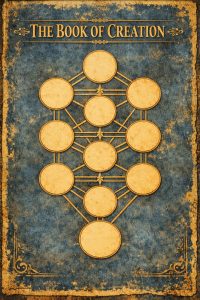
The next book of Kabbalah was written around 1800 BC, and is called
“The Book of Creation”. It describes the system of control within our
world in more detail and clarity. In 200 AD the next book of Kabbalah
was written, – the Book of Zohar, probably the most famous Kabbalistic
text. Then, in the 15th century Lurianic Kabbalah, the books of Ari
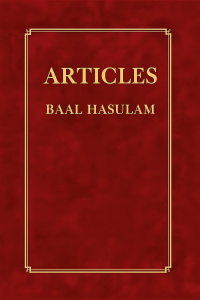
were written, followed by the Kabbalistic books of Baal HaSulam in the
20th century. Altogether there are five sources of Kabbalah in
existence.
Why there are only five?
Kabbalah maintains that the main material of our world is human egoism,
our desire for pleasure, fulfillment, information, knowledge,
possession, and absorption – on any level. Also, this process doesn’t
only occur within ourselves. This desire of matter to preserve its
form – i.e. crystals, properties etc., – exists on the following
levels: still, vegetative, animal, and human - and is the desire to
preserve itself at all times, that is, to attract the useful and to
eliminate or push away the harmful. This is the main quality of all
matter. The development of matter occurs in the development of the
egoistic quality of intake.
How is this determined on the human level?
Level zero of human development are the desires of the body, which
would be present in man even if he lived alone in the forest. These
basic desires are food, family, children, and sex, or whatever the
body demands naturally. So, bodily desires – is level zero of the
development of desire. It is on this level of development that the
first book of Kabbalah was written, “Secret Angel” (5700 years ago).
The next phase in the development of desire (the first level of desire)
is the desire for wealth. Egoism increases, and man, besides wanting to
simply exist, begins to desire possessions higher than the animal
level. During this period appeared the second book of Kabbalah, “The
Book of Creation” (1800 BC).
The next level in the increase of egoism in humanity (the second level
of desire) resulted in the desire for rank, fame, and power. The desire
for power is the strongest of the three. At this time appeared the Book
of Zohar (200 AD).
The following or third phase of the development of egoism is the desire
for knowledge, and alongside this development the books of the famous
scientist Ari (16th century).
During the 20th century, the time of the Kabbalist Baal HaSulam, a
further development of egoism took place. At this time desires higher
than natural knowledge appeared: desires for the Upper or spiritual
attainment. This development has continued into our time: the early
21st Century.
All these books speak about one thing: about the world around us,
about its way of existence as well as something beyond it, called the
Upper world. In what way is our world controlled from the Upper world
and, vice-versa, how do we, through the Upper world control our world?
This is how a Kabbalist thinks.
It is said in the book of Zohar, written in 200 AD, that the time will
come - the prediction is very precise – 1995 – when humanity will
enter a phase of such an egoistic development that it will not be able
to be fulfilled by the bodily desires such as for wealth, power, or
knowledge, and will begin to search for something that is beyond this
world. And then the science of Kabbalah, which was concealed for
thousands of years, must be revealed (beginning in 1995) and offer
everyone its knowledge. If this does not happen then, as the science
of Kabbalah says, humanity will enter a period of disorientation and
disillusionment, and drugs will flood humankind. This happens because
mankind does not understand, know or see the point of its existence.
This, in short, is the history of humankind, and with it, the history
of Kabbalah.
All of these Kabbalistic sources are identical, except during each
period they speak about our world and man and his state differently.
They speak about free will, about the way a person thinks, how he makes
decisions and adapts to his world and how humanity can achieve higher
attainment. This is what can be said about the development of the
science itself.
What does Kabbalah say about the composition of the universe? It says
that there exist five worlds: Adam Kadmon, Atzilut, Beria,
Yetzira, Assiya, and our world. All of the worlds are identical;
the difference between them is only in the material from which they are
created. Just like in nature there exist five levels of egoism, so
these worlds differ in their levels of egoism or the matter from which
they are created. The system of control descends from the higher level
to the lower level. It follows that in our world almost everything is
predetermined from the Upper level, except one thing, the opportunity
for man to develop the as he attains and gains knowledge of the Upper
world.
If we look at a person as a model, as a piece of existence, then, as
it says in Kabbalah, if we knew our exact composition, all of our
qualities with which we were born, all of the parameters that are
preprogrammed into us, all the genes (as they say today, there is a
gene responsible for murder, for memory, etc. and they are finding
predetermined qualities in man), and if we knew in advance all of our
nature, then we would see that there is nothing in our behavior that
can not be foretold, because everything in us has been prepared,
placing us in a specific environment for our development (society,
school, parents, etc).
This way, inside and out, we are guaranteed a closed system where it
is possible to predict absolutely all of man’s future steps. Kabbalah
says that man has a sole parameter within which he is free. This is
the opportunity to exert efforts to develop through knowledge, and
better still, to attain the integral system of control, the Universe
and creation. Only in this is he free, and only in this will he be able
to correctly have contact with nature and thus develop within this
system of control.
The system of control is made up of two lines: the right (positive)
and the left (negative). Man is located between them and has free will
to attain the world and thus to change himself.
Question: What is the difference between the
Kabbalistic sources?
The difference between them is that the first Kabbalistic books were
written in a language we could not understand (i.e., the language of
fairy-tales, legends, fables, metaphors etc.) and the closer they are
to our time the more academic they become. They begin to separate the
material into phases, stages, and levels with precision.
At the present moment our main Kabbalistic source is the work entitled
“The Teaching of Ten Sefirot”. It is six volumes, a textbook
of sixteen parts, each of which is made up of questions and answers,
and it is completely suited for our learning.
It explains that the whole system of creation is made of ten concentric
spheres, called Sefirot and our world is located in their
center. We, located in this center, perceive only the lowest of them.
We call it just that: “Our world”. We do not perceive all the other
worlds with our regular senses. Kabbalah, as the method of attaining
the universe, explains that through the study of Kabbalah man can begin
to perceive the outer or Upper Sefirot, to attain in this way
the roots of creation from which all the signals descend into our
world.
The whole history of humankind, as this teaching asserts, demonstrates
that all humanity will ultimately come to a state in which man will be
shown the impossibility of existence without attaining the whole
picture of creation. This will lead him to an understanding of these
outer Sefirot or the outer spheres, to a place where all the
systems of control are located.
Why must they exist at all? Existing in this world, can we say that
anything exists outside of us? Evidently, we can, even if only due to
the fact that we do not know what will happen with us in the next
instant. As we completely lack information about the future we are
unable to predict anything; we do not know how and which actions affect
our world positively or negatively and return to us as good or evil,
and we do not know our own destiny nor the destiny of all humanity.
In reality, we know nothing, not even a minute or second about the
future.
All this, as it says in Kabbalah, is located in the outer levels,
beyond our current perception, and although we are people and are the
crown of creation, in reality we are in an underdeveloped state. We
must develop further in order to attain the outer creation. This is
attained only through the study of the Kabbalistic sources.
Kabbalistic sources speak about the organization of these worlds. The
book “The Teaching of the Ten Sefirot” begins this way. From
the highest level of the beginning of all the worlds and through all
the worlds the book tells us about the structure of all the worlds,
our world and man in our world. Through studying this entire structure
the student slowly begins to see connections in our world which he
did not see before, one sees interactions between different objects in
our world. In this way the philosophical picture that is offered by the
Kabbalistic teaching becomes clear to the student.
As I have already said, in the history of humanity there were five
famous Kabbalists. Each of them epitomized a new phase in the
development of humanity.
On this timeline we can discern absolutely everything about the
history of humanity – how with the increase of egoism there emerged a
new socio-economic formation, how suddenly new lands were discovered,
how the next change of egoism provoked the necessity to develop
technology and so on. In this way we can discern everything depending
only on this one parameter which in principle determines everything.
Our internal egoistic desires towards the environment – to acquire, to
attain, to receive, and to determine – push us towards newer and newer
levels of development, which are determined by this system.
In connection to this it is possible to identify philosophical
branches (such as when they begin and why), for instance, Christianity,
Buddhism, Islam and Judaism, as well as the roots of practically
everything that happens to humanity. A more detailed look at this
timeline (or the line of egoistic growth in humanity) gives us a way to
understand any parameter, that is, any event which happened to us
throughout the centuries.
In our time, in the last 10-15 years, as was predicted in the book of
Zohar (from the year 1995 and even earlier) Kabbalah is no longer a
secret science. It has been revealed and is studied. There are
faculties on the study of Kabbalah in philosophical departments and
universities. From our Kabbalistic Academy I read lectures in many of
the world’s universities. Today it is already a discipline, which is
studied by philosophers and included in student programs as one of the
teachings worked out by humanity, which is continuing to develop it
further.
Question: Scientific critics consider Kabbalah
to have appeared in the 11th-12th centuries. Is this so? And the
second question: you said, unambiguously, that we can predict certain
qualities of man in advance, determine his profession. How does
Kabbalah treat the very principle of uncertainty?
Yes, there are several theories about the emergence of Kabbalah.
There is a theory expressing the traditional view towards this
question, which says that for the first time Kabbalah emerged
approximately 5700 years ago, and according to the second view
Kabbalah began in the 11th-12th century in Spain, in Europe.
I am of the school which considers the beginning of Kabbalah to have
originated in the more ancient period, and indeed, there are sources
supporting this. It is difficult to prove from documented sources, but
at least the book of Zohar (although it is said that it appeared in the
11th century AD) is written in such a language which clearly points to
an emergence of Kabbalah in the 2nd century.
Recently I was at the University of Berkeley, California, where I gave
a lecture together with professor Daniel Matt, who holds the other
opinion. He and I in front of a large audience exchanged views – he
stated his point of view and I – mine, which is normal in science.
Regarding the principle of uncertainty, the fact is that Kabbalah
immediately places man in a very certain relation to the world and
attainment. Kabbalah says that there exist four levels of attaining the
world.
- The first level, which in practical physics, is called the “level of
Newton” and states the following: everything that exists around us –
exists; I am in this world and I am able to study this existence.
- The next level. Today science already determines, and it is obvious
from Einstein’s Theory of Relativity, that in principle, that which
exists - exists. And I as an investigator, in relation to this existing
world am independent, but my observation depends on the relative speed
of two objects: the object which I am studying and myself.
- The next theory maintains that man affects the result of the
experiment, meaning that I am not simply observing something, as was
thought previously, but that which I see is something average between
my qualities and the qualities of the “something” around me, and I am
not simply studying something – I am studying something within my own
qualities.
This way it turns out that we are not attempting to learn the objective
picture of the world, and not even attempting to say whether it exists
or not, because we always study everything through our five sense
organs. We can make an image of man, this system, as a box which has
five entrance holes: smell, touch, vision, hearing and taste.
Everything that we receive enters this box through the five senses, but
what exists outside – I do not know.
Suppose I hear something. What does it mean, “I hear”? Probably that
something is outside of me, arousing some kind of waves (how? – I also
do not know), that reach my ear drums and, seemingly, push on it.
Inside exists a whole system, an eardrum and so on, as well as an
electrical system that transmits all kinds of signals to me. I adapt
them, compare them with what I know, and this way I understand that
something is happening outside, and somehow I decipher it for myself.
A question arises: if along this path I will have some kind of damage,
then will I know if something is outside or not? And what if I will
have different parameters, a different range of my sense organs, then
I will perceive the world to be completely different. For instance,
a dog “sees” the world inside of the organs of smell. Everything
presents itself as some sort of spots, and the dog discovers only
according to smell. What does it see? Some kind of color puzzle.
It follows that we cannot speak about what the world is like; we can
speak only about how we picture it. At the present time this position
is already accepted by science as obvious and true.
Kabbalah speaks about something else. In general it states that all of
our senses are built according to the principle of equivalence, meaning
the following: outside some kind of wave is traveling; if inside myself
I am able to generate something similar, then according to the
principle of equivalence I catch this wave and then I perceive it. In
this way, around us – who knows, what may exist - but we catch only a
tiny part of the world around us to the extent to which our senses are
able to discern it.
Is there something else that exists, something different, wider, inside
our volume that we do not pick up at all? Kabbalah tells us that there
is. Because of this it is called “Kabbalah” from the word “reception”,
which means to receive additional information.
Basically, there is a lot of information around us which we are not
aware of. However, we do not feel that we are missing this information.
In particular, and most importantly, we are missing information about
ourselves: what will happen with our world and with us in the next
moment, not to speak about distant future. Is there a way to find this
out? Kabbalah, as a practical science, maintains that there is. How so?
It's very simple. It’s necessary to attune yourself in an appropriate
way; to open an extra sensory organ which exists alongside what is
happening, what is outside of us. In short, we need an extra sense.
Right now we, together with scientists, are working on the development
of certain symbols of perception that point to the existence of
something that we do not determine in any way. Everything that we
determine, everything that we observe and perceive, in reality is only
a projection of our senses. And if our senses were structured
differently, then we would perceive totally different things. For
example, we would perceive firm things as transparent, liquid ones as
sticky, and so on. Our senses give us practically the whole picture of
the surrounding world.
In summary, at first, there was Newton’s theory, then Einstein’s
theory, then Hue Everett’s theory… Recently I gave a lecture at the
Department of Theoretical Physics at the Moscow State University. We
are finding common grounds and are trying to supplement each other.
Question: It is difficult to imagine that
physicists and the orthodox would discuss the same problem…
No, of course not. Kabbalah is not a living science; it does not claim
to be absolute, all-knowing, or exclusive. It simply offers its theory.
Within the framework of this theory, depending on one's egoism and on
that “something” that possibly exists around us, it can explain certain
questions. We conduct meetings, so-called round table discussions on a
regular basis.
Question: Can you tell us, how do the main,
so-called world religions relate to this? Is there a system of
interaction; any discussion or dialogue forum?
It is traditionally considered that Kabbalah came out of Judaism; that
it is in some way connected to Judaism. Kabbalists themselves do not
consider this to be the case. Kabbalah passed through Judaic
representatives, but if you ask about Kabbalah, the most religious
Jews will clearly tell you that they do not understand anything about
it and do not study it. This means that Kabbalah has no relation to
religion, and I would say that it does not have any relation to Judaism
as well, because Kabbalah appeared earlier than the Jewish people.
Besides, Kabbalah says that there is no such nation as “Jewish people”.
This was a specific group of people who traveled out of Mesopotamia
around 2000 BC. If today we conducted a biological test of Jews and
ancient Persians (there are still such tribes in Iraq), we would find
that they are totally identical. In other words, this group of people
is not a nation in a biological sense.
Kabbalah does not rely on any dogmas or traditions in its view of the
world. It does not obligate a person to follow any special frame of
behavior as the three world religions do. On the contrary, Kabbalah
says that this method is offered to all mankind for its further
development, when, at the brink of the 20th-21st centuries, humanity
really begins pondering about the meaning of life, and can't find the
answer in our religions, or inside the framework of this world.
Scientist-Kabbalists (among them were Jews and non-Jews) have always
been subject to ostracism and general enmity from religious orthodox
Jews. This can be seen even today, because Kabbalah clearly takes its
stand from a materialistic position. We talk only about what we know;
only that which we can determine through experiment really exists,
and under no circumstances do we accept any aspects of faith.
Question: But is there also a religious
Kabbalah?
This is not Kabbalah. They took the terminology from Kabbalah in
order to explain their earthly behavior. Around the 16-17th century
there was a group of religious Jews who decided to add some additional
religious attributes in order to inspire themselves and their people,
because at the time there was a large spiritual downfall (this was
related to the common egoism). Several important rabbis decided that
they had to somehow revitalize their followers and so they took
elements from Kabbalah that explained the qualities of the worlds,
meaning the five worlds, and the ten Sefirot, etc.
They started to explain all this to religious people, and did so in
order to instill in them some higher thoughts, than simple observance
of dead traditional ceremonies, procedures, and dress habits. In this
how regular Judaism was supplemented with Kabbalistic elements.
Many took from Kabbalah: there is a Christian Kabbalah, a Jewish,
Orthodox, and a Kabbalistic philosophy in general.
Question: What about Modern Orthodox
Judaism?
I will tell you honestly: I do not deal with them – not Judaism, not
Catholicism or Jewish Orthodoxy. A few months ago we made a trip
during which we gave a few presentations in Protestant universities.
We gave lectures not only in the universities, but also in the
communities, including meetings with the Department Heads. This
amounted to about 80 million people, a huge number of people.
Basically, we encountered a complete understanding, as well as
knowledge of Kabbalah. This stands in contrast to the representatives
of Judaic religion, who brag about their knowledge, but in reality
lack it. With these people it was possible to communicate openly and
freely about Kabbalah, and really treat them with deep respect.
Besides, we have a world wide Kabbalah teaching network, which
includes about 800,000 people who are studying according to our
system. This is a remote study system; teaching takes place over the
internet. We also have live courses.
Twice a year we conduct huge congresses. Representatives from 34
countries attended the last such congress. There were people from
many different races and peoples. On our internet site the teaching
is published in 27 different languages. By the way, our educational
site received the prize of Brittanica. You can say that Kabbalah
today is pretty fashionable.
Question: How do you feel about centers of
traditional Jewish Kabbalah, for example in Tzfat? This is my first
question. And the second question: please tell me how you evaluate
the influence of Kabbalah in Tzfat – positively or negatively – on
Hasidism of the 17th – 18th centuries in Spain, Germany (and from
the 17th century in the territory of Ukraine)?
Regarding Kabbalah and its center in Tzfat, I am the representative
of this branch in Kabbalah. This is very dear to me. This is what I
have studied and continue to study and in my teaching I highlight
specifically this area of Kabbalah. Lurianic Kabbalah is what is
called “Kabbalah of the city of Tzfat”. Presently there is
practically no center of study there. The Kabbalah of Tzfat ended
during the 16th and 17th centuries. Today Kabbalah is not studied in
Tzfat, and there are no Kabbalah representatives there.
Further, in relation to the effect that Kabbalah of the 11th-12th
centuries made on Hasidism of the 16th-17th centuries in Spain (as
well as Byelorussia and Ukraine): if we interpret the history
correctly, we see that there is practically no connection between
them. All Hasidism grew out of Lurianic Kabbalah – around the 15-16th
century, and it does not relate at all to Kabbalah of the 11th-12th
century, that is, the Spanish period. In Spain it was not Kabbalah,
it was religious philosophy of Rambam and others. Besides, I would
say that this is a totally different way of thinking.
I will mention a few important points in the history and maybe later
you can clarify them more by yourself. We can investigate the
surrounding world through two types of governance: general and
particular. The difference between them is the same as between the
wave and the particle theories of light – everything goes outward
either through spheres, or through informational currents.
Before the Kabbalist Ari, that is, before the 15-16th centuries,
Kabbalists investigated the general theory of governance through
spheres. This is how Kabbalah looked until Ramak, who was the last
Kabbalist before Ari. After Ari, Kabbalah has investigated everything
only through precise, goal-oriented governance, that is, through
directed informational currents. There is no relation between the two
ways of thinking, not even a connection; they are very clearly
separated books.
It is impossible to say that there is any connection between Hasidism
in Eastern Europe in the 17th century and later and the philosophy of
the 11th-12th centuries. Of course, you can always find some kind of
connection, but there are no strict connections.
Question: Is Kabbalistic teaching about God?
Kabbalah does not even say the word, “God”. It says that there is the
Upper force, which can be called the Supreme thought; and on it, like
on a sheet, lies the entire universe. This Supreme thought is called
the Creator, because it creates everything else, but it is a thought,
i.e., an informational field.
This is not what religion says about God: that there is Something,
and if you pray with Him, He answers you positively, and if I don’t
pray with Him, He treats you worse, and so on. There is no such thing.
Kabbalah refers to the Creator, to this common informational field as
to the general law of nature that acts in all the worlds (including
our world). In other words, it is a law just like the law of gravity:
you may or not pray with it - it does not matter, because if you jump
from a ten story building you will have the same result. This is how
Kabbalah looks at the world around us, meaning, that this is not God
who can be kind or harsh - it is a law. If you comply with this law,
then you use this world properly to the degree of your compliance
with it.
This is why Kabbalah says: open your eyes, study the world around
you, including the one that is beyond your five senses. If you get to
know it better, you will start acting correctly. That's all. The need
for upbringing disappears, because we see that ordinary traditional
upbringing brings little results. Regarding punishment, we also see
that any punishment, including the confinement of a person, bears
little fruit.
Only when a person clearly sees that the consequence of his behavior
harms him does he refrain from acting in a certain way. We simply
need to discover the world; to realize that everything in it is the
opposite of you, and then you will naturally act better. Then the
principle of “love thy neighbor” and others, that are preached by
religion as well, will really be observed. We just need to attain.
Question: In the books which you have given us
there are stories about the creation of the world, about how man,
Adam Kadmon, came about, and how peoples appeared, - is this to be
taken literally or understood in a different way?
Nothing is perceived literally, everything is perceived in the form of
a technical, physics-like picture. I hope that the material which I
gave you will make it clear that Kabbalah relates to the world like
any other materialistic science.
If you speak with physicists and astrophysicists today, they will
tell you that they are already guessing that at the basis of the
Universe there is some kind of intelligence. It stands behind
everything that happens to us and what we observe in the Universe.
This means that that science is already approaching this barrier in
order to go beyond the knowledge and attain a higher understanding.
What does Kabbalah say about the method perception? The method of
perception is studying, and nothing else, just as in our world. But
the difference (and this is why it is called a secret teaching) is
that in our world you can conduct experiments parallel to your study,
researching the nature in this way. However, in Kabbalah you cannot
conduct experiments. You can experiment only to the degree of to
which you are equivalent in form to what which is outside.
Studying Kabbalah changes you. It broadens your internal abilities
and your internal absorption of the environment. You begin to feel
more acutely and, accordingly, start conducting experiments yourself;
start observing the consequences. In other words, Kabbalah allows you
to see and feel what happens beyond matter, from the other side,
meaning, it allows you to perceive the forces that control matter.
Because humanity is created solely from one kind of material – the
egoistic one, it is very easy to compel us, as we are always
striving for maximum pleasure with minimal effort. This is the law
of our behavior – mental, physical, it does not matter what, - but
it not the spiritual law. Because of this we are easily compelled
to something. A little suffering, caused by our egoism, - and we
begin to move in the direction in which it prompts us to. This
determines all of our behavior. That is why there is no other way
out.
As it is said even in the first book of Kabbalah (and it doesn’t
matter if it was written in the 11th century, as my colleague says,
or 5700 years ago, as I say; in any case it is an ancient theory) –
thanks to the development of egoism and only because of it in
particular, we will begin to sense and comprehend the entire
universe, that is, will take over control into our hands instead of
being blindly controlled.
There are three centers for studying Kabbalah: in New York, in Israel,
and in Moscow. These are the three main centers, and there are also
over 200 smaller centers in the whole world. The teaching is free,
and is mainly given over the internet. There is also a communications
system with these centers.
Question: What is absolute egoism?
Absolute egoism is us. Kabbalah says that originally one common soul
was created; it is called Adam. Adam is not the person that once
supposedly existed on the Earth and from him followed all humankind –
it is everything that exists in humanity for tens of thousands of
years.
Adam is the person in whom the egoistic level zero emerged for the
first time. In other words, he took a burden and was able to write
the book “Secret Angel”. This is what happened on Earth.
Basically, the common absolute egoism is the original unification of
us all, which occurred before the Universe disintegrated, before the
Big Bang. This is a huge mass which dismantled due to the shattering
of the vessels (in Kabbalah this is examined in great detail). There
was a colossal explosion that occurred because this egoism, that is,
the egoistic force of separation or individualism was greater than
the force of mutual attraction.
This is what we have. Egoism increased slightly and look what is
happening today: since the middle of the 20th century (only 50 years
have passed!) families have been falling apart, people are becoming
so individualistic that they are no longer capable of living in a
family; children leave parents, and people are beginning to take
drugs in order not to feel this world, to completely check out of it.
A desire to disconnect from this world is the expression of the very
last level of egoism. Psychologists are completely in agreement on
this.
Question: Is there such a concept as Kabbalistic
magic?
There is no such thing. This is only ascribed to Kabbalah; not magic,
Tarot cards, spells, red strings or holy water – there is none of
this in Kabbalah. Take any modern man – all of this is ascribed to
Kabbalah so that it easier to sell it.
Question: But is there really such a thing?
There is no such thing. I face with this all the time. These are
common questions that people ask. If you take purely Kabbalistic
sources – “Secret Angel”, “The Book of Creation”, the book of “Zohar”,
the books of Ari and Baal HaSulam – you will not find a single world
or a hint suggesting that Kabbalah is some sort of magic.
We exist on this Earth for many thousands of years – have you seen
any miracles or any “holy” force that you can pray with – and did
anything happen? Give me an example. I don’t know of such things.
I'm a scientist; my profession is biological medical cybernetics. I
graduated from the University in Leningrad, and worked in the
Military-Medical Academy. Then I began to study Kabbalah. I did not
go into religion; I only studied science. That is why I can not even
speak on this level. I remain a materialist.
In my opinion there is no magic in the world. As I understand it,
magic and faith are nothing else but lack of knowledge. There are many
things that we don't know about nature; we use only 2% of our brain,
but, if 98% were also created, we probably need it for something. By
developing further one begins using it.
And, of course, whatever we know about the nature does not even
amount to 2%; it's an impossibly small percentage, so it is obvious
that we will find out much more. But I don’t think that there is room
for magic. There is room for science and information.