



Introduction to Talmud Eser Sefirot
1
At the outset of my words, I find a great need to break an iron wall that has been separating us from the wisdom of Kabbalah since the ruin of the Temple to this generation. It lies heavily on us and arouses fear of being forgotten from Israel.
However, when I begin to speak to anyone about this study, his first question is, “Why should I know how many angels are in the sky, and what their names are? Can I not keep the entire Torah in all its details and intricacies without this knowledge?”
Second, he will ask, “The sages have already determined that one must first fill one’s belly with Gmarah and Talmud. Thus, how can one deceive himself in that he has finished the entire revealed Torah, and lacks only the wisdom of the hidden?
Third, one is afraid that he will turn sour because of this engagement, as there have already been incidents of deviation from the path of Torah because of engagement in Kabbalah. Hence, why do I need this trouble? Who is so foolish as to place himself in danger for no reason?
Fourth: Even those who favor this study only permit it to holy ones, servants of the Creator. Not all who wish to take the Lord may come and take.
Fifth, and most importantly, “It is a conduct in our midst that when in doubt, keep this: Do as the people do,” and my eyes see that all those who study Torah in my generation are of one mind, and refrain from studying the hidden. Moreover, they advise the ones who ask them that it is undoubtedly preferable to study a page of Gmarah instead of this engagement.
2
Indeed, if we set our hearts to answer but one very famous question, I am certain that all these questions and doubts will vanish from the horizon, and you will look unto their place to find them gone. This indignant question is a question that the whole world asks, namely, “What is the meaning of my life?” In other words, these numbered years of our life that cost us so heavily and the numerous pains and torments that we suffer for them, to complete them to the fullest, who is it that enjoys them? Even more precisely, to whom do I give delight?
It is indeed true that historians have grown weary contemplating it and particularly in our generation. No one even wishes to consider it. Yet the question stands as bitterly and as vehemently as ever. Sometimes it meets us uninvitingly, pecks at our mind and humiliates us to the ground before we find the famous ploy to flow mindlessly in the currents of life as yesterday.
3
Indeed it is to resolve this great riddle that the verse writes, “Taste and see that the Lord is good.” Those who keep the Torah and Mitzvot correctly are the ones who taste the taste of life. They are the ones who see and testify that the Lord is good, as our sages say, that He created the worlds to do good to His creations, since it is the conduct of The Good to do good.
Yet, those who have not yet tasted the taste of life in observing Torah and Mitzvot cannot feel and understand that the Lord is good, as our sages say, that when the Creator created us His sole purpose was to benefit us. Hence, we have no other counsel but to keep the Torah and Mitzvot correctly.
It is written in the Torah (Parashat Nitzavim): “See, I have set before thee this day life and good, and death and evil.” It means that prior to the giving of the Torah, we had only death and evil before us, as our sages say, that “The wicked in their life are called dead.” This is so because their death is better than their life since the pain and suffering they endure to attain their sustenance is many times greater than the little pleasure they feel in this life.
However, now we have been granted Torah and Mitzvot and by keeping it we acquire the real life, joyful and delightful to its owner. It is written, “Taste and see that the Lord is good.” The writing says in that regard, “See, I have set before thee this day life and good,” which you did not have in reality at all prior to the giving of the Torah.
The writing ends, “therefore choose life, that thou mayest live, thou and thy seed.” There is seemingly a double phrasing here, “choose life, that thou mayest live.” Yet, it is a reference to life in observing Torah and Mitzvot, which is when there is real life. However, a life without Torah and Mitzvot is harder than death. This is the meaning of the words of our sages, “The wicked in their life are called dead.”
The writing says, “that thou mayest live, thou and thy seed.” It means that not only is a life without Torah joyless to its owner, but one also cannot delight others. One finds no contentment even in one’s progeny, since the life of his progeny is also harder than death. Hence, what tribute does he leave for them?
However, not only does one who lives in Torah and Mitzvot enjoys his own life, but he is even happy to bear children and bequeath them of this good life. This is the meaning of, “that thou mayest live, thou and thy seed,” for one receives additional pleasure in the life of one’s progeny, of which he was the cause.
4
Now you can understand the words of our sages about the verse, “therefore choose life.” It states, “I instruct you to choose the part of living, as a person who says to his son: ‘Choose for yourself a good part in my land.’ He places him on the good part and says to him: ‘Choose this for yourself.’” It is written about this, “O Lord, the portion of mine inheritance and of my cup, Thou maintainest my lot.” You placed my hand on the good fate, to say, “This take for you.”
The words are seemingly perplexing. The verse says, “therefore choose life.” This means that one makes the choice by himself. However, they say that He places him on the good part. Thus, is there no longer choice here? Moreover, they say that the Creator puts one’s hand on the good fate. This is indeed perplexing, because if so where then is one’s choice?
Now you can see the true meaning of their words. It is indeed true that the Creator Himself puts one’s hand on the good fate by giving him a life of pleasure and contentment within the corporeal life that is devoid of content, filled with torment and pain. One necessarily departs and escapes them when he sees a tranquil place, even if it seemingly appears amidst the cracks. He flees there from this life, which is harder than death. Indeed, is there a greater placement of one’s hand by Him than this?
One’s choice refers only to the strengthening. This is because there is certainly a great effort and exertion here before one purifies one’s body to be able to observe Torah and Mitzvot correctly, not for himself but to bring contentment to his Maker, which is called Lishma. Only in this manner is one endowed with a life of happiness and pleasantness that come with observing the Torah.
However, before one comes to that purification there is certainly a choice to strengthen in the good way by all sorts of means and artifice. Also, one should do whatever his hand finds the strength to do until he completes the craft of purification and will not fall under his burden midway.
5
According to the above, you will understand the words of our sages in the Talmud (Avot): “Thus is the path of Torah: Eat bread with salt, drink little water, sleep on the ground, lead a sorrowful life, and labour in the Torah. If so you do, happy you will be; happy in this world and happy in the next world.”
We must ask about their words: How is the wisdom of Torah different from the other teachings in the world, which do not require this asceticism and sorrowful life, but the labour itself is enough to acquire those teachings? Even though we labour extensively in the Torah, it is still not enough to acquire the wisdom of the Torah, except through the mortification of bread with salt and a sorrowful life.
The end of the words is even more surprising, as they said, “If so you do, happy you will be; happy in this world and happy in the next world.” This is because it is possible that I will be happy in the next world. Yet, in this world, when I mortify myself in eating and drinking and sleeping, and live a sorrowful life, would it be said about such life, “happy in this world?” Is this the meaning of a happy life in this world?
6
However, it is explained above that the practice of Torah and Mitzvot correctly, in its strict condition, is to bestow contentment to one’s Maker and not for self-gratification. It is impossible to come to that except by way of great labour and exertion in purifying the body.
The first tactic is to accustom oneself to not receive anything for one’s pleasure, even the permitted and necessary things for the existence of one’s body, such as eating, drinking, sleeping and other such necessities. Thus, one will disconnect himself completely from any pleasure that necessarily accompanies the satisfaction in the fulfillment of one’s sustenance. At last, one will come to live a sorrowful life in its literal meaning.
After one becomes accustomed to that and his body possesses no desire to receive any pleasure for itself, it is now possible for him to engage in the Torah and keep the Mitzvot in that manner too, in order to bestow contentment upon his Maker and not at all for himself.
When one acquires that, one is imparted the taste of a happy life, filled with goodness and delight without any blemish of sorrow, which appear in the practice of Torah and Mitzvot Lishma. It is as Rabbi Meir says (Avot 86), “One who engages in Torah Lishma (for Her name) is granted many things. Moreover, the entire world is rewarding for him, the secrets of Torah reveal to him and he becomes as a flowing spring.”
It is about him that the verse says, “Taste and see that the Lord is good.” One who tastes the flavour of the practice of Torah and Mitzvot Lishma is endowed with seeing the intention of creation for himself, that it is only to do good to His creations, as it is the conduct of The Good to do good. Then he rejoices and delights in the number of years of life that the Creator imparted him, and the entire world is rewarding to him.
7
Now you will understand the two sides of the coin of engagement in Torah and Mitzvot: On the one hand it is the path of Torah, meaning the extensive preparation one must make to prepare the purification of his body before he is actually granted keeping the Torah and Mitzvot.
In that state it is necessary that he will practice Torah and Mitzvot LoLishma (not for Her name), but mixed with self-gratification. This is because he has not purified and cleansed his body from the will to receive pleasure from the vanities of this world. It is at that time that one must live a sorrowful life and labour in the Torah, as it is written in the Mishnah.
However, after one completes the path of Torah, has already purified his body, and is now ready to keep the Torah and the Mitzvot Lishma, in order to bring contentment to his Maker, he comes to the other side of the coin. This is the life of pleasure and great tranquility upon which was the intention of creation “to do good to His creations,” meaning the happiest life in this world and in the next world.
8
This explains the great difference between the wisdom of Torah and the rest of the teachings in the world: Acquiring the other teachings in the world does not benefit life in this world whatsoever. This is because they do not even render mere gratification for the torments and suffering one undergoes during one’s life. Hence, one needs not correct his body; the labour that he gives in return for them is quite sufficient, as with all other worldly possessions acquired in return for labour and toil.
However, the sole purpose of engagement in Torah and Mitzvot is to make one worthy of receiving all the goodness in the intention of creation, “to do good to His creations.” Hence, one must necessarily purify one’s body to merit that Godly goodness.
9
This also thoroughly clarifies the words of the Mishnah, “If so you do, happy you will be in this world.” They made this precision with deliberate intention to indicate that a happy life in this world is only for those who completed the path of Torah. Thus, the matter of mortification in eating, drinking, sleeping and a sorrowful life that are mentioned here abide only while during the path of Torah. This is why they insisted and said, “Thus is the path of Torah.”
When one completes this path of LoLishma in sorrowful life and mortification the Mishnah ends, “happy in this world.” This is because you will acquire that happiness and goodness in the intention of creation and the entire world will be rewarding for you, even this world, and all the more so the next world.
10
The Zohar (Bereshit) writes about the verse, “And God said: 'Let there be light.' And there was light.” In means that the acts of creation were created in their full stature and form, meaning in their fullest glory and perfection. Accordingly, the Light that was created on the first day came out in all its perfection, which also contains the life of this world in utter pleasantness and gentleness, as expressed in the words, “Let there be light.”
However, in order to prepare a place of choice and labour, He stood and concealed it for the righteous at the end of days, as our sages say. Hence they said in their pure tongue “Let there be Light for this world.” However, it did not remain so but “and let there be Light for the next world.”
In other words, them who practice Torah and Mitzvot Lishma attain it only at the end of days, meaning during the end of days after the end of the purification of their body in the path of Torah. Then they are rewarded with that great Light in this world too, as our sages say, “You shall see your world in your life.”
11
However, we find and see in the words of the sages of the Talmud that they have made the path of Torah easier for us than the sages of the Mishnah. This is because they said, “One will always practice the Torah and Mitzvot, even LoLishma, and from LoLishma he will come to Lishma because the Light in it reforms.”
Thus, they have invented for us a new means instead of the penance presented in the above Mishnah (Avot), which is the “Light in the Torah.” It bears sufficient power to reform one and bring him to practice Torah and Mitzvot Lishma.
They did not mention penance here. Only that engagement in Torah and Mitzvot alone can provide one with that Light that reforms so that one may engage in Torah and Mitzvot in order to bring contentment to his Maker and not at all for his own pleasure. This is called Lishma.
12
Nevertheless, we must question their words. After all we have found a few students whose practice in the Torah did not help them to come to Lishma through the Light in it. Indeed, practicing Torah and Mitzvot in LoLishma means that one believes in the Creator and in reward and punishment. He engages in the Torah because the Creator commanded the practice, yet associates his own pleasure with bringing contentment to his Maker.
If after all one’s labour in the practice of Torah and Mitzvot he will know that no pleasure and self-benefit came to him through this great exertion and strain, he will regret having made all these efforts. This is because one has initially tortured oneself thinking that he will enjoy his exertion. This is called LoLishma.
Nonetheless, our sages also permitted the beginning of the practice in Torah and Mitzvot in LoLishma because from LoLishma he comes to Lishma. Indeed, there is no doubt that if this student has not acquired faith in the Creator and in His Torah, but still dwells in doubt, it is not about him that our sages say “from LoLishma he will come to Lishma.” It is not about him that they said that by engaging in it “the Light in it reforms.”
The Light in the Torah shines only to those with faith. Moreover, the measure of that Light is as the measure of the force of one’s faith. Yet to those without faith it is the opposite for they receive darkness from the Torah and their eyes darken.
13
Sages have already presented a nice allegory about the verse, “Woe unto you that desire the day of the Lord! Wherefore would ye have the day of the Lord? It is darkness, and not light.” A parable about a rooster and a bat that were waiting for the Light. The rooster said to the bat: “I await the Light for the Light is mine, but you, why do you need the Light?” (Sanhedrin 98; 72).
Clearly, those students who were not endowed with coming from LoLishma to Lishma because of their absence of faith did not receive any Light from the Torah. Thus, in darkness they walk and shall die without wisdom.
Conversely, those who were imparted complete faith are guaranteed in the words of our sages that because they engage in the Torah even LoLishma the Light in it reforms them. They will be imparted the Torah Lishma, which brings a happy and good life in this world and in the next world, even without the prior affliction and sorrowful life. It is about them that the verse writes, “Then shalt thou delight thyself in the Lord, and I will make thee to ride upon the high places of the earth.”
14
Concerning such a matter as the above, I once interpreted the saying of our sages, “He whose Torah is his trade.” The measure of his faith is apparent in his practice of the Torah because the letters of the word Umanuto (his trade) are the same (in Hebrew) as the letters of the word Emunato (his faith).
It is like a person who trusts his friend and lends him money. He might trust him with one dollar, and if he asks for two dollars he will refuse to lend him. He might also trust him with one hundred dollars, but not more. Also, he might trust him and lend him half his property but not his whole property. Finally, he might trust him with his entire property without a shred of fear. This last faith is considered “complete faith”, but the previous forms are considered “incomplete faith”. Rather it is partial faith, whether more or less.
Similarly, one allots oneself only one hour a day to practice Torah and work out of the measure of his faith in the Creator. Another allots it two hours, according to the measure of his faith in the Creator. The third does not neglect even a single moment of his free time without engaging in the Torah and the work. Thus, only the faith of the last one is complete since he trusts the Creator with all his property. The previous, however, their faith is still incomplete.
15
Thus it has been thoroughly clarified that one should not expect that the Torah and Mitzvot in LoLishma will bring him to Lishma except when one knows in one’s heart that he has been granted faith in the Creator and in His Torah appropriately. This is because then the Light in it reforms and he will attain “the day of the Lord,” which is all Light. The sanctity of faith purifies one’s eyes to enjoy His Light until the Light in the Torah reforms him.
However, those without faith are as bats. They cannot look at the Light of day because the daylight is inverted for them to a more terrible darkness than the darkness of the night, as they are only fed in the darkness of the night.
In this manner, the eyes of those without faith are blinded to the Light of God and hence the Light becomes darkness to them. For them, the potion of life is turned into a potion of death. It is about them that the writing says, “Woe unto you that desire the day of the Lord! Wherefore would ye have the day of the Lord? It is darkness, and not light.” Thus, first one must make one’s faith complete.
16
This answers yet another question in the Tosfot (Taanit P. 7): “He who practices Torah Lishma, his Torah becomes a potion of life for him. He who practices Torah LoLishma, his Torah becomes a potion of death for him.” They asked, “Yet, they said, ‘One will always practice the Torah and Mitzvot, even LoLishma, and from LoLishma he will come to Lishma.’”
According to the explained above, we should divide it simply: One who engages in Torah because of the Mitzva to study the Torah and believes in reward and punishment, despite associating self-pleasure and benefit with the intention to bring contentment to his Maker, the Light in it will reform him and he will come to Lishma.
Conversely, one who studies not for the sake of the Mitzva to study the Torah because he does not believe in reward and punishment in that measure, enough to labour so for it, but exerts only for his own pleasure, his Torah becomes a potion of death for him. For him, the Light in it is turned to darkness.
17
Hence, the student pledges prior to the study to strengthen himself in faith in the Creator and in His guidance in reward and punishment, as our sages have written, “Your landlord is liable to reward you for your work.” One should aim one’s labour to be for the Mitzvot of the Torah, and thus he will be imparted the pleasure of the Light in it. His faith will strengthen and grow through the remedy of this Light, as they said, “It shall be health to thy navel, and marrow to thy bones” (Proverbs 3, 8).
Then one’s heart shall rest assure that from LoLishma he will come to Lishma. Thus, even one who knows about himself that he has not acquired faith can hope so through the practice of Torah.
If one sets one’s heart and mind to acquire faith in the Creator through that means, there is no greater Mitzva than that, as our sages said, “Habakkuk came and stressed only that: “the righteous shall live by his faith” (Makkot 24).
Moreover, there is no other counsel than this, as it is written, “Rabbi said: ‘Job wished to rid the entire world of judgment. He said before Him: ‘Oh Lord, Thou hath created the righteous, Thou hath created the wicked, who holds you down?’’”
RASHI interprets there: “Thou hath created righteous by means of the good inclination; Thou hath created wicked by means of the evil inclination. Hence, there is none that is saved from Thine hand, for who holds you down? Coerced are the sinners.” And what did the friends of Job reply? “Yea, thou doest away with fear, and impairest devotion before God” (Job 15, 4), the Creator has created the evil inclination, He has created for it the spice of Torah.”
RASHI interprets there: “Created the Torah, which is a spice that abolishes ‘thoughts of transgression,’” as they said (Masechet Kidushin), ‘If thou cometh across this villain, pull him to the Beit Midrash (seminary). If he is hard, he will soften. Hence not coerced are they, for they could save themselves.’”
18
Clearly, they cannot rid themselves of the judgment if they say that they received that spice and still have thoughts of transgression, meaning that they are still in doubt and the evil inclination has not melted. This is because the Creator who created us and gave the evil inclination its strength, evidently knew to create the remedy and the spice that are liable to wear off the power of the evil inclination and eradicate it altogether.
If one practices Torah and fails to remove the evil inclination from himself, it is either that he has been negligent in giving the necessary labour and exertion in the practice of Torah, as it says, “I have laboured but have not found, do not believe,” or perhaps one did put in the necessary labour, but has been negligent in quality.
That means that while practicing Torah they did not set their mind and heart to draw the light in the Torah which brings faith in one’s heart. Rather, they have been absent minded about the principal requirement demanded of the Torah, namely the Light that brings faith. Moreover, although they first aimed for it, their minds went astray during the study.
Either way one cannot rid oneself of the blame by arguing coercion for our sages strictly state, “I have created the evil inclination, I have created for it the spice of Torah.” If there had been any exceptions in that, then Job’s question would have remained valid.
19
Through all that has been explained thus far I have removed a great complaint about the words of Rabbi Chaim Vital in his introduction to Shaar HaHakdamot (Gate to Introductions) by the Ari and the introduction to the Tree of Life. He writes, “Indeed, one should not say, ‘I shall go and engage in the wisdom of Kabbalah before he engages in the Torah, the Mishnah and the Talmud.’ This is because our sages have already said, ‘One should not enter the PARDES[1] unless he has filled his belly with meat and wine.’”
This is like a soul without a body. It has no reward or act or consideration before it is connected inside a body when it is corrected in the Mitzvot of the Torah, in 613 Mitzvot.
Conversely, when one is occupied with the wisdom of the Mishnah and Babylonian Talmud and does not give a share to the secrets of Torah and its concealments as well, it is like a body that sits in the dark without a human soul, God’s candle that shines within it. Thus, the body is dry and does not draw from a source of life.
Hence, a wise disciple who practices Torah Lishma should first engage in the wisdom of the Bible, the Mishnah and the Talmud, as long as his mind can tolerate. Afterwards he will delve in knowing his Maker in the wisdom of truth.
It is as King David commanded his son Solomon: “know thou the God of thy father and serve Him.” If that person will find the matter of the study and scrutiny heavy and difficult, he is better off leaving his hand off it, once he tested his luck in this wisdom, and engage in the wisdom of truth.
It is written, “A disciple who has not seen a good sign in his study within five years, will also not see it (Hulin p. 24). Thus, every one whose study is easy for him must dedicate a portion of one or two hours a day to study the Halacha (Jewish code of laws) and explain and interpret the questions in the literal Halacha.
20
These words of his seem very perplexing because he says that before one succeeds in the study of the literal one should already engage in the wisdom of truth. This contradicts his former words that the wisdom of Kabbalah without the literal Torah is as a soul without a body, having no deed, consideration and reward.
The evidence he brings from a disciple who did not see a good sign is even more perplexing, for have our sages said that because of that he should abandon the study of Torah? Certainly, it is in order to warn him to examine his ways and try with another Rabbi or another section, but he must certainly not leave the Torah, even the revealed Torah.
21
It is even more difficult to understand both in the words of Rabbi Chaim Vital and the Gmarah, because it is implied in their words that one needs some specific merit to attain the wisdom of Torah. However, our sages said (Midrash Raba), “The Creator said unto Israel: ‘Regard, the whole wisdom and the whole Torah is an easy thing: any one who fears Me and observes the words of the Torah, the entire wisdom and the entire Torah are in his heart.’” Thus we do not need any prior merit here; only by the virtue of fear of God and observing the Torah is one granted the whole wisdom of the Torah.
22
Indeed, if we examine his words they will clarify before us as pure heavenly stars. The text, “he is better off leaving his hand off it, once he tested his luck in this wisdom,” does not refer to luck of wit and erudition. Rather, it is as we have explained above in the interpretation “I have created the evil inclination, I have created for it the spice of Torah.”
It means that one has delved and exerted in the revealed Torah and still the evil inclination is in power and has not melted at all. This is because he is still not delivered from thoughts of transgression, as RASHI writes above in the explanation to “I have created for it the spice of Torah.”
Therefore he advises him to leave his hands off it, and practice the wisdom of truth for it is easier to draw the light in the Torah while practicing and labouring in the wisdom of truth then in labouring in the literal Torah. The reason is also very simple: the wisdom of the revealed is clothed in external, corporeal clothes, such as stealing, plundering, torts, etc. Hence it is hard and heavy for any person to aim his mind and heart to the Creator during the study so as to draw the Light of the Torah.
It is even more so for a person for whom the study itself is heavy and arduous. How can he remember the Creator during the study, since the scrutiny concerns corporeal matters and cannot come in him simultaneously with the intention for the Creator?
Therefore he advises him to practice the wisdom of Kabbalah, as this wisdom is entirely clothed in the names of the Creator. Then he will certainly be able to aim his mind and heart to the Creator effortlessly even if he is the slowest learner. This is so because the study in the issues of the wisdom and the Creator are one and the same, and this is very simple.
23
Hence he brings good evidence from the words of the Gmarah: “A disciple who has not seen a good sign in his study after five years, will also not see it.” Why did he not see a good sign in his study? Certainly, it is only due to the absence of the intention of the heart; not because of any lack of aptitude, as the wisdom of Torah requires no aptitude.
Instead, as it is written in the above study: “Regard, the whole wisdom and the whole Torah is an easy thing: any one who fears Me and observes the words of the Torah, the entire wisdom and the entire Torah are in his heart.”
Of course one must accustom oneself in the Light of Torah and Mitzvot and I do not know how much. One might remain in waiting all his years. Hence the Braita warns us (Hulin 24) not to wait more than five years.
Moreover, Rabbi Yosi says that only three years are quite sufficient to attain the wisdom of the Torah. If one does not see a good sign within that length of time, one should not fool himself with false hopes and deceit, but know that he will never see a good sign.
Hence, one must immediately find himself a good tactic that will succeed in bringing him to Lishma and to be granted the wisdom of the Torah. The Braita did not specify the tactic, but it warns not to remain seated in the same situation and wait longer.
This is the meaning of what the Rav says, that the surest and most successful tactic is the engagement in the wisdom of Kabbalah. One should leave one’s hand entirely from engagement in the wisdom of the revealed Torah since he has already tested his luck in it and did not succeed and he should dedicate all his time to the wisdom of Kabbalah, where his success is certain.
24
This is very simple for these words have no connection to the study of the literal Torah in any thing that one must actually practice, for “it is not the ignorant who is pious, and a mistaken learning makes for evil, and one sinner destroyeth much good.” Hence, one must necessarily repeat them as much as it is necessary to not fail in one’s practice.
However, here it speaks only of the study of the wisdom of the revealed Torah, to explain and scrutinize questions that arise in the interpretation of the laws as Rabbi Chaim Vital deduces there himself. It refers to the part of the study of the Torah that is not performed de facto, not to the actual laws.
Indeed, it is possible to be lenient and study from the abbreviations and not from the origins. However, this too requires extensive learning since one who knows from the origin is not like one who knows from a brief scan of some abbreviation. In order to not err in that, Rabbi Chaim Vital says at the very outset of his words that the soul only connects to the body when it is corrected in the Mitzvot of the Torah, in 613 Mitzvot.
25
Now you shall see how all the questions that we presented in the beginning of the introduction are complete folly. However, they are the obstacles that the evil inclination spreads in order to hunt innocent souls, to dismiss them from the world robbed and abused.
Examine the first question, where they imagine that they can keep the entire Torah even without the knowledge of the wisdom of Kabbalah. I say to them: Indeed, if you can keep the study of Torah and the observance of the Mitzvot correctly, Lishma, meaning solely in order to bring contentment to the Maker, then it is said about you, ‘One’s soul shall teach one.’ This is because then all the secrets of the Torah will appear before you like a lush spring, as in the words of Rabbi Meir in the Mishnah (Avot), and you will need no assistance from the books.”
However, if you are still engaged in LoLishma learning, but hope to merit Lishma by this means, then I ask you: “How many years have you been doing so?” If you are still within the five years, as the Tana Kama says, or within the three years, as Rabbi Yosi says, then you still have time and can hope.
Yet, if you have been engaged in the Torah LoLishma for more than three years as Rabbi Yosi says, and five years, as the Tana Kama says, then the Braita warns you that you will not see a good sign in this path you are taking! Why delude your souls with false hopes when you have such a near and sure tactic as the study of the wisdom of Kabbalah, as I have shown the reason above that the study in the issues of the wisdom and the Creator Himself are one?
26
Let us also examine the second question, which is that one must fill one’s belly with Mishnah and Gmarah. Everyone agrees that it is indeed so. Yet, this is all true if you have already been endowed with learning Lishma, or even LoLishma, if you are still within the three years or the five years. However, after that time the Braita warns you that you will never see a good sign again, and so you must test your success in the study of Kabbalah.
27
We must also know that there are two parts to the wisdom of truth: The first, called the “secrets of Torah”, should not be exposed except by implication, and from a wise Kabbalist to a disciple who understands in his own mind. MaaseMerkava and MaaseBereshit also belong to that part. The sages of the Zohar refer to that part as “the first three Sefirot, Keter, Hochma, Bina, and it is also the Rosh (Head) of the Partzuf.
The second part is called the “flavours of Torah”. It is permitted to disclose them and also a great Mitzva to disclose them. The Zohar refers to it as the “seven lower Sefirot of the Partzuf” and it is also called the Guf (Body) of the Partzuf.
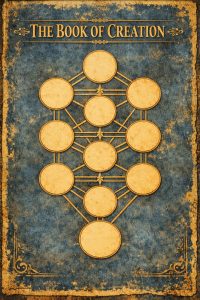
Every single Partzuf deKedusha (of holiness) consists of ten Sefirot. These are called Keter, Hochma, Bina, Hesed, Gevura, Tifferet, Netzah, Hod, Yesod, Malchut. The first three Sefirot are considered the “ Rosh of the Partzuf” and the seven lower Sefirot are named the “ Guf of the Partzuf”. Even the soul of the low Adam also contains the ten Sefirot in their above names and every single Sefira, both in the Upper and in the lower.
The reason that the seven lower Sefirot which are the Guf of the Partzuf are called “flavors of Torah” is as the meaning of the verse, “and the palate tasteth its food.” The Lights that appear under the First three, namely the Rosh, are called Taamim (flavors) and Malchut of the Rosh is called Hech (palate).
For this reason they are called Taamim of Torah. It means that they appear in the palate of the Rosh, which is the source of all Taamim, which is Malchut of the Rosh. From there down it is not forbidden to disclose them. Quite the contrary, the reward of one who discloses them is immeasurable and boundless.
However, these first three Sefirot and the seven lower Sefirot expand both in the general and in the most particular segment that can be divided. Thus, even the first three Sefirot of the Malchut at the end of the world of Assiya belong to the section of the “secrets of Torah” which are not to be disclosed. Similarly, the seven lower Sefirot in the Keter of the Rosh of Atzilut belong to the section of the “ Taamim of the Torah” and are permitted in disclosure, and these words are written in the books of Kabbalah.
28
You will find the source of these words in the Mishnah (Psachim), as it is written (Isaiah 23), “And her gain and her hire shall be holiness to the Lord; it shall not be treasured nor laid up; for her gain shall be for them that dwell before the Lord, to eat their fill, and for stately clothing.” What is “stately clothing”? This is what covers things that Atik Yomin covered. What are those? The secrets of the Torah. Others say, this is what reveals things that Atik Yomin covered. What are those? The flavours of the Torah.
RASHBAM interprets, “ Atik Yomin is the Creator,” as it is written, “and Atik Yomin sits.” The secrets of the torah are MaaseMerkava and MaaseBereshit. The meaning of “Name” is as it is written, “this is My name for ever.” The “clothing” means that He does not give them to any person, only to those whose heart is anxious. “This is what reveals things that Atik Yomin covered” means covering the secrets of the Torah that were first covered and Atik Yomin disclosed them and gave permission to disclose them. One who discloses them attains what he said in this verse.
29
Now you can see the great difference between the secrets of Torah, where all who attain them receive this great reward for covering them and not for disclosing them, and the opposite with the Taamim of the Torah, where all who attain them receive this great reward for disclosing them to others.
There is no dispute about the first opinion, rather only examination of the different meanings between them. The Lishna Kama states the end, as it says “stately clothing”. Hence they interpret the attainment of the great reward for covering the secrets of Torah.
Others say it states the beginning that reads, “eat their fill” meaning the Taamim of the Torah, as it is written, “and the palate tasteth its food” because the Lights of Taamim are called eating. Hence they interpret the attainment of the great reward mentioned in the text regarding one who discloses the Taamim of the Torah though both think that the secrets of the Torah must be covered and the Taamim of the Torah must be disclosed.
30
Thus you have a clear answer about the fourth and the fifth questions in the beginning of the introduction that you find in the words of our sages and also in the holy books that it is only given to one whose heart is anxious. It refers to that part called “the secrets of the Torah” which is considered the first three Sefirot and Rosh. This is only given to concealed ones and under certain conditions, but in all the books of Kabbalah, in writing and in print, you will not find even a trace of them because those are the things that Atik Yomin covered, as it is written in the Gmarah.
Moreover, do say if it is possible to even think and picture that all those holy and famous righteous which are the greatest and best in the nation, such as Sefer Yetzira (Book of Creation), Sefer HaZohar (the Zohar), and the Braita of Rabbi Ishmael, Rabbi Hai Gaon, and Rabbi Hamai Gaon, Rabbi A. from Garmiza and all the Rishonim (first ones) through the RAMBAN and Baal HaTurim and the Baal Shulchan Aruch through the Vilna Gaon and the Ladi Gaon and the rest of the righteous may their memory be blessed.
From them we received the entire revealed Torah and by their words we live and know which act to perform so as to be fancied by the Creator. All of them wrote and published books in the wisdom of Kabbalah. There is no greater disclosure than writing a book because the writer does not know who reads the book. It is possible that utterly evil will scrutinize it. Hence, there is no greater uncovering of secrets of Torah than that.
We must not doubt the words of these holy and pure, that they might infringe even the slightest thing written and explained in the Mishnah and the Gmarah that are forbidden to disclose, as written in Masechet Hagigah.
Rather, all the written and printed books are necessarily considered the Taamim of the Torah, which Atik Yomin first covered and then uncovered, as it is written, “and the palate tasteth its food.” Not only are these secrets not forbidden to disclose, on the contrary, it is a very good deed to disclose them (as written in Psachim 119).
One who knows how to disclose and discloses them, his reward is plentiful. This is because in disclosing the Lights to many, particularly to the many, depends the coming of Messiah soon in our days Amen.
31
There is a great need to explain once and for all why the coming of the Messiah depends on the study of Kabbalah in the masses, which is so prevalent in the Zohar and all the books of Kabbalah. Laymen have already discussed it futilely and it has become unbearable.
The explanation of this matter is expressed in the Tikkunim (corrections) of the Zohar ( Tikun No. 30). Abbreviated translation: When the Holy Divinity went into exile, this spirit blows upon them who engage in the Torah because the Holy Divinity is among them. They are all as hay eating beasts, every grace that they do, for themselves they do it. Even all of those who do study the Torah, every grace that they do, for themselves they do it. In that time, spirit leaves and never returns. This is the spirit of Messiah.
Woe to them that make the spirit of the Messiah leave and never return. They make the Torah dry and do not want to delve in the wisdom of Kabbalah. These people cause the sprouting of the wisdom, which is the Yod () in the name HaVaYaH (), to depart.
The spirit of the Messiah leaves, the spirit of holiness, the spirit of wisdom and understanding, the spirit of counsel and might, the spirit of knowledge and of the fear of the Lord.” “And God said: 'Let there be Light.'” This is the Light of love, the love of Mercy, as it is written, “I have loved thee with an everlasting love.”
It is said about that, “if ye awaken, and if ye stir up love, until it please…” then it is love not in order to receive reward. This is because if fear and love is in order to receive reward, it is a handmaid… “a handmaid that is heir to her mistress.”
32
We shall begin to explain the matter of the Tikkunim of the Zohar from toe to head: He says that the fear and the love one has in the practice of Torah and Mitzvot in order to receive reward, meaning while hoping for some benefit from the Torah and the work, this is considered the maid. It is written about her, “a handmaid that is heir to her mistress.”
This is seemingly perplexing for it is written, “One will always practice the Torah and Mitzvot, even LoLishma,” and why does “the earth doth quake?” In addition, we must understand the correlation of the engagement in LoLishma specifically to the handmaid, and also the parable that she inherits her mistress. What is the inheritance here?
33
You will understand the matter with everything that is explained above in this introduction that they did not permit the study in LoLishma but only since from LoLishma one comes to Lishma, since the Light in it reforms. Hence, engagement in LoLishma is considered a helping handmaid, who performs the ignoble works for her mistress, Holy Divinity.
At last, one will come to Lishma and will be imparted the inspiration of Divinity. Then the maid, which is the engagement in LoLishma, will also be a holy maid, for she supports and prepares the holiness, though she will be considered the world of Assiya of the Kedusha (holiness).
However, if one’s faith is incomplete and he engages in the Torah and in the work only because the Creator commanded him to study, then we have seen above that in such Torah and work the Light does not appear. This is because one’s eyes are flawed and like a bat turn the Light into darkness.
Such a study is no longer considered a holy maid since he will not acquire Lishma through it. Hence, it comes to the dominion of the maid of the Klipa (shell), which inherits these Torah and work and takes them for herself.
Hence “the earth doth quake,” meaning Holy Divinity, called earth. It is so because those Torah and work that should have come to her, as possessions of the Holy Divinity, that evil handmaid robs and lowers them to be a possession of the Klipot (shells). Thus, the handmaid is heir to her mistress.
34
The Tikkunim of the Zohar interpreted the meaning of the oath, “if ye awaken, and if ye stir up love, until it please.” The precision is that Israel will draw the Light of the Upper Hesed (Mercy), called “Love of Mercy”. This is what is desired, which is drawn particularly by the engagement in Torah and in Mitzvot not in order to receive reward. The reason is that the Light of the Upper Wisdom is extended to Israel through this Light of Mercy, appearing and clothing in this Light of Mercy that Israel extends.
This Light of Wisdom is the meaning of the verse, “And the spirit of the Lord shall rest upon him, the spirit of wisdom and understanding, the spirit of counsel and might, the spirit of knowledge and of the fear of the Lord” (Isaiah 11). It is said about the King the Messiah: “And He will set up an ensign for the nations, and will assemble the dispersed of Israel, and gather together the scattered of Judah from the four corners of the earth.” This is because after Israel extend the Light of Wisdom through the Light of Mercy the Messiah appears and assembles the dispersed of Israel.”
Thus, everything depends on the practice of Torah and the work Lishma which can extend the great Light of Mercy where the Light of Wisdom clothes and extends. This is the meaning of the oath, “if ye awaken, and if ye stir up.” It is so because the complete redemption and the assembling of the dispersed is impossible without it since so are the pipes of holiness arranged.
35
They also interpreted “and the spirit of God hovered over the face of the waters.” What is “the spirit of God”? During the exile, when Israel were still occupied in Torah and Mitzvot LoLishma, if they are in this way because from LoLishma one comes to Lishma, then Divinity is among them, though in exile since they still have not reached Lishma.
This is written when Divinity is in concealment. However, they are bound to attain the revelation of Divinity, and then the spirit of the King the Messiah hovers on the engaging and awakens them to come to Lishma, as it is written, “the Light in it reforms.” She aids and prepares for the inspiration of Divinity, which is her mistress.
However, if this learning in LoLishma is not suitable to bring them to Lishma, then Divinity regrets it and says that the spirit of man that rises upward is not found among the disciples of the Torah. Rather, they suffice in the spirit of the beast that descends downward, engaging in Torah and Mitzvot only for their own benefit and pleasure.
The engagement in the Torah cannot bring them to Lishma and the spirit of the Messiah does not hover on them but walks away from them and will not return. The impure maid robs their Torah and inherits her mistress since they are not on the way to come from LoLishma to Lishma.
Even though they do not succeed through the practice in the revealed Torah because it does not have the Light and it is dry because of the smallness of their minds, they could still succeed by engaging in the study of Kabbalah. This is because the Light in it is clothed in the clothing of the Creator, meaning the Holy Names and the Sefirot. They could easily come to that form of LoLishma that brings them to Lishma and then the spirit of God would hover on them, as it is written, “the Light in it reforms them.”
Yet, they have no wish at all for the study of Kabbalah and hence they cause poverty, loot, ruin, killing and destruction in the world, because the spirit of the Messiah leaves, the spirit of holiness, the spirit of wisdom and understanding.
36
We learn from the words of the Tikkunim of the Zohar that there is an oath that the Light of Mercy and love will not awaken in the world before Israel’s acts in Torah and Mitzvot will be with the intention to not receive reward and only to bestow. This is the meaning of the oath, “I adjure you, O daughters of Jerusalem.”
Thus, the length of the exile and affliction that we suffer depends on us and waits for us to merit the practice of Torah and Mitzvot Lishma. If we only attain that, the Light of love and Mercy that has the power to extend will immediately awaken, as it is written, “And the spirit shall rest upon him, the spirit of wisdom and understanding.” Then we shall attain the complete redemption.
It has also been clarified that it is impossible that the whole of Israel will come to that great purity except through the study of Kabbalah. This is the easiest way, adequate even for commoners.
However, while engaging in the revealed Torah it is impossible to attain except for a chosen few and after extensive labour, but not for the majority of the people (for the reason explained in item 24). This thoroughly explains the irrelevance of the fourth and fifth questions in the beginning of the introduction.
37
The third question which is the fear that one will turn sour, well there is no such fear here. This is because the deviation from the path of God that occurred in the past was for two reasons: Either they broke the words of our sages with things that they were not to disclose, or because they perceived the words of the Kabbalah in their superficial meaning, meaning as corporeal instructions, breaching “Thou shalt not make unto thee a graven image.”
Hence, indeed until this day there has been a fortified wall around this wisdom. Many have attempted and began to study and could not continue for lack of understanding and because of the corporeal appellations. Thus I have laboured with the interpretation “Panim Meirot and Panim Masbirot” to interpret the great book “Tree of Life” by the Ari, to make abstract the corporeal forms and establish them as spiritual laws above time and space. Accordingly, any novice can understand the matters, their reasons and explanations with a clear mind and great simplicity, no less than one understands Gmarah through the interpretation of RASHI.
38
Let us continue to elaborate on the practice of Torah and Mitzvot Lishma. We must understand that name, “Torah Lishma”. Why is the desirable and whole worship named so, Lishma, and the worship that is undesirable is named LoLishma?
The literal meaning implies that one who engages in Torah and Mitzvot to aim his heart to bring contentment to his Maker and to himself should have been referred to as Torah Lishmo (for His Name) and Torah LoLishmo (not for His Name), meaning for the Creator. Why then is this defined by the name Lishma and LoLishma, meaning for the Torah?
There is certainly something more to understand here than the aforementioned since the verse proves that Torah Lishmo, meaning to bring contentment to one’s Maker is still insufficient. Instead, the study must be Lishma, meaning for the Torah. This requires explanation.
39
The thing is that it is known that the name of the Torah is “Torah of Life”, as it is written, “For they are life unto those that find them” (Proverbs, 4; 22), “For it is no vain thing for you; because it is your life” (Deuteronomy 32; 47). Hence, the meaning of Torah Lishma is that the practice of Torah and Mitzvot brings one life and long days, and then the Torah is as its name.
One who does not aim his heart and mind to the aforesaid, the practice of Torah and Mitzvot brings him the opposite of life and long days, meaning completely LoLishma, since its name is “Torah of Life”. These words are explained in the words of our sages (Taanit 7, 71) “He who practices Torah LoLishma, his Torah becomes a potion of death for him; and he who practices the Torah Lishma, his Torah becomes a potion of life for him.”
However, their words require explanation regarding how and through what does the Torah become to him a potion of death? Not only is his work and exertion in vain and one receives no benefit from his labour and strain, but the Torah and the work themselves become for him a potion of death. This is indeed perplexing.
40
We must first understand the words of our sages (Megillah 6, 72), who said, “I have laboured and found - believe. I did not labour and found – do not believe.”
We must ask about the phrase “laboured and found”: they too contradict each other. “Labour” refers to work and exertion that one gives in return for any desired possession. For an important possession one makes great efforts and for a lesser possession one makes a lesser effort.
Its opposite is a “find”. Its conduct is to come to a person absentmindedly and without any preparation in labour, toil and price. Hence, how does it say, “laboured and found”? If there is effort here it should have stated, “laboured and purchased” or “laboured and acquired” etc. and not “laboured and found”.
41
The Zohar writes about the text “and those that seek Me earnestly shall find Me” and asks, “Where does one find the Creator?” They said that the Creator is found only in the Torah. Also, regarding the text “Verily Thou art a God that hidest Thyself” that the Creator hides Himself in the Holy Divinity.
We must thoroughly understand their words. It seems that the Creator is hidden only in corporeal things and conducts and in all the futilities of this world, outside the Torah. Thus, how can you say the opposite, that He hides Himself only in the Torah?
There is also the general meaning that the Creator hides Himself in a way that He must be sought. Why does He need this concealment? In addition, “All that seek Him shall find Him” which we understand from the text “and those that seek Me earnestly shall find Me.” We must thoroughly understand this seeking and this finding, what are they and why are they?
42
Indeed, you should know that the reason for our great distance from the Creator and that we are so prone to transgress His will is for but one reason. It became the source of all the torment and the suffering that we suffer and for all the sins and the mistakes that we fail in.
Clearly, by removing that reason we will be instantly rid of any sorrow and pain. We will immediately be granted adhesion with Him in heart, soul and might. I say that that preliminary reason is none other than the “lack of our understanding in His providence over His creations,” it is that we do not understand Him properly.
43
For example, Let us assume that the Creator conducts open providence with His creations in this manner: Anyone who eats a forbidden thing will immediately suffocate and anyone who performs a Mitzva will immediately find a wonderful pleasure in it such as the finest delights in this corporeal world. What fool would even contemplate tasting a forbidden thing, knowing that because of it he will immediately lose his life, as one does not consider jumping into the fire?
Also, what fool would leave any Mitzva without performing it as quickly as possible, as one who cannot retire from or linger with a great corporeal pleasure that comes into his hand without receiving it as swiftly as he can? Thus, if providence were open before us, all the people in the world would be complete righteous.
44
Thus you see that all we need in our world is open providence. If we had open providence all the people in the world be completely righteous. They would also cleave to Him with absolute love for it would certainly be a great honor for anyone of us to befriend and love Him with our heart and soul and cleave to Him without losing a minute.
However, it is not so and a Mitzva is not rewarded in this world. Moreover, those who defy His will are not punished before our eyes, but the Creator is patient with them.
In addition, we sometimes think the opposite, as it is written (Psalms 73): “Behold, such are the wicked; and they that are always at ease increase riches.” Hence, not all who want to take the Lord may come and take. Instead we stumble every step of the way, until – as our sages wrote about the verse – “I have found one man out of a thousand. A thousand go into a room and one comes out to teach.”
Thus, understanding His providence is the reason for every good, and the lack of understanding is the reason for every evil. It turns out that this is the whole axis that all the people in the world circle, for better or for worse.
45
When we closely examine the attainment of providence that comes to people’s sensations we find four kinds there. Each and every kind receives a special providence by the Creator. Thus, there are four kinds of attainment of providence here, though in fact, they are but two: concealment of the face and revelation of the face, but they are divided into four.
There are two discernments in providence of concealment of the face, which are: a single concealment, and concealment within concealment. There are also two discernments in the providence of revelation of the face, which are: providence of reward and punishment, and eternal providence.
46
The verse says: (Deuteronomy 31: 17): “Then My anger shall be kindled against them in that day, and I will forsake them, and I will hide My face from them, and they shall be devoured, and many evils and troubles shall come upon them; so that they will say in that day: Are not these evils come upon us because our God is not among us? And I will surely hide My face in that day for all the evil which they shall have wrought, in that they are turned unto other gods.”
When you regard these words you will find that in the beginning it states “Then My anger shall be kindled... ...and I will hide My face,” meaning one concealment. Afterwards it states “and many evils and troubles shall come upon them... ...And I will surely hide My face,” meaning double concealment. We must understand what is this “double concealment”.
47
We must first understand what is the meaning of the “face of the Creator” about which the writing says, “I will hide My face.” It can be thought of as a person who sees his friend’s face and knows him right away. However, when he sees him from behind he is not certain that in his identity. He might doubt, “Perhaps he is another and not his friend?”
So is the matter before us: Everyone knows and feels that the Creator is good and it is the conduct of the good to do good. Hence, when the Creator bestows upon His creations everyone knows and recognizes Him since He behaves according to His name, as we have seen above regarding open providence.
48
Yet, when He behaves with His creations the opposite from the above mentioned, meaning when they receive suffering and pain in His world, this is considered the posterior of the Creator. It is so because His face, meaning His complete attribute of goodness is entirely concealed from them, and this is not a conduct that suits His name. It is like one who sees one’s friend from behind and might doubt and think, “Perhaps he is another?”
The writing says, “Then My anger shall be kindled... ...and I will hide My face.” During the anger people are afflicted troubles and pains. It turns out that the Creator hides His face, which is His utter benevolence and only His posterior is apparent. In that state, great strengthening in His faith is required in order to beware of thoughts of transgression since it is hard to know Him from behind. This is called “One Concealment”.
49
However, when troubles and torments accumulate to a great extent it causes a double concealment, which the books name “Concealment within Concealment”. It means that even His posterior is unseen, meaning they do not believe that the Creator is angry with them and punishes them but ascribe it to chance or to nature and come to deny His providence in reward and punishment.
50
However, before that, when the writing speaks only from the perspective of one concealment, the text ends: “Are not these evils come upon us because our God is not among us?” It means that they still believe in providence of reward and punishment.
They also say that the troubles and suffering come to them because they do not cleave to the Creator, as it is written, “these evils come upon us because our God is not among us.” It is considered that they still see the Creator, but only from behind. For that reason it is called “One Concealment”, meaning only concealment of the face.
51
Now we have explained the two facets of the perception of concealed providence that people feel, “one concealment” and “concealment within concealment”. One concealment relates only to the concealment of the face while the posterior is revealed to them. It means that they believe that the Creator gave them the affliction as punishment.
Even though it is hard for them to always know the Creator through His posterior side, which brings them to transgress, even then they are regarded as “incomplete righteous”. This means that these transgressions are like sins because they come to them as a result of the accumulation of the affliction, as they generally believe in reward and punishment.
52
Concealment within concealment means that even the posterior of the Creator is hidden from them, as they do not believe in reward and punishment. These transgressions of theirs are considered sins. They are considered “complete evil” because they rebel and say that the Creator does not watch over His creations at all, and turn to idolatry, as it is written, “in that they are turned unto other gods.”
53
We must know that the whole matter of the work in keeping Torah and Mitzvot by way of choice applies primarily to the two aforementioned facets of concealed providence. It is said about that time (Avot): “The reward is according to the pain.”
Since His guidance is not revealed it is impossible to see Him but only in concealment of the face, meaning from behind, as one who sees one’s friend from behind and might and doubt and think he is another. In this manner one is always left with the choice to keep His will or break it.
The troubles and the pains that one receives bring him to doubt the reality of His guidance over His creations, whether in the first manner, which is a mistake, or in the second manner, which is a sin.
Nevertheless, one is still in great pain and labour. The writing says about this time: “Whatsoever thy hand attaineth to do by thy strength, that do” (Ecclesiastes 9). This is so because one is not granted the revelation of the face, which is the complete measure of His goodness, before he exerts and does whatever is in his power to do; the reward is according to the pain.
54
When the Creator sees that one has completed one’s measure of exertion and finished everything he had to do in strengthening his choice in faith in the Creator, then the Creator helps him. It is then that one attains the open providence, which is the revelation of the face. Then he is rewarded with complete repentance, meaning he cleaves to the Creator once more with his heart and soul and might, as he is naturally drawn from the perspective of the attainment of the open providence.
55
These above attainment and repentance come to a person in two degrees: The first is the attainment of providence of absolute reward and punishment. Besides attaining the reward for every Mitzva in the next world in utter clarity, he is also rewarded the attainment of the wondrous pleasure in immediate observing of the Mitzva in this world.
In addition, besides attaining the bitter punishment that extends from every sin after one’s death, one is also rewarded with the sensation of the bitter taste of every transgression while being very much alive.
Naturally, one who is imparted this open providence is certain that he will not sin again as one is certain that he will not cut in his flesh and cause himself terrible suffering. In addition, one is certain that he will not neglect a Mitzva without observing it the instant it comes to his hand, as much as one is certain that he will not neglect any worldly pleasure or a great profit that comes into his hand.
56
Now you can understand what our sages said: “How will one know that he has repented? When He who knows all mysteries will testify that he will not turn back to folly.” These are seemingly perplexing words, for who would rise to the heaven to hear the testimony of the Creator? Also, before whom should the Creator testify? Is it not enough that the Creator Himself knows that the person repented and will not sin again?
From the explanation, the matter becomes quite clear: Indeed, one is not completely certain that he will not sin again before he is awarded the above attainment of reward and punishment, meaning the revelation of the face. It is this revelation of the face by the Creator that is called “testimony” since one’s salvation into this attainment of reward and punishment itself is what guarantees that he will not sin again.
It is therefore considered that it is the Creator who testifies for him. It is written: “How will one know that he has repented?” In other words, when will one be certain that he has been endowed complete repentance? For that one is given a clear sign: “when He who knows all mysteries testifies that he will not turn back to folly.” Thus, when one attains the revelation of the face, one’s own salvation testifies that he will not turn back to folly.
57
This above repentance is called “Repentance from Fear”. One returns to the Creator with his heart and soul until He who knows all mysteries testifies that he will not turn back to folly. However, that certainty that he will not sin again is because of one’s attainment and sensation of the terrible punishment and wicked torment that come with the transgressions. Because of that one is sure that he will not afflict himself horrible anguish.
However, at last, these repentance and certainty are only because of the fear of the punishment that extends from the transgression. It turns out that one’s repentance is only for the fear of punishment. Because of that it is called “Repentance from Fear”.
58
With this we understand the words of our sages that “One who repents out of fear, his sins become mistakes.” We must understand how this happens. According to the above (item 52) you can thoroughly understand that the sins one makes extend to him from the reception of providence through double concealment, namely concealment within concealment. It means that one does not believe in providence of reward and punishment.
However, one concealment means that he believes in providence of reward and punishment, yet because of the accumulation of the suffering he sometimes comes to thoughts of transgression. Even though one believes that the affliction came to him as a punishment, he is still like that person who sees his friend from behind and might doubt and think that he is another. These sins are only mistakes since as a whole he does believe in providence of reward and punishment.
59
Hence, when one is granted repentance from fear, meaning a clear attainment of reward and punishment until he is certain that he will not sin again, the concealment within concealment is entirely corrected in him. This is because now he evidently sees that there is providence of reward and punishment. It is clear to him that all the suffering he had ever experienced were a punishment from His providence for the sins he had committed. In retrospect, he made a grave mistake.
However, it is not entirely so, but they become sins. It means that it is like the transgressions he made in one concealment when he failed because of the confusion that came to him because of the multitude of torments that drive one out of one’s mind. These are only regarded as mistakes.
60
Yet, in this repentance he did not correct at all the first concealment of the face that he had had before, but only from now on after he has attained the revelation of the face. In the past, however, before he has been awarded repentance, the concealment and the mistakes remain as they were, without any change or correction whatsoever. It is so because then too he believed that the troubles and the suffering came to him as punishment, as it is written, “Are not these evils come upon us because our God is not among us?”
61
Therefore he is still considered a complete righteous because he who is rewarded the revelation of the face, namely the complete measure of His goodness, is called “righteous” (item 55). This is so because he justifies His providence as it really is, meaning that He is utterly good and wholesome with His creations, that He is good to the good and to the evil.
62
He is also called “intermediate” since after he attains repentance from fear he also becomes qualified to attain repentance from love through his wholesome engagement in Torah and good deeds. Then one attains being a “complete righteous”. Hence, now that one is intermediary, between fear and love, he is named “intermediate”. However, before that he was not completely qualified to even prepare himself for repentance from love.
63
This thoroughly explains the first degree of the attainment of the revelation of the face. This means the attainment and the sensation of providence of reward and punishment in a way that He who knows all mysteries will testify that he will not turn back to folly. This is called “Repentance from Fear”, when his sins become as mistakes. It is called “incomplete righteous” and also “intermediate”.
64
Now we shall explain the second degree of the attainment of the revelation of the face, which is the attainment of the complete providence, true and eternal. It means that the Creator watches over His creations in the form of “Good that doeth good to the good and to the bad”. Now one is considered “complete righteous” and “repentance from love”, when one is granted the turning of his sins to virtues.
This explains all four aspects of the perception of providence that apply in the creations. The first three, meaning double concealment, single concealment and attainment of providence of reward and punishment, are but preparations by which one attains the fourth aspect. This is the attainment of the true, eternal providence.
65
Nevertheless, we must understand why the third aspect is not enough for a person, namely the providence of reward and punishment. We said that he has already been rewarded with He who knows all mysteries testifying that he will not sin again. Hence, why is he still called “intermediate” or “incomplete righteous”, whose name proves that his work is still not desirable in the eyes of the Creator and there is still a flaw and blemish in his work?
66
First let us scrutinize what the interpreters asked about the Mitzva of love of God. How did the Holy Torah commit us to a Mitzva that we cannot keep? One can coerce and enslave oneself to anything, but no coercion and enslavement in the world will help with love.
They explain that when one keeps all 612 Mitzvot correctly the love of God extends to him by itself. Hence, it is considered possible to keep since one can enslave and coerce oneself to keep the 612 Mitzvot correctly and then he will also attain the love of God.
67
Indeed, their words require elaborate interpretation. Ultimately, the love of God should not come to us as a Mitzva, since there is no act and enslavement on our part in it. It rather comes by itself after completing the 612 Mitzvot. Hence, we are quite sufficient with the commandment of the 612 Mitzvot, and why this Mitzva was written?
68
In order to understand that we must first acquire genuine understanding in the nature of the love of God itself. We must know that all the inclinations, the tendencies and the properties instilled in one to serve one’s friends with, all these tendencies and natural properties are required for the work of God.
To begin with, they were only created and imprinted in a person because of their final function, which is the ultimate purpose of man, as it is written, “he that is banished be not an outcast from him.” One needs them all so as to complement oneself in the ways of the reception of the abundance and to complement the will of God.
This is the meaning of, “Every one that is called by My name, and whom I have created for My glory” (Isaiah 43; 7), and also “The Lord hath made all things for His own purpose” (Proverbs 16; 4). However, in the meantime man has been given a whole world to develop and complete all these natural inclinations and attributes by engaging in them with people, thus yielding them suitable for their purpose.
It is written, “One must say: The world was created for me.” This is because all the people in the world are required for an individual since they develop and qualify the attributes and inclinations of every individual to become a fit tool for His work.
69
Thus, we must understand the essence of the love of God from the properties of love by which one person relates to another. The love of God is necessarily shown in these attributes since to begin with they were only imprinted in humans for His name. When we observe the attributes of love between man and man we find four attributes of love, one atop the other, meaning two that are four.
70
The first is “Conditional Love”. It means that because of the great goodness, pleasure and benefit that one receives from one’s friend, one’s soul clings to one’s friend with wondrous love.
There are two measures in that: the first is that before they’ve met and began to love each other, they caused harm to one another. However, now they do not want to remember it for “love covereth all transgressions.” The second measure is that they have always done favors and helped one another and there is no trace of harm and detriment between them.
72
The second is “Unconditional Love”. It means that one knows the virtue of one’s friend to be sublime, beyond any imaginable measure. Because of that his soul clings to him with endless love.
Here too there are two measures: the first is before one knows every conduct and deed of one’s friend with others. At that time this love is considered “Less than Absolute Love”.
This is because one’s friend has dealings with others that, on the surface, seem to be detrimental to others out of negligence. In this manner, if the lover saw them, the merit of one’s friend would be entirely blemished and the love between them would have been corrupted. Yet, since he has not seen these dealings, his love is still whole, great and most wonderful.
73
The second attribute of conditional love is the fourth attribute of love in general, which also comes from knowing the merit of one’s friend. Yet, in addition to that, one now knows all his dealings and comportment with every person, none missing. One has checked and found that not only is there not a trace of flaw in them, but his goodness is greater than anything imaginable. Now it is “Eternal and Complete Love”.
74
Note, that these four attributes of love between man and man also apply between man and God. Moreover, here, in the love of God, they become degrees in the form of cause and consequence.
It is impossible to acquire any of them before one acquires the first attribute of conditional love. After it is completely acquired, that first attribute causes one to acquire the second attribute. After one has acquired the second attribute to the fullest it causes him to acquire the third attribute. Finally, the third attribute to the fourth attribute, eternal love.
75
Hence the question arises: How can one acquire the first degree of love of God, being the first degree of conditional love, which is love that comes through the multitude of goodness one receives from the loved one, when there is no reward for a Mitzva in this world?
Moreover, according to the above, one must go through the first two forms of providence by way of concealment of the face. In other words, His measure of goodness, that the conduct of the good is to do good, is concealed at that time (item 47). Therefore, at that time one experiences pain and suffering.
Nevertheless, we learn that all the practice of Torah and the work out of choice is conducted primarily during that time of concealment of the face. If so, how can it be that one will be awarded the second attribute of conditional love, being that the loved one has always done only wondrous and plentiful good and never caused any harm, and even more so when he attains the third or fourth degrees?
76
Indeed we dive in deep waters here. At the very least, we must fish out a precious gem from this. For that purpose let us examine the words of our sages, “You shall see your world in your life and your end to the life of next world.”
We must understand why they did not say, “You will receive your world in your life,” only “see”? If they wanted to bless they should have blessed wholly, meaning to acquire and receive one’s world in one’s life. We must also understand why a person should see the next world in his life, at least his end will be the life of the next world. Moreover, why did they place this blessing first?
77
We must first understand how is this seeing of the next world in one’s life? Certainly, we cannot see anything spiritual in corporeal eyes. It is also not the comportment of the Creator to change the laws of nature. This is because the Creator originally arranged these conducts in this manner as they are the most successful for their purpose. Through them one comes to cleave to Him, as it is written, “The Lord hath made all things for His own purpose.” We must therefore understand how one sees one’s world in one’s life?
78
I shall tell you that this seeing comes to a person through the opening of the eyes in the Holy Torah, as it is written, “Open Thou mine eyes, that I may behold wondrous things out of Thy law.” It is about this, that the soul is sworn before it comes to the body (Nida p. 30), and “Even if the whole world says you are righteous, be as a wicked in your own eyes,” specifically in your own eyes.
This means that as long as you have not been awarded the “opening of the eyes” in the Torah, regard yourself as wicked. Do not fool yourself with your publicity in the entire world as righteous.
Now you can also understand why they placed the blessing “You shall see your world in your life” at the beginning of all the blessings. It is because prior to that, one is not even awarded the property of “Incomplete Righteous”.
79
We have yet to understand, if a person knows within himself that he has already kept the whole Torah and the whole world agrees with him in that, why is that not enough for him at all? Instead, he is sworn to continue regarding himself as wicked. Is it because that wondrous degree of opening his eyes in the Torah is missing in him that you compare him to a wicked?
80
Indeed the four measures of people’s attainment of His providence over them have already been explained. Two of them are in concealment of face, and two are in disclosure of face.
Also, the reason for the concealment of the face from the creatures has been xplained, which is to deliberately give people room for labour and to engage in His work in Torah and Mitzvot through their choice. This is because that increases the contentment of the Creator from their work in His Torah and Mitzvot more than His contentment from His angels above, who have no choice and whose work is compelled.
81
Despite the above praise for concealment of face, it is still not considered wholeness, but only “transition”. It is the place from which the longed for wholeness is attained.
This means that any reward for a Mitzva that is prepared for one is acquired only through one’s labour in Torah and good deeds at a time of concealment of the face, when he engages out of “choice”. This is so because then one feels sorrow in his strengthening in one’s faith in keeping His will, and one’s reward is measured only according to the pain one suffers from keeping the Torah and the Mitzva. Hence it is written, “The reward is according to the pain.”
82
Hence, every person must experience that transit period of concealment of the face. When it is completed, one is awarded open providence, meaning the revelation of the face.
Before one is awarded revelation of the face and although he sees the posterior side, he cannot refrain from ever committing a sin. Not only is one unable to keep all 613 Mitzvot because love does not come by coercion and compulsion, but one is not even complete in the 612 Mitzvot. This is because even one’s fear is not fixed as it should be.
This is what it means that the Torah equals 611 in Gimatria (and any Gimatria is the posterior side), that one cannot even observe 612 Mitzvot correctly. This is the meaning of “He will not always contend.” In the end one will be awarded the revelation of the face.
83
The first degree of the revelation of the face is the attainment of the providence of reward and punishment in utter clarity. This comes to a person only through His salvation, when one is awarded the opening of eyes in the Holy Torah in wonderful attainment and becomes “a flowing spring” (Avot 86). In any Mitzva in the Holy Torah that one has already kept of his own choice, one is granted seeing the reward of the Mitzva in it, destined for him in the next world and also the great loss in transgression.
84
Even though the reward is not yet in one’s hand since the reward for a Mitzva is not in this world, the clear attainment is quite sufficient for him from now own, in order to feel the great pleasure while performing each Mitzva. This is so because “All that is about to be collected is deemed collected.”
For example, take a merchant who made a deal and gained a large sum. Even though the profit will come to his hand after a long time, if he is certain beyond doubt that the profit will come to his hand in time, he is as happy as if the money has come to him immediately.
85
Naturally, such providence testifies to him that from now on he will cleave to Torah and Mitzvot with his heart and soul and that he will retire from the sins as if escaping from a fire. One is not yet a complete righteous because he has not acquired repentance from love. Yet, his great adhesion in the Torah and good deeds helps him to slowly be granted repentance from love, meaning the second degree of the revelation of the face. Then one can keep all 613 Mitzvot wholly and become a complete righteous.
86
Now we thoroughly understand what we asked concerning the oath, that the soul is sworn before it comes to this world: “Even if the whole world says you are righteous, be as a wicked in your own eyes.” We asked: Since the whole world agrees that one is righteous, why must one still consider oneself wicked? Does he not trust the entire world?
We must also add concerning the phrase, “Even if the whole world says.” What is the connection between this and the testimony of the entire world? He should have sworn him, “Even if you know for yourself that you are righteous.”
Yet, the most perplexing is that the Gmarah states explicitly (Brachor 61) that one must know in one’s soul if he is righteous or not. Thus, there is an obligation and possibility to be a genuinely complete righteous.
Moreover, one must delve and know this truth. If this is so, how is the soul sworn to always be wicked in its own eyes, and never know the actual truth, when our sages have obligated the opposite?
87
The words are very precise indeed. As long as one has not been awarded the opening of eyes in the Torah in wondrous attainment, sufficient for him for clear attainment of reward and punishment, he certainly cannot consider himself righteous. This is because one necessarily feels that he lacks the two most comprehensive Mitzvot in the Torah, namely Love and Fear.
It is unimaginable that one will attain complete fear before he is awarded complete and clear attainment in providence of reward and punishment in a way that “He who knows all mysteries will testify that he will not turn back to folly” due to his great fear of punishment and the great loss from transgressing.
This refers to the attainment of the first degree of revelation of the face that comes to a person by the opening of eyes in the Torah. It is all the more so with love, which is completely beyond one’s ability since it depends on the understanding of the heart and no labour and coercion help here.
88
Hence the oath states, “Even if the whole world says you are righteous.” This is so because these two Mitzvot, love and fear, are given only to the individual. No one else in the world can distinguish them and know them.
Hence, since they see that he is complete in 611 Mitzvot, they immediately say that he probably has the two Mitzvot of love and fear as well. Since human nature compels one to believe the world, one might fall into a grave mistake.
For that reason, the soul is sworn to that before it even comes into this world, and may it do us good. Nonetheless, it is the individual himself who must certainly question and know in his heart if he is a complete righteous.
89
We can also understand what we asked: How can even the first degree of love be attained when there is no reward for a Mitzva in this world? Now it is clearly understood that one does not need to actually receive the reward for the Mitzva in his life.
Hence their precision “You shall see your world in your life and your end in the next life.” It indicates that the reward for a Mitzva is not in this world, but in the next world.
Yet, in order to know, to see and to feel the future reward of the Mitzva in the next world, one must really know it for certain while in this life, meaning through the wonderful attainment in the Torah. Then one still attains conditional love, which is the first degree of the exit from concealment of the face and the entrance to the revelation of the face. One must have that in order to keep Torah and Mitzvot correctly in a way that “He who knows all mysteries will testify that he will not turn back to folly.”
90
One attains the second degree of revelation of the face by straining to observe Torah and Mitzvot in conditional love. It comes to one by knowing the future reward in the next world by way of “all that is about to be collected is deemed collected.” This is regarded as His guidance of the world from His eternity and truthfulness, meaning that He is good to the good and to the bad.
In that state one attains unconditional love and the sins become as virtues for him and from then on he is called “Complete Righteous” since he can keep the Torah and Mitzvot with love and fear. He is called “Complete” since he has all 613 Mitzvot in completeness.
91
This answers what we asked: One who attains the third measure of providence, namely providence of reward and punishment when He who knows all mysteries already testifies that he will not turn back to folly is still considered “Incomplete Righteous”. Now we thoroughly understand that one still lacks one Mitzva, namely the Mitzva of love. Of course one is incomplete since he must necessarily complete the number 613 Mitzvot, which is necessarily the first step on the threshold of perfection.
92
With all the above said we will understand what they have asked: How did the Torah compel in the Mitzva of love when this Mitzva is not even in our hands to engage in or even somewhat touch? Now you see and understand that it is about this that our sages warned us, “I have laboured and did not find, do not believe,” and also, “Let one always engage in Torah and Mitzvot in Lo Lishma because from Lo Lishma one comes to Lishma” (Psachim 59). Also, to that the verse testifies, “those that seek Me earnestly shall find Me” (Proverbs 8).
93
These are the words of our sages (Megillah p. 6): “Rabbi Itzhak said, ‘If a person tells you, ‘I have laboured and did not find,’ do not believe; ‘I did not labour and found,’ do not believe; ‘I laboured and found,’ believe.’”
This phrase seems to contradict itself because labour relates to possession, and a find is something that comes without labour at all, absentmindedly. He should have said, “I laboured and bought.”
However, you must know that this term “find” that is mentioned here relates to the verse, “those that seek Me earnestly shall find Me.” It refers to finding the face of the Creator, as it is written in the Zohar that He is only found in the Torah, meaning one finds the face of the Creator by labouring in the Torah. Hence, our sages were precise in their words and said “I laboured and found, believe,” because labouring is in the Torah and finding is in the discovery of the face of the Creator.
They deliberately refrained from saying, “I laboured and won, believe,” or “I laboured and bought.” This is because then there would be a place to err in that the words that the winning of the possessing relate only to the possession of the Torah. Hence, they made the precision with the word “found”, indicating that it refers to another thing besides the acquisition of the Torah, namely the revelation of the face of His providence.
94
That settles the verse: “I did not labour and found, do not believe.” It seems puzzling, for who would think that the Torah can be won without having to labour for it? Since the words relate to the verse, “those that seek Me earnestly shall find Me” (Proverbs 8; 17), which means that anyone, small or great, who seeks Him finds Him immediately. This is what the word “seek” implies.
One might think that this does not require so much labour and even a lesser person, unwilling to make any effort for it will also find Him. Our sages warn us in that regard to not believe such an explanation. Rather, the labour is necessary here and “I did not labour and found, do not believe.”
95
Now you see why the Torah is called “Life”, as it is written, “See, I have set before thee this day life and good” (Deuteronomy 30; 15), “therefore choose life,” and also “For they are life unto those that find them” (Proverbs 4; 22). This extends from the verse, “In the light of the king's countenance is life” (Proverbs 16), since the Creator is the source of all life and every good.
Hence life extends to those branches that cleave to their source. This refers to those that have laboured and found the Light of His face in the Torah, that have been imparted opening their eyes in the Torah in wonderful attainment. They have been imparted the revelation of the face, meaning the attainment of the true providence, fitting for His name, “Good”, and that the conduct of the Good is to do good.
96
Those that won can no longer retire from keeping the Mitzva correctly as one cannot retire from a wonderful pleasure that comes into one’s hand. They also run from transgression as one runs from a fire.
It is said about them: “But ye that did cleave unto the Lord your God are alive every one of you this day.” His love comes abundantly to them in natural love through the natural channels prepared for one by the nature of creation.
This is because now the branch cleaves to its root correctly and life is poured to him abundantly and incessantly from its origin. It is because of this that the Torah is called “Life”.
97
For that reason, our sages warned us in many places concerning that necessary condition in the practice of Torah, that it will be specifically Lishma, in a way that one will be awarded life through it for it is a Torah of life. For this task it was given to us, as it is written, “therefore choose life.”
Hence, every person must set his mind and heart to labour in the torah during the practice so as to find “the light of the king's countenance” in it, the attainment of open providence, called “light of countenance”. Any person is fit for it, as it is written, “those that seek Me earnestly shall find Me.” It is also written, “I laboured and did not find, do not believe.’
Thus, one needs nothing in this matter except the labour alone. It is written, “Anyone who practices Torah Lishma, his Torah becomes a potion of life for him” (Taanit 7; 71). It means that one should only set one’s mind and heart to attain life. This is the meaning of Lishma.
98
Now you can see that the question the interpreters asked about the Mitzva of love, saying that this Mitzva is out of our hands since love does not come by coercion and compulsion, is not at all a question. This is because it is in our hands entirely. Every person can labour in the Torah until he finds the attainment of His open providence, as it is written, “I laboured and found, believe.”
When one attains open providence the love extends to him by itself through the natural channels. Thus, one who does not believe that he can attain that through his efforts, for whatever reason, he is necessarily in disbelief with the words of our sages.
Rather, he thinks that the labour is not enough for each person, the opposite of the verse, “I laboured and did not find, do not believe.” It is also against the words of the verse, “those that see Me shall find Me”; specifically those that “seek”, whomever they are, great or small. However, it is certainly the labour that he needs.
99
From the above said you will understand the meaning of, “Any one who practices Torah Lo Lishma, his Torah becomes a potion of death for him” (Taanit 7; 71), and the verse, “Verily Thou art a God that hidest Thyself,” that the Creator hides Himself in the Torah.
We asked: It seems reasonable that the Creator is hidden in this world, outside the Torah, not in the Torah itself, which is only the place of the disclosure. We asked further still: This concealment that the Creator hides Himself so as to be sought and found, why should I?
100
From this you can thoroughly see that this concealment that the Creator hides Himself so as to be sought is what the concealment of the face means. He conducts it with His creations in two ways: one concealment and concealment within concealment.
The Zohar tells us that we should not even consider that the Creator wants to remain in providence of concealed face from His creations. Rather, it is like a person who hides himself on purpose so that his friend will seek and find him.
Similarly, when the Creator behaves in concealment of face with His creations it is only because He wants the creatures to seek the disclosure of His face and find Him. In other words, it is because there would have been no way or outlet for people to attain the light of the King’s countenance had He not first behaved with them in concealment of face. Thus, the whole concealment is but a preparation for the disclosure of the face.
101
It is written that the Creator hides Himself in the Torah. Regarding the matter of the torments and pains one experiences while in concealment of face, one who possesses few sins and has done little Torah and Mitzvot is not like one who has extensively engaged in Torah and good deeds. The first is qualified to sentence his Maker to a scale of merit, meaning to think that the torments came to him because of his sins and scarceness of Torah.
For the other, however, it is much harder to sentence his Maker to a scale of merit. This is because in his mind, he does not deserve such harsh punishment. Moreover, he sees that his friends, who are worse than him, do not suffer so, as it is written, “the wicked; and they that are always at ease increase riches,” and also, “in vain have I cleansed my heart.”
Thus, as long as one has not attained providence of revelation of the face, the multitude of his Torah and Mitzvot make his concealment of face much heavier. This is the meaning of the Creator hiding Himself in the Torah.
Indeed, all that heaviness that he feels by the Torah are nothing but proclamations by which the Holy Torah itself calls him. It awakens him to hurry and give the required sum of labour in order to endow him with the revelation of the face immediately, as God wills it.
102
This is why it writes that all who learn Torah in Lo Lishma the Torah becomes a potion of death for them. Not only do they not come out from concealment of face to disclosure of face since they did not set their minds to labour and attain it, the Torah that they accumulate greatly increases their concealment of face. Finally, they fall into concealment within concealment, which is considered death, being completely detached from one’s root. Thus, their Torah becomes a potion of death for them.
103
That clarifies the two names the Torah is called by: the “revealed” and the “concealed”. We must understand why we need the concealed Torah, and why the entire Torah is not revealed?
Indeed there is a profound intention here. The concealed Torah implies that the Creator hides in the Torah, hence the name “the Torah of the hidden.” Conversely, it is called “revealed” because the Creator is revealed by the Torah.
Therefore, the Kabbalists said and so we find in the prayer book of the Vilna Gaon that the order of the attainment of the Torah begins in the concealed and ends in the revealed. This means that through correct labour where one first delves in the Torah of the hidden, he is thus granted the revealed Torah, the literal. Thus, one begins with the concealed, called Sod (secret), and when he is granted, he ends in the literal.
104
It has been thoroughly clarified how it is possible to attain the first degree of love, being the conditional love. We learned that even though there is no reward for a Mitzva in this world, the attainment of the reward for the Mitzva exists in worldly life nonetheless. It comes to a person by opening the eyes in the Torah and this clear attainment is completely similar to receiving instantaneous reward for the Mitzva.
Hence one feels the wonderful benefit contained in the thought of creation, which is to delight His creatures in His full, good and generous hand. Because of the abundance of benefit that one attains, wondrous love appears between a person and the Creator. It pours to one incessantly by the same ways and channels through which natural love appears.
105
However, all of this comes to a person from the moment he attains onwards. One does not want to remember all the torment caused by the providence in concealment of face that one had suffered before he attained the above disclosure of face, since “love covereth all transgressions.” Nevertheless, it is considered a great flaw, even when compared to love among people, much less concerning the truthfulness of His providence, since He is Good that doeth good to the good and to the bad.
Therefore, we must understand how one can attain His love in that regard, that he will feel and know that the Creator has always done him wondrous good since the day he was born onwards; that He never caused him an ounce of harm. This is the second attribute of love.
106
We need the words of our sages in order to understand that. They said, “one who repents from love, his sins become as virtues.” It means that not only does the Creator forgive his sins, each sin and transgression that one had made is turned into a Mitzva by the Creator.
107
After one attains the enlightenment of the face in the amount that each sin he had committed, even the deliberate ones, is turned and becomes a Mitzva for him, one rejoices with all the torment and affliction that he had ever suffered since the time he was placed in the two attributes of concealment of the face. This is because it is them that brought one all these sins that have now become Mitzvot by the illumination of His face who performs wondrous wonders.
Any sorrow and trouble that drove him out of wits, where he failed with mistakes as in the first concealment, or failed with deliberate sins as in double concealment, has now become a cause and preparation for keeping a Mitzva and the reception of eternal and wondrous reward for it. Therefore, any sorrow has turned for him into a great joy and any evil to wonderful good.
108
It is similar to a tale that the world tells about a Jew who was a house trustee for a certain landlord. The landlord loved him dearly. Once, when he went away, he had left his business in the hands of his substitute, who was an anti-Semite.
What did he do? He took the Jew and struck him five times in front of everyone to thoroughly humiliate him.
When the landlord returned the Jew went to him and told him all that had happened to him. His anger was kindled greatly. He then called upon the substitute and commanded him to give the Jew immediately a thousand coins for every time he had struck him.
The Jew took them and went home. His wife found him crying. She asked him anxiously: “What happened to you with the landlord?” He told her. She asked: “Then why are you crying?” He answered: “I am crying because he only beat me five times. I wish he’d beaten me at least ten times since now I would have had ten thousand coins.”
109
Now you see that after one has been awarded repentance of the sins in a way that the sins become as virtues, one is then imparted love with the Creator in the second attribute where the loved one never caused any harm or even a shadow of harm. Instead, He performs wondrous and plentiful good always and forever. Thus, the repentance from love and the turning of the sins into virtues come as one.
110
Thus far we have only examined the two degrees of conditional love. Yet, we must still understand how one is awarded to come in the two attributes of unconditional love with one’s Maker.
For that, we must thoroughly understand what is written (Kidushin p. 40): “One must always regard oneself half guilty and half pure. If he performs one Mitzva, happy is he, for he has sentenced the world to a scale of merit. If he commits one sin, woe unto him for he has sentenced the world to a scale of demerit.”
Rabbi Elazar, son of Rabbi Shimon, says: “Since the world is judged by its majority, and the individual is judged by the majority, if he performs one Mitzva, happy is he for he has sentenced himself and the entire world to a scale of merit. If he commits one sin, woe unto him for he has sentenced himself and the entire world to a scale of demerit. For this one sin that he had committed, the world and he have lost much good”
111
These words seem puzzling from beginning to end. He says that one who performs one Mitzva, immediately sentences to a scale of merit, for he is judged by the majority. Yet, this refers only to those who are half guilty and half pure, and Rabbi Elazar, son of Rabbi Shimon, does not speak of those at all. Thus, the essence is still absent.
RASHI interpreted his words as referring to the words, “One must always consider oneself half guilty and half pure.” Rabbi Elazar, son of Rabbi Shimon, adds that one should also regard the world as though they are half guilty and half pure. Yet, the essence is still absent, and thus, why did he change his words if the meaning is the same?
112
It is even more difficult on the object itself, meaning for one to see oneself as only half guilty. If one knows one’s many iniquities, will one deceive oneself saying that one is only half this and half that?
The Torah states, “keep thee far from a false matter!” Moreover, it is written, “one sinner destroyeth much good.” This is because one sin sentences the person and the entire world to a scale of demerit. Thus, it is about a true reality, not some false imagination by which a person should regard himself and the world.
113
Also perplexing: Can it be that there are not many people in each generation who perform one Mitzva? Thus, how is the world sentenced to a scale of merit? Does that mean that the situation does not change at all and there is nothing new under the sun? Indeed, great depth is required here for the words cannot be understood superficially at all.
However, this does not regard a person who knows his sins are many, to teach him deception, that he is half this and half that. It rather relates to one who feels and imagines himself as being completely and utterly righteous and finds himself utterly whole. It is so because he has already been awarded the first degree of love by opening his eyes in the Torah and He who knows all mysteries will testify that he will not turn back to folly.
To him the writing shows the way and proves that one is not yet righteous, only intermediate, meaning half guilty, half pure. This is so because one is still short of one Mitzva from the 613 Mitzvot in the Torah, namely the Mitzva of love.
The whole testimony of He who knows all mysteries that he will not sin again is only because of the clarity in one’s attainment of the great loss in the transgression. This is considered fear of punishment and is therefore considered “repentance from fear”.
114
We also learned above that this degree of repentance from fear still does not correct one, except from the time of repentance onward. Yet, all the sorrow and the anguish one had suffered before he was granted the revelation of the face remain as they were, uncorrected. In addition, the transgressions one had made were also not entirely corrected, but remain as mistakes.
115
It is therefore said that such a person, who is still short of one Mitzva, will regard himself as half guilty and half pure. It means that one should imagine that the time when he was granted the repentance was the middle of his years.
Thus, he is still half guilty, meaning in that half of his years that had passed before he has repented. Then one is certainly guilty since repentance from fear does not correct them.
It follows that he is also half pure, in that half of his years since he repented onward. At that time one is certainly pure for he is certain that he will not sin again. Thus, one is guilty in the first half of his years and pure in the second half of his years.
116
One is told to think that if he performs one Mitzva, that Mitzva that he lacks from the number 613, he will be happy for he has sentenced himself to a scale of merit. It is so because one who is granted the Mitzva of love by repentance from love is imparted, his sins being turned to virtues through it.
Then, every sorrow and grief that he had ever suffered, before he has been granted the repentance, is turned for him to wondrous, endless pleasure. Moreover, one regrets not having suffered twice as much and more, as in the parable about the landlord and the Jew who loved him.
This is called “sentencing to a scale of merit”, since all one’s emotions, the mistakes and the sins, have become virtues. Thus, sentencing to a scale of merit means that the whole cup that was filled with demerits has now been turned into a full cup of merits. In the words of the s