




Hebrew  | Russian  |  German  |  French  |  Italian  |  Spanish  |  Portuguese  |  Dutch  |  Polish  |  Hungarian | Norwegian

SwedishFinnish  |  Turkish  |  Bulgarian  |  Romanian  |  Greek |  Arabic  |  Amharic  |  Yidish  |  Latvian  

 Farsi   |  Georgian  |  Estonian  |  Filipino  |  Lithuanian  |  Ukrainian    |  Croatian  |  Japanese 

kabbalah.infokabbalah.info homepage kabbalah.info
 
Learning Center | Kabbalah TV | Kabbalah Blog | Kabbalah Music | Online Store | Press | Archive | Contact | About

Breaking the Iron Wall 
An Introduction to Ten Sefirot

Rabbi Y. Ashlag (1882-1955)


1) I have found a great need to break down from before me the iron wall which separates us from the wisdom of Kabbalah. This concealment that started from the time of the destruction of the Second Temple continuing until now weighs very heavily on us ; it is the source of the pain and grief of all mankind, and has aroused within us a fear least this wisdom will be completely forgotten. For this reason the author of the "Sulam" wrote his work, "Study of the Ten Emanations", which is the primary book for a fundamental understanding in Kabbalah.

Whenever I begin to speak to the heart of a person concerning this study, the first question which immediately arises is : "Why do I need to know about heavenly angels and their names? Can I not fulfill the entire Torah with all its laws and details without this knowledge? ". Underlying this question is the impression and premise that Kabbalah has no relevance to our daily lives, and that it is remote and an abstract form of mysticism and magic.

A second basic question also arises: "Haven't our sages already established that one needs to learn the entire revealed Torah before one learns Kabbalah. Furthermore, who can deceive himself to say that he has already completed the entire revealed Torah and he is only lacking the hidden Torah?"

And afterwards, the third question: "Already many people have strayed away from the path of Torah because of their involvement in Kabbalah. Why should I bring problems upon myself? Why should I enter into such danger without any clear purpose?". (It is conventional to think that those who begin studying the wisdom of Kabbalah automatically become weakened in Torah because they become overly concerned with intention of the command and disregard the performance of the command.)

Then they ask a fourth and fundamental question: "All those who are devoted solely to Torah in our days have nothing to do with this concealed wisdom, and if one asks about Kabbalah he is always told to leave it alone and just study revealed Torah".

2) All these reasons for people not to learn Kabbalah stem from their lack of understanding in what was the purpose of creation. Thus they come with such questions as: "What is the meaning of life? What is the reason for my pains and anguish? What is the purpose of my life?". Despite the fact that throughout history great philosophers have tried to answer these question, still these very questions bother our minds to this day, and yet leave us humiliated, pained, and without answers. The general solution given to such questions is that they should be forgotten, and that one should just lose himself in the natural flow of life. However, the study of Kabbalah is for those who relentlessly ask and seek to find answers to such questions.

3)But the solution to all these questions is stated clearly in our Torah as it says "Come taste and see that the Creator is good". Only through an understanding of the Creator, with a closeness, a bonding, and a clinging to Him can a person come to all that is good, absolutely perfect, and eternal.

Reaching a level when one has a feeling of the Creator it is only possible through emulating Him, that all a person's impulses and thoughts should be like those of the Creator. This is called, "The fulfillment of Torah and Mitzvot as commanded". And only then can a person feel that the Creator created everything for his good and for his merit, him in a life filled with happiness.

4)The Creator himself brings a person to good by giving him pleasure and serenity in this life, which is normally filled with pain, and emptiness, forcing a person to constantly seek refuge from a life that is harder than death itself.
Where is the freedom of choice for a person? Does it not say in our Torah: "You should choose life". The choice of a person is exclusively in his ability to control to fix his desires and thoughts, making them similar to the desires and thoughts of the Creator.

This fixing of a person's thoughts and desires is called purification of the body, because the body is called "will and thought", so that a person should be entirely involved "to fulfill the Torah and its mitzvot as commanded."This excludes a devotion that is only for pleasure, it means a devotion that is in order to give pleasure to the Creator, the same way that Creator wants to give pleasure to a person. This is also what is referred to as "the fulfillment of Torah for its own sake" or "complete service".
Only through this way that a person doesn't think of himself, but rather only of the Creator does he merit to a life of fulfillment. Before a person reaches this stage of purity he still thinks primarily of himself ; this is the time when there is a place for freedom of choice. At this stage, a person has the option to choose from many available paths and methods to strengthen the purification of his "wills and thoughts" and to protect himself from falling on the way. The Creator intentionally brings distractions to a person in order that he should overcome them, strengthen himself, and reach a feeling of completeness and calm.

5)The purification of the body means "the ability (to intend) to receive in order to give", that he thinks not of himself, but of the good of his Creator, this is called "for the purpose of heaven". This alone is called "the fulfillment of Torah and mitzvot". This process of purification of the body (desires) is referred to as "we shall do" and the receiving of the perfection as "we shall understand".

In all of Creation there is only the Creator and his creature, man. "Man" means, the inner man, his "desires and thoughts", not his physical body. The spiritual world is pure will and desires without physical bodies. In the spiritual world, the will itself is called the "body" or "the vessel of the soul". The pleasure that fulfills the will is called the "Creator", or "the light" or "the soul".Other than these two components, there is nothing else existant, in the entire Creation.

The Creator made an egoistic will that wants only to receive pleasure and nothing else.But this egoistic will is very limited, not able to receive eternal perfection, because at the same time that the will is filled with the light of the pleasure, it becomes extinguished by the pleasure, and without the desire for pleasure the pleasure is not felt. But without the feeling of pleasure it is impossible to live, and life becomes like death itself. Therefore a created being always needs to make new desires in order to fulfill them.

Thus a person is constantly running after pleasure, as it is the light of life. Yet he will never actually grasp pleasure if he cannot awaken a new desire in order to enliven himself, he will die. Therefore, the desire to receive pleasure in a direct, egocentric form, such is as known to us, will never render a person real pleasure.

Because the purpose of the Creator was to give pleasure to his creatures, he created within us a will to receive. But in order to receive the infinite divine pleasure this will to receive needs to be fixed in the following way:

1)That the will shouldn't diminish at the time the pleasure is received.
2)The lacking of pleasure should remain also when the person is filled with pleasure, and that a person should constantly be able to increase his will and to fulfill it without losing his desire for yet more pleasure.
3)The will should grow so much that a person should be able to receive the greatest pleasures in existence, in a complete and eternal form, without having to be filled with just momentary pleasures.

However, in order to achieve these levels of pleasure there has to be in the person a lack other than the lack of pleasure. Therefore the Creator endowed in a person a much greater capability than to just receive pleasure, rather we have the ability to feel the Creator, the source of all pleasure. From this state of feeling the Creator, the giver of all pleasure, a person begins to feel shame for only wanting to receive pleasure, until he starts to hate his very own nature and desires a "a will to give", like that of his Creator.

However since the Creator has no lack and the person has nothing to give the Creator, the person redirects the will for pleasure that he naturally has in a different form. He will only receive pleasure on the condition that his receiving of the pleasure also gives pleasure to the Creator. Thereby a person is constantly receiving pleasure and also constantly giving pleasure.

This form of receiving elevates a person to the level of the Creator, because he becomes a giver, like the Creator. The will to give that the person acquires is not limited to his ability to receive, because his will to give entirely depends on how great the Creator is in his eyes. Since the greatness of the Creator has no bounds, a person is always able to increase in giving to his Creator and also the resultant receiving of pleasures increases, thus :

The receiving of pleasure through his will to receive constantly grows, because without receiving pleasure he cannot give to his Creator.

He receives pleasure by giving pleasure to his Creator, and this pleasure depends on the greatness of the Creator in his eyes.
It follows that through fixing his desire to receive for the purpose of giving pleasure to the Creator, he elevates himself from the level of a person to that of the Creator, and becomes like the Creator Himself. Through this process the complete purpose of the Creator in creating the world becomes revealed for the whole purpose of the Creation is to bring man to this state.

The process of transferring from wanting pleasure only for oneself to wanting only to give pleasure to the Creator, is called' "purification of the body", because in spiritual terms the will means the body. The physical body has no relevance, because it is only animalistic material, but the will inside the body is called the actual "body". How is a person able to transform his will to receive if this is his natural state? How is it possible without any outside force other than his desire for pleasure, that he change his will to receive, the only will found in man?

These questions require for us to understand how the entire world goes through two stages in order to reach its purpose which is "complete pleasure and eternal knowledge, similar the Creator":

Stage 1-Repairing the will of man.
Stage 2-receiving pleasure, which was the original intention of the Creator.

The stage of repairing the will includes a chain of small reparations. The action of fixing is called "mitzvah". After being repaired, when the will has become conditioned to receive in order to give pleasure to the creator, a person receives pleasure called "light" or "Torah". Therefore the stage in which a person fixes his will is called "the way of Torah", and the stage in which a person receives the pleasure of the purpose of creation is called "a life of pleasure and tranquility" or "Torah".

On how to fix the body it is written: “Thus is the way of Torah: Bread and salt you should eat, water in measure you should drink, on the ground you should sleep., a life of affliction you shall live, and in Torah you should labor. If you do this happy are you and you shall have good. Happy are you in 'this world' and happy are you in the 'world to come' ". From here it is clear that this world is the stage of "the fixing of the will to receive" and the "world to come" is the receiving of pleasure with a complete and fixed will.

But from here arise the questions: "What is the difference between Torah and all the other wisdoms like physics, chemistry, mathematics, and others wisdoms which don't require any afflictions, just some effort, in order to understand them? Why does Torah require both effort and also afflictions?". The next question is: "Maybe in the world to come" I'll have good but in this world that I deny myself, how could the Sages say "happy are you in this world""?

6) The purpose of purifying the body is in order that a person should be conditioned not to receive for his own pleasure. Even in things permissible and necessary to maintain the body like: eating, drinking, and sleeping he should remove himself from any pleasure until he lives literally a life of pain.

Then, after he has become accustomed to this, there is no longer a desire to receive pleasure left in his body, he is able to toil in Torah and mitzvot in order to give pleasure to his Creator, and this is called "for it's own sake". And when he reaches this level he merits to taste a life filled with wealth, filled with good without any blemish of pain, a life that is embedded with the labor of Torah and mitzvot "for their own sake".

On this it is written "Come taste and see because the Creator is good", this taste is referring to the taste of labor in Torah and mitzvot "for their own sake", and the seeing refers to see the purpose of creation which is only "to give good to His creatures ; it is the nature of the God to do good". Then one is happy in the life the Creator gave him, and for him the creation is worthwhile.

7)From here we see two levels of involvement in Torah and mitzvot:
Level A- "Path of Torah": The period of preparation where a person needs to fix his will to receive, his labor in Torah and mitzvot is "not for its own sake", rather he still has a mixture of his own pleasures and motives. This stems from the person still not being able to purify his will and rid himself of the vanities of this world. At this stage he has to "live a difficult life and labor in Torah".

Level B-"A life of pleasure and tranquility": The stage occurs after he has finished and completed the "way of Torah" and purified his will to receive, enabling him to fulfill the Torah and mitzvot "for their own sake", in order to give pleasure to the Creator. Now he has come to the" life of pleasure and tranquility" which is the reason behind creation as His will is to "bestow good to his creatures". This life of good means the most bountiful life in "this world" and the "world to come".

8) This is the difference between Torah and other wisdoms: In other wisdoms a person doesn't have to fix his will to receive, effort alone suffices to achieve mastery and success, as with everything in the physical world. The purpose of other wisdoms is for the knowledge and concepts of that wisdom to be known and understood, as this is the pleasure that is to be derived from the wisdom. However, to improve and bring good to the life of a person and to bring him to the completion for which he was created, is to receive perfection and eternal pleasure, this is only possible through fixing his will to receive.

The purpose of labor in Torah and mitzvot is to prepare a person to be ready to receive all the good which is the intended by the Creator ; He wants " to give good to His creatures". This good is reserved not only for "the world to come" but also in this world as well. Therefore a person has to purify his will in order to be able to receive from his Creator in his lifetime. As long as a person doesn't fix his will to receive in his life in this world, he needs to keep returning to this world, until in one of his incarnations he fixes his will and accomplishes the purpose of creation.

9)Therefore a bountiful life in this world only comes to one who completed the "path of Torah", who has gone through all the pains, struggles, and difficulties of this world, which are specific to the "path of Torah". After he has completed this period of "not for its own sake”, a life of pain and difficulty, he merits to a life of good and bounty in "this world" and the "world to come".

10) Life in complete perfection was created instantly and included life in this world in it's state of complete Goodness. The Creator created man in his final eternal state filled with pleasure and perfection from the very beginning. In order however, that a person should have free will, struggling on his own to reach perfection, the Maker set aside this state of perfection to be revealed only after a person purifies his will in this world.

11)However the Sages of the Talmud were lenient concerning the level of "the path of Torah" saying that the learning of the Torah even with no alterior motive alone brings a man to "for its own sake", because the light that is in the Torah fixes a person. From here we see that they changed the means to reach the purpose of creation to a much easier method.

The sages of the Talmud made it easier to reach the truth, instead of afflictions they gave us another way to purify the body (will):the light within the Torah", that it has the strength to fix a person and to bring him to learn "for its own sake". This means that it's enough to study Torah "not for its own sake", and the light that's in the Torah will fix a person, until he will have a pure will with which he will be able to labor in Torah in order to give pleasure to his Master, to "learn for its own sake".

12) To learn Torah with ulterior motives means that a person: 1)Believes in the Creator 2)Believes in the Torah 3)Believes in reward and punishment 4)Labors in the Torah because the Creator commanded to labor in it 5)But he wants in the same action of studying to bring pleasure to himself as well as to the Creator, that also he will have a reward. Yet if after his labor it is known to him that he won't receive his reward, he regrets all his toil.

Even after this leniency this the sages permitted to labor in Torah "not for its own sake" in the place of afflictions, only because by "from learning not for its own sake one comes to learning for its own sake", and excluded any labor for any other purpose. Because originally before the leniency of the sages of the Talmud it was forbidden to learn "not for its own sake", rather it was permissible to learn only after one reached the level of "for its own sake".

The sages of the Talmud permitted to labor in the Torah "not for its own sake" only for the purpose of transforming the will as only for this purpose they made the decree that the Torah itself should be a medium that fixes a person instead of self denial. Therefore at the time of learning a person is not obligated that his intent should be to understand what is written in the works of Kabbalah, but rather it should be to merit transforming his will and thoughts. Only when that a person's intents and thoughts are proper will the light of Torah transform his will. The sages decreed the Torah as a medium only on the condition that a person has the intent to repair himself at the time of learning, only in this form did they permit to learn Torah "not for its own sake"!

But if a person still doesn't believe in the Creator and in the Torah and lives with doubts, he will not be able to reach "for its own sake" through "not for its own sake", because the light of the Torah is only for those who believe. The greatness of the light of the Torah comes according to one's faith in the Torah. Therefore without faith a person will receive "darkness" instead of "light". Without faith the only purpose in the Torah is to seek understanding and wisdom. The intellectual understanding is his pleasure and he has no intention to transform himself or to reach a revelation of the Creator, his real purpose from birth. In essence he is repulsed from learning the inner Torah. This type of learning brings him only intelectualities and a desire to display his knowledge in the eyes of others. All these results are called "darkness".

13) Someone who merits perfect faith, is guaranteed that even if he learns Torah "not for its own sake" he will be enlightened by the light of the Torah. Without first practicing self denial or living a life of abstention, he will merit to come to Torah "for its own sake”. This results a life of bounty in this world and the next.

Therefore if a person that learns with alterior motives sees that according to the amount he already should have long since reached the level of "for its own sake", he should to know that it stems from his lack of faith. For him who learns Torah "not for his own sake", the transformation to "for its own sake" depends on the light that he takes from the Torah, which is solely dependent on the amount of his faith.

14) A Person’s level of faith is recognizable from his labor in Torah. If he believes with complete faith that the Torah brings him "life", he wil dedicate all his available time for it.

15) Therefore only a person, who knows that he has merited the proper measure of faith in the Creator and his Torah, can expect that his labor in Torah "not for its own sake" will become "for its own sake". Only together with this faith the light of Torah tranfigure him and bring him to the light of the Creator which will change him toward the good.
The lack of faith while one labors in Torah reverses the light to darkness ; the Torah which is the giver of life becomes the giver of death. Such a scholar masters only the simple understanding of Torah lacking all desire to grasp the inner Torah, the real light of the Torah. Therefore first and foremost a person must consummate his faith.

16) Therefore if a person labors in Torah because he believes in the reward, while yet combining his own interests along with his intent to give pleasure to his Maker, the light in the Torah will transfigure him and bring him "to its own sake". Even though he still isn't able to aim solely for the purpose of the Creator, it still considered that the time he spends learning fixes him. This is called "learning for the sake of fulfilling the mitzvah of learning Torah".

But if a person toils in Torah "not for the sake of fulfilling the mitzvah of studying Torah", that is to say, not to fix himself, but rather just to give pleasure to himself so he can be called a "scholar" or a "Rabbi", in order to brag or satisfy his ego, his Torah becomes a "drug of death". The light in the Torah has been turned to darkness, which is not able to stand the light of the Torah, its inwardness - the wisdom of Kabbalah.

17) Therefore a person needs to first acquire faith in his Creator and His supervision of reward and punishment, that is, that the Creator will pay reward, and that his reward will be that he will receive more faith in his maker This should be a person’s intent, prior to studying ; to merit the light of the Torah and to come to study for "its own sake". There is no better advice for reaching faith, than to direct his heart and mind during learning toward faith in the Creator.

So if a person sees that he has an evil inclination, which is his desire only to receive, the only solution is learning Torah. "Learning Torah" means learning for the purpose for which the Torah was given : to make him good. If he's only acquiring intellectual concepts for his own pleasure, he's not learning Torah, only plain wisdom. The word "Torah" is refers to the "the inner light in the Torah that brings him to good", which brings him to his Creator, e.g. a revealment of his Creator. It follows from this that the proper type of study brings a person two things:1) faith and 2) the level of "for its own sake".

18) Every person has the ability to repair himself because the same Creator that made the evil inclination also created the Torah to fix it. Therefore the Torah has the power to fix the desire that's in a person, the evil inclination. He who labors in Torah and doesn't succeed in correcting his evil inclination, has been slack and did not put out either the sufficient "amount of effort" or the "quality of effort".

"The Amount of effort" is determined by the amount of his available time that he spends studying Torah.
"The Quality of effort" is determined by how much of his mind and heart he devotes at the time of his study in order to merit the light of the Torah, that brings faith to a person ; That he not labor in Torah without any intention to fix himself, and not that he begins to learn in order to fix himself but at the time of learning removes his mind from this and wants just to understand the text. The main factor is his quality of effort, because the evil inclination is not opposed to acquiring wisdom, but when a person has the intent to kill his evil inclination, then his entire nature rises and interferes with him to prevent him from thinking of fixing himself. Therefore a person has to strengthen mainly his quality of effort.

But only according to the degree that a person feels that his inclination is evil in not allowing him to reach good and perfection to the degree that he hates his nature which doesn't allow him to reach his Creator, to this degree only will he be able to repair himself at the time of studying.

19) It is written in the Talmud that he who labors in the revealed Torah five years and doesn't reach the level of "for its own sake" will never reach it. Therefore if in the beginning it is difficult for a person to labor in the revealed Torah, it is better that he involves himself in the wisdom of Kabbalah while in the revealed Torah he should only learn the relevant day to day laws. This is not because its easier to learn the wisdom of Kabbalah than the wisdom of the revealed Torah, but that through the learning of Kabbalah it's easier to bring out the light of Torah which fixes a person.

20)Why is a person obligated to abandon the learning of the revealed Torah, to learn only relevant day to day laws, and the rest of the time to be involved only in Kabbalah?

21)The Torah is only attained through "fear of the Creator and "fulfillment of the mitzvot".

22)The purpose of life is to fight the evil inclination. The intermediary to accomplish this is the intent to repair oneself during learning Torah. Kabbalah books as well as in the revealed Torah, indeed all books of Torah, speak exclusively of the revelation of the Maker to his creatures. For this reason the Torah is referred to as "the names of the Creator". According to the level that a person grasps Torah, that is, how the Creator is revealed to him, how the person feels the Creator before him, on this level he designates Him with a name.

All of scripture was written down by those who understood the Creator. They conveyed their knowledge in different linguistic styles : the language of Kabbalah, the language of the Torah and the prophets, the language of aggadah (legends), and language of halachah. But in whatever idiom, they only wrote according to what they grasped in the upper worlds, that is how they felt the Creator. In this respect there is no difference between any of the styles. This is also the way that Moses received the Torah. He merited an understanding from the Creator of all the upper worlds, meaning a complete knowledge of how the Creator is revealed to man and he wrote the Torah from the Creator, and afterwards, all the different ways of understanding of the Creator put forth our holy books. They were all written by people that grasped the Creator and wrote what they felt in Torah, in Prophets, in Writings, in aggadah, in Talmud. Together they are called Torah because they were all written through divine revelation to man.

The revealed Torah on a simple level discusses mundane things like theft, damages, and other monetary laws. It is difficult to see divine revelation in these things.

Therefore it is difficult to direct one's mind to the Creator and, therefore, to the purpose of his learning, namely, to merit faith while delving into these laws. Therefore, if after five years of learning the revealed Torah a person hasn't fixed himself, the Torah itself obligates him to abandon the revealed Torah and instead to toil in the wisdom of Kabbalah. In Kabbalah it is much easier to extract the light of Torah and to direct his thoughts and heart to the Creator and to the purpose of his learning. The wisdom of Kabbalah openly and clearly speaks of the actions of the Creator.

23) It is written in the Talmud itself that if a person doesn't reach "for its own sake "within five years of learning Torah the reason only stems from the lack of intention in his heart, and not from his lack of skill or ability. The Torah doesn't require skill only proper intentions of the heart. Only according to one's desire to repair himself (not according to his intellect) will the Torah enlighten him. The sages determined that five years is sufficient time to reach the level of "for its own sake", therefore a person is obligated to move promptly to the study of Kabbalah in order to succeed in reaching the level of "for its own sake".

24) Every person is obligated to learn the revealed Torah, in order to know practical laws. This is possible from studying the short abridged works. Rav Yosef Karo wrote halachah in a shorter fashion in the "Shulchan Aruch" because he studied Kabbalah with the Kabbalist Ari Za"l, and saw that the process of clarification of halacha doesn't allow us time for the study of Kabbalah.

25)It follows that a person doesn't need to learn Kabbalah in two instances:
First, if he fulfills the Torah "according to halacha" meaning "for its own sake" in order to give pleasure to the Creator than he will automatically receive the light of Torah without any need from outside books. Second, if he still hasn't devoted five years to the study of revealed Torah he still has time to develop the level of for "its own sake".

If however, he learns Torah "not for its own sake" for more than five years, the Talmud itself warns him that he will not reach the level of "for its own sake". At this point, he must learn Kabbalah, because during the time he's learning Kabbalah it is easier to bring his heart to the Creator, it will help him to reach spirituality.

26)Therefore the meaning of what is written in the Talmud (that a person must fill himself with revealed Torah), is that either he's learning for its own sake or he has not completed five years of study. But the holy Ari Za"l writes that in our times only through the study of Kabbalah is it possible for a person to fix himself and to reach the purpose for which he was born, and there is no need for studying first five years, rather immediately he should begin studying Kabbalah.

the Creator created the person with a will to receive pleasures. If he uses his will to receive for himself, for his own pleasure, the Creator hides himself from the person.But if he uses his will to receive in order to give to his Creator, the Creator reveals Himself to the person.

The will to receive is referred to as a "black spot" because this willl isn't able to receive light or to feel the Creator. Therefore if a person wants only to receive pleasure in his learning he will not merit to feel the Creator, because the Creator as far as he is concerned is not existent.According to his level of repairing his will to receive on the condition to give, this black spot expands and starts receiving into the light, meaning it fills up with a feeling for the Creator. The light that fills this dark spot is called the "neshama(soul) of man."

The will to receive that enables him to receive the light is called "partzuf" (aspect), meaning "partzuf (aspect)" is the will to receive, when it's completed with the intention "of receiving in order to give" than it is called "for its own sake"The entire aspect includes the "head" and the "body". The "head" reveals all the light. In the "body" their is only the receiving of a portion of that light that the told “aspect” decides it is able to receive in order to give pleasure to the Creator.

All that a person feels in this world and in the world to come is the feeling of the Creator. The difference is that in the "world to come" he just feels the Maker, who is revealed to man, and in "this world" a person feels the Creator in physical garments hidden from man. "This world" is called what one feels with his unfixed "will to receive". The "world to come" refers to after a person has fixed "his will to receive". The wisdom of Kabbalah teaches a person how to achieve revelation of the Creator to man, and how to pass from a feeling "of this world:" called "faith" to the “world to come" "world to come" called understanding.

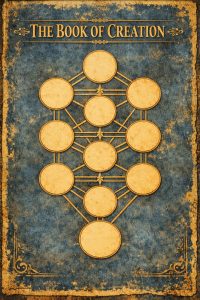
27) When the point of will to receive receives a fixing to receive not for itself but rather in order to give to the Creator, it expands, that is it attains ten different wills to give in different paths. These ten wills are called "ten sefirot (emanations)". Therefore in every spiritual partzuf( a will to receive in order to give) there are ten sefirot (emanations): Keter, Chochmah, Binah, Chesed, Gevurah, Tiferet, Netzach, Hod, Yesod, and Malchut.. The first three sefirot: Keter, chochmah, and binah are called the "head of the partzuf". The seven lower sefirot: chesed, gevurah. tiferet, netzach, hod, yesod, and malchut are called the "body of the partzuf".

All the feelings that a person feels he receives with the same will to receive. But with the will to receive for its own sake, a person is able to understand only a tiny portion of the existence which he calls "my world".

When a person through his study of Kabbalah decides no longer to use his will to receive, rather to attain and to use only the will to receive in the condition to give, similar to the Creator, in this measure of fixing his will, he begins to feel the real existence that surrounds him. This existence is called "revealment of the Creator."

All of Kabbalah teaches a man to reach a feeling of true existence, It discusses the revelation of the Creator to man. Both in the revealment of the Creator to man, and in Kabbalah there are two parts:

"Hidden Torah"- What is revealed in the first three sefirot: Keter, chochmah, and binah, or in the head of the partzuf. This portion includes "the maaseh mercavah" (the divine chariot) and "maaseh beraishit" (act of creation) and is permitted only to be revealed through hints from the master to the student.

Ta'amim of the Torah"- What is revealed in the lower seven sefirot of the face or the body of the face, this is permissible to learn and is a great mitzvah to reveal it to everyone.

When a person reaches through the study of Kabbalah, his first revelaltion of the Creator, his black spot expands and fills with an upper light. In his feeling of the Creator, this widening already includes ten sections from the ten sefirot, which are called sefirot because they give light.

This partzuf that is born through a person's feeling of the Creator is called "neshamah". The lights which are revealed in the body are called "Ta'amim" or "Ta'amei Torah", of which the reward for a person who receives them has no limit.

The will to receive of the "black spot", is called "the point of this world", in which it a person feels no existence of the Creator of the world. There are 125 levels of revelation of the Creator, in each of which the will to receive is fixed gradually until it reaches the proper will which is completely directed towards giving, then the Creator is entirely revealed. The levels of revealment are called "worlds" . There are five worlds from above to below. Adam Kadmon, Atzilut, Briah, Yetzirah, Asiyah. In each of them there are five partzufim (pl. of Partzuf), in each partzuf there are five sefirot. So in total there are 125 levels of reperation on the way to receiving a complete fixed will.

The higher head level at the end of the "world of asiah" is already included in "hidden Torah", that is forbidden to reveal, and the" body" of the world of "atzilut" is included in "ta'amei ha Torah" that is permissible and fitting to reveal

28) Kabbalists reveal only that which is permissible to reveal and hides that which is forbidden to reveal.
A Kabbalist receives a reward for hiding "hidden Torah" from others, and revealing "taamei ha Torah" to others.

30) Therefore in all works of Kabbalah there is no mentioned of "hidden Torah" and all the printed books include only "taamei ha Torah" which is a great mitzvah to reveal. To the extent that upper lights are revealed to the public, revelation of the Creator increases in the world. This is called the "coming of Messiah". The "hidden torah" is given over only to individuals under very strict conditions.

31) Why is the coming of the messiah dependent on the spreading of the wisdom of Kabbalah to the masses?

32)When a person is involved in Torah in order to receive a reward, that is, he anticipates a return for his effort, the fear and love in his labor of Torah and mitzvot becomes a medium in order to receive that reward. His fear is that he will not receive a reward ; his love depends on receiving a reward. If he does not receive the reward the love will cease.

If a person conducts himself this way, he's not using the Torah for its purpose, because the Creator gave the Torah as a medium to fix the evil inclination and to achieve the ultimate purpose of creation.

33)According to what is stated in point 11, it is forbidden to begin studying Torah "not for its own sake" with the intention of only to receive a reward. It is permissible only to engage in Torah when it's used as a intermediary to reach "for its own sake" then the light of the Torah can fix him "and return him to good", to be similar to his Creator. Only on this condition is his activity of "not for its own sake" considered a intermediary and is called an aspect of "the world of asiah of kedushah (holiness)".

However if his faith is not complete and his involvement in Torah is not for the reason that the Creator has commanded him, the light of the Torah is not revealed to him, and in place of "light", revelation of the Creator, he receives "darkness", concealment of the Creator, and he enters the domain of the "klipot (evil husks)".

That is, when a person wants only for his own good, the holiness of the Torah goes over to the side of evil, to the klipot.

34)There are two orot(lights) in the partzuf (face)
Ohr Chassadim (Light of bestowal)- the intention to give to the Creator.
Ohr Chochmah-revelation of the Creator to man.

The condition to merit to spirituality is that a person should bring upon himself the "Ohr Chassadim", which come through learning Torah “not on the condition to receive a reward”. Through the "Ohr Chassadim" a person brings upon himself the "Ohr Chochmah, then the power of "moshiach" is revealed to him, that is "moshech" (brings him) from corporeality to spirituality. Therefore everything depends on his involvement in Torah "for its own sake" which can bring him to the "ohr chassadim" within which the "ohr chochmah" is enclothed.

35) At the time when one is spiritually exiled that he is still learning Torah "not for its own sake", if he learns with the intent that his "not for its own sake" he will come "for its own sake", the Creator will help him. Then through the darkness he can come to a revelation of the Creator through his power of "moshiach", the ability to arouse him to the level of "for its own sake".

If however the involvement in Torah is "not for its own sake", lacking faith and unable to bring to the level of "for its own sake", then there won't awaken in a person the desire to know his Creator. Because the purpose of his Torah is only for himself, he'll be satisfied merely with physicality. Since he isn't interested in learning "for its own sake" the power of "moshiach" will not be able to effect him, and his learning will remain purely physical. Though the power of "moshiach" brings a person from corporeality to spirituality, it is only if their learning "not for its own sake" is with intention to reach "for its own sake".

There are many who learn revealed Torah, and despite that don't succeed in reaching "for its own sake", they still don't begin learning Kabbalah which can bring them to "for its own sake" which has been stated. The reason they can't come to Torah "for its own sake" is not because the Torah lacks light which can arouse them to this level, but rather they don't have the ability to bring this light out of the Torah.

36) The condition that the Ohr Chassadim (light of kindness) will come to the person is only if he studies Torah not in order to receive a reward, rather only to give pleasure to his Creator. All the time of exile and pain that a person suffers are only in order to awaken him that he should work to merit to Torah "for its own sake". As soon as he merits this, right away he will merit "Ohr chesed and ahavah" (light of kindness and hapiness), which will bring him to a complete individual redemption.
General mankind can reach the level "of for its own sake" only through the study of Kabbalah, because only it is sufficient to help those of smaller intellect, since all of the layers of the wisdom of Kabbalah, directly describe the Creator. On the other hand it's much harder to reach this level through revealed Torah, which one can only reach "for it's own sake" through great toil.

Therefore he who thinks that he's learning Kabbalah to know worlds, sefirot, angels, partzufim,like someone in Torah that is just learning in order to increase his intellect, is making a very serious mistake. Through the Kabbalah a person reaches the light that turns a person towards the good, the "Ohr mashiach (the light of messiah)" which brings a person to spirituality and an inner spiritual redemption.

37)They say that from the study of Kabbalah a person can go crazy and abandon the fulfillment of mitzvot. These things happened in the past when people took the study of Kabbalah in a physical form, and consequently harbored all types of strange images in their minds.

Since the works of Kabbalah are filled with spiritual concepts, the one who studies without the right intention imagines in these spiritual ideas all types of physicality. Consequently many attempted to learn Kabbalah and afterwards abandon it without success.

Therefore only the proper type of learning of Kabbalah, that is from the writings of the Ari Za"l and from the writings of the Ashlag, and only through the proper teacher can assure the learner that he will gather the spiritual concepts in the proper, simple and clear form..

38) Why is the involvement in Torah and complete and proper devotion called Torah "for its own sake" and devotion that isn't appropriate called "Torah not for its own sake"?If the reason is that a person who learns Torah is obligated to intend to give pleasure to the Creator, then the proper form of learning should be called "for His sake", instead of "for it's (the Torah) own sake"?

39) The Torah brings a person to spiritual life called "chayim" (life). If a person doesn't intend to learn Torah "for it's own sake" for life, and studies "not for it's own sake", this is called death. Therefore Torah which brings a person to spirituality is called "giver of life", but Torah which doesn't bring a person to spirituality is called the "giver of death".

40) It's written " I have toiled and I have found' believe, I have not toiled and found- don't believe." At first glance it's difficult to understand this. Toiling means working in order to "acquire" something, where as "finding" implies receiving without any effort. Than how can it say "I have toiled and I have found"? Because if toil was involved it should have said "I have toiled and I've acquired" or "I have toiled and have merited" but not "I have toiled and I've found"?

41) It is written that we find the Creator in the Torah ; the Creator hides himself in the Torah.Shouldn’t it be however that He hides himself in physical things, and reveals himself in the Torah. How is it written that Hashem hides himself specifically only in Torah? It's also written that the Creator hides himself, such that one must pray for Him to reveal himself. Why does He hide himself? And why must we ask of Him to reveal himself?

It's only possible to find the Creator in the places where He hides himself. If we say that the Creator only hides Himself in the Torah, than this is a sign that his place of concealment is only in the Torah.

42) We don't understand the Creator's providence over us. This is the main cause of distance from Him, and causes us to transgress His Will ; and the cause of all our anguish and our stumbling into intentional or unintentional transgressions. If we were to remove this cause we would relieve ourselves of these troubles and be able to truly cling to Him with all our hearts.
43) If the Creator would reveal Himself to us in such a way that who ate something forbidden would immediately choke, and all who perform a mitzvah would have immediate pleasure, who would even consider transgressing knowing that his life is at stake? It would be like running into a blazing fire! Who would than abandon the Will of the Creator, that is mitzvot, rather we would fulfill the Torah quickly and zealously, like a person who's unable to separate himself from a physical pleasure that has been given to him. . If it were revealed before us the way that the Creator supervises the world we would all be completely righteous people!

44) It is clear if the providence were to be revealed, we would all be completely righteous people clinging to the Creator with the greatest of love.

Many try to cling to God and only a few individuals actually succeed. Because the reward of a Mitzvah is not revealed, and neither is the punishment of one who transgresses. Rather things appear quite the opposite. Therefore understanding the providence of God is the reason for all the good, and the lack of understanding is what causes all the bad and evil.

45)The feeling of providence comes to a person in two ways:

"concealment" panim (hidden faces)" which is divided into two:

single concealment or
double concealments - that is, concealment within concealment "gilui panim (revealed faces)" divided into two:

(Revelation of) Supervision of reward and punishment
(Revelation of) Eternal providence.

46) When the Creator hides His face a person feels this in the form of pain and difficulty as he has either a single or a double concealment.

"Panim" of the Creator: When the Creator behaves with "revealed providence". He does good for a person. This is when His Face is revealed to him. He then knows and understands his Creator, in that He's good and giving good, and recognizes Him like one who sees a close friend and can immediately identify Him.

48) "Back” of the Creator: When He behaves toward a person with "hidden providence" a person receives pain because that face of the Creator, which is trustworthy to pay, is hidden from him. This is a person who sees his friend from behind and he is in doubt if this is actually his friend. There are two types of concealments or hidings "one concealment”: When a person receives pain and suffering, this means that the Creator is hiding Himself, namely His goodness, and only his behind is revealed. Than a person has to strengthen himself in faith, to be careful from sin, because it's hard to know the Creator from behind.

49) "Concealment inside of concealment" or "double concealment": The abundance of pains cause that even the behind of the Creator doesn't become recognizable to the person, that he doesn't believe that this is the Creator that is angry at him and is punishing him, rather he attest it to an event or nature. This person comes towards rejection of the providence of the Creator as the One who rewards and punishes, and this is already called "avodah zorah" idol worship.

50) In "One concealment" a person still believes in the providence over reward and punishment and that all his suffering comes from that he's not clinging to the Creator.He still sees the Creator, but only from the way of behind, that has brought him suffering. Therefore it's called "one concealment" meaning concealment of the face of the Creator but not His behind.

51) From here the two aspects of understanding hidden providence are felt in a person "once concealment" or "concealment in the midst of concealment".

One concealment or concealment means concealment of "panim" (faces) but revealed "achorayim" (behinds). A person believes that the Creator causes him his difficulty as a punishment for a sin, even though it's hard for him to always recognize his Creator from behind, and he comes to as a result to doubts and sins, he is still called a "rasha sheynoh gamor (not a complete wicked man)". We don't consider him completely wicked since these sins come about as a result of great suffering, and they are considered unintentional sins, and he still believes in reward and punishment, but since his pains are so great it causes him to have doubt. The concealment is in this that he doesn't see that the Creator is "good and gives good", but he believes that the Creator behaves with him with hidden providence.

52) Double concealment: Even the behind of the Creator is hidden from the person, because he doesn't believe in reward and punishment. Then the sins are written as intentionally and he is considered a complete wicked man, because he thinks that the Creator doesn't supervise at all which constitutes idol worship. The concealment is so great that he doesn't even realize that the Creator has providence over the "concealment".

53) All the service in fulfilling the Torah and mitzvot in the path of free will occurs essentially at a time of concealment. A person at this time must do everything in his power to behave as if there is revealed supervision, to overcome, to choose to believe, and to choose that the Creator is watching him Since the providence isn't revealed and he sees his Creator as His face is hidden, like a person who sees his friend from behind that could easily have a doubt if it really is his friend, so too he may think that what has occurred in his life is from some random circumstance or event, and not from the Creator.

Therefore the choice is always in the hand of a person: to do the will of the Creator or to transgress. Because the suffering that he receives brings him to doubt the providence of the Creator on him. So a person is found in a state of great difficulty and struggle to believe in the providence of the Creator. On this period of time it's written: "All that's in your power to do you should do", meaning specifically in this time when things are hidden a person must overcome his nature to strengthen his faith to accept that the Creator supervises the entire creation only in the way of "being good and giving good". Because a person merits to "Face revealment" to see completely clear how the Creator handles the world in the way "of being good and doing good", only after he has toiled and has done all that's in his power to believe from the position of free will, that that was the truth even during the period of "behinds". According to the greatness of anguish for a person that he needs to overcome in order to believe at the time of concealment, that the providence of the Creator is always good. greater is his reward as the Creator reveals to him His face and all that is good.

"Doubts",-that a person is in doubt if the Creator really handles the world in a good way? This who person has hardships needs to say to himself that the intention of the Creator in handling the entire world is only in the way of "being good and giving good" and all of his hardships are only for the good..

54) After the Creator has seen that a person has completed all his labor and all that was in his power to act with his freewill to strengthen himself in the belief that the Creator controls the creation constantly in a completely good way, than the Creator helps him and he merits to open attention from the Creator,"Face revealment" This person sees that everything is run with absolute good, from this he's aroused to great love for the Creator, and than he merits complete repentance, that he can cling to the Creator with all his heart, and soul, all as a result from his realization of the open guidance of God.

55) The revealed providence and complete repentance come to a person on two levels:

56) The first level of revealed providence is the complete understanding of reward and punishment.

Not only includes the understanding that all the reward for mitzvot is in the world to come, but also a realization of the great pleasure one has in doing the mitzvot in this world. Not only does one realize the bitter punishment that comes from every sin after his death, but also feels the bitter taste of a sin that's done here in this world.
Therefore, the one who merits to open providence certainly cannot sin anymore, similar to one who certainly wouldn't cut off his limbs and cause himself great suffering. Likewise he will take any opportunity to perform a mitzvah, as would any normal person partake in a great pleasure that is offered to him.

57) Complete repentance is when the Creator Himself testifies that the person will no longer sin. Because a person cannot be certain that he won't sin until he merits to an understanding of reward and punishment, meaning the revealed hand of the Creator. This revealment of the Creator 's ways is, "redemptions of the Creator" or "Testimonies". "Creator's redemption" refers to the revealing of the Creator to man. And when a person reaches an understanding of reward and punishment, he is guaranteed that he won't sin further.

58) This repentance is called "repentance from fear". For also the one who returns to his Creator with all his heart and soul, the guarantee that he won't sin further comes from his feeling of the pain and suffering, that come from his sins.He is sure he won't sin because he doesn't want to cause to himself great hardship. Therefore his repentance comes only from fear of sin, and so it is called "repentance from fear".

59) The one who does repentance from fear merits that all his intentional sins become unintentional, since the intentional sins resulted from the double concealment when the Creator had become completely hidden from the sinner.
However the state of one concealment, when he believed in reward and punishment, but nevertheless from the great hardships he had at times sinful thoughts, can be compared to one who sees his friend from behind, and is likely to think that maybe it's not his friend. These sins are also considered unintentional since he didn't believe in reward and punishment.

60) Therefore after he has merited to repentance from fear to a clear understanding of the system of reward and punishment, until he is certain that he won't sin, he becomes removed completely from the double concealment. Now he sees that there is a system of reward and punishment, and it's clear to him that all the hardship and darkness that he experienced was a punishment for all of his sins.

He sees that in the past he made a bitter mistake that he thought the Maker was not controlling the world and now he sees that the Creator was always managing the world in the way of "being good and doing good".
Thusly he has uprooted his intentional sins, but not completely as they are considered now unintentional. Similar to the sins that he did at one concealment which are considered only unintentional, because he fell as a result of confusion and great hardship which remove a man from he semblance of mind.

61) But from the first concealment he underwent immediately proceeding his repentance, he doesn't repair with his new repentance. Left over is all the concealment and the unintentional sins that he committed, without any change or fixing, because than he also believed that all of his suffering came from his sins. So he only merits to fix from the time of his repentance and onward but not from before.

62) Therefore he's still not called a complete righteous person . Though since he has merited to the revealed face of the Creator and sees that He is "good and does good" from this time and on he can be referred to as a righteous person, being he has realized the righteousness of Providence as it is in truth., that the Creator behaves with people in the epitome of good and completeness, as He is good to both good and bad people.

63) Since he merited to understand revealed providence, that he realizes that the Creator overlooks and takes care of both good and bad, from this point and on he can be called tzadik. But until he reached this point he was not able to be called tzadik (Righteous) because he had thoughts against the Creator. But since he had sinned in the past he is called a "tzadik sheyno gamor" (incomplete righteous person).

64) He is also referred to as a "benoni" one who's in between. Because after he has merited to repentance from fear he becomes enable through his devotion to merit to repentance from love, that he'll merit to be called "tzadik gamor (a completely righteous person).

65) It's been explained that the first level of understanding revealed providence-is the realization of reward and punishment to the extent that the Creator will testify that this person will no longer sin further.This is referred to as repentance from fear, when the intentional sins become unintentional, and he is then called "tzadik sheyno gamor (incomplete righteous person)" or "benoni"(person in between).

66) The second level of understanding open providence is the understanding of complete, true, and eternal nature of providence. The realization that the Creator intimately watches over all his creatures in the aspect of "good and giving good" than a person is called "tzadik gamor (complete), and this repentance is called "repentance from love", when he merits that his intentional sin become mitzvot.

There are the four aspects of understanding providence, that a person must path through: The first three aspects :double concealment, one concealment, the understanding of reward and punishment they are preparations that through them a person merits to the fourth aspect, an eternal and true understanding.

67) Why is it not enough for a person the third aspect, the knowing of reward and punishment, that a person merits that the Creator testifies on him that he will no longer sin? Why is he called a "benoni" or "a tzadik sheyno gamor" that these names indicate that his devotion is not fitting in the eyes of the Creator, and is still found to be lacking in Torah and mitzvot?

68) How does the Torah command us to love, something which isn't in our control, since love is something that doesn't help force? But from the fact that a person performs the other 612 mitzvot properly he'll automatically begin to love the Creator. Therefore it's considered this mitzvah as it is in the hand of man to perform it. Because if he's able to force himself to perform the other 612 mitzvot, he will than be able to also perform the mitzvah of love.

69) But if there is no medium for which a person to perform the mitzvah of love except through the other 612 mitzvot, than why should it be numbered as a mitzvah, and not just be considered a byproduct of the other mitzvot?

70) All the tendencies and characteristics in a person that he has to serve someone else are necessary to serve the Creator. Originally they were implanted in a person soley for the purpose of serving the Creator, which is the meaning and end of all man.. Rather in the meantime a person has an entire world in order that all these tendencies and natural characteristics will be opened and completed, as through a person's involvement with society these characteristics become refined so one can serve the Creator with them. Therefore the existence of mankind is neccesary for the individual as they are the ones who open and prepare his tendencies and characteristics in order they should be fitting for his spiritual devotion.

71)Therefore we need to understand the essence of love of the Creator in the context of love between human beings, which necessarily also the love of the Creator is influenced by these characteristics. There are two types of love between people which divide into four:

72) Love that depends on something, love stemming from immense good, pleasure, and purpose that he receives from his friend . In this there are two levels:

Before they knew and loved one another, they had done harm to each other, but they don't want to remember, "because on all sinners love will cover". Therefore if they want to deprive pleasure from the love each one has to be careful not to remind the other of his wrong doings.

Or they never did harm to one another and they have nothing to remind each other.

73) Love that is not dependent on anything, that they see each others good points in a way that goes beyond normal measure which from it cling their souls together with great love that has no end.

It also has two levels:

a) Love that's dependent on something-before that he knew all his ways and action of his friend amongst people. For it is than tested if the love is absolute, because he sees that the actions of his friend with others causes his friend damage and problems. which would blemish his entire image of his friend, and ruin their love. Rather he still has not seen his friends involvement therefore there love is still complete.
b)Love that is not dependent on anything-this love comes from knowing all the ways and actions of his friend, having checked and found that they are good beyond measure, and far surpass beyond measure from any of his peers, thusly it's referred to as "an absolute and eternal love".

74) These four characteristics of love that are found between man and his fellow man, exist also between man and his Creator. Rather that the love between man and his Creator works in a cause and effect manner: That a person merits first to "a love that depends on something". And after that he merits one type of love in completeness, he will automatically move to the next level, until he reaches to "eternal love".

75) But how can a person reach the first level of love which comes from the great reward he has received from his beloved, at a time where there is no reward in this world?

Every person has to go through the two levels of "face concealment" that the face of the Creator, his good side, from which the "way of good is to bestow good", is hidden from him, therefore he than receives the difficulty and suffering. All his involvement in Torah and devotion is in the way of freedom of choice takes mainly during the time of the concealment of the Creator, because then he feels no love to his creator.

If this is the case how does a person reach the second level of love that depends on something? Because in order to reach this type of love a person needs to see that the beloved does for him great and wonderful things since the past until this day, and caused him no wrong. All the more so how can he reach the third level or the fourth level?

76) On this it says "your world you'll see in your life and your end in the world to come". Why doesn't it say "your world you will accept in you life" instead of "you will see"? And why is a person supposed to see his life in the world to come in this world.?

77) What does this mean that a man sees the world to come in his life? For sure with the physical eyes you see nothing spiritual! Also the Creator doesn't change the laws of nature, because he already set them and they are very successful to reach the proper end, in order that a person through them should merit to cling to the Creator. If so how can it be for a person to see his world in his life?

78) This seeing comes to a person through "you shall open your eyes to Torah". Therefore it is written: "Even if the entire world will say to you that you are a tzadik, you should be in your eyes like a wicked person.", regard yourself as wicked person and don't trick yourself by all those in the world who call you a tzadik. Because according to this a person will not merit even to the level of "Tzadik sheyno gamor (incomplete)".

79) But if a person knows himself in truth that he already fulfilled the entire Torah and all the world realizes this, why is this not enough, why must he consider himself wicked? This is because he's lacking the level of "open your eyes to the Torah", to see his world in this life.

80) The four levels of apprehension of the Creator's providence upon man are: Two from the aspects of concealment panim. And two from the level of revealed panim. Intentionally the first levels was made in hiding that a person shouldn't see that the Creator bestows good and pleasure, rather he see as if it works in s a different way. This is in order that a person should have a place for toil and freedom of choice, that from this comes to the Creator great pleasure from the service of man.
81) However "face concealment" is incompleteness and is only considered a passing stage that from it a person reaches to the desired completion, but all the reward that a person merits from his toil in Torah and his free will come from the time of "face concealment " as than a person has difficulty in trying to strengthen himself in faith and fulfillment of the will of the Creator. All the reward of a person is measured according to the hardship that he suffers from the performance of mitzvot and Torah at the time of free will.

82) Therefore it is necessary for each person to pass this stage of "face concealment". When he completes it, he merits to open providence, to a revealment of the face of the Creator, that he feels Him, like He is "good and that he gives good". Before he reaches this stage of openness of His face, he sees only the behind, and he doesn't see the good that comes from the Creator. Despite that he believes that the Creator handles that worlds in the way of "good and bestowing good" it's impossible that he won't come to sin, because a person can't always be in a state of darkness and arise himself to a level of faith to declare that the Creator is always good and doing good.

It's not in the hand of a person to fulfill all the 613 mitzvot, because the mitzvah of love doesn't come in force or against his will. Even if a person will force himself to perform the will of the Creator in the other 612 mitzvot this is not the best situation, because such fear is not lasting as one can always complain to the Creator, that perhaps the time has come to merit to pleasure kindness.

83) The first level of "revealed faces" which is the understanding of fear and punishment, comes to the person through "redemption of God", that he merits "to open his eyes in Torah" with complete understanding. And all the mitzvot he performed through great labor, he now sees the reward for them, that has been placed aside for him in the world to come, and also the great damage caused by his sins.

84) Even though he still hasn't reached the reward, because in this world there is no reward. Nevertheless it is enough for him the understanding that from this point on he can feel the great pleasure in performing each mitzvah, because anyone who is ready to receive a reward 'it is as if he has already received it".

85)Naturally it's understood that open providence will testify from then onwards a clinging to the Torah and mitzvot with all his heart and soul, and because he feels the pain of the sins, he will run from the sins, like from a fire. Though the fire still has not reached him, he is quick to run from it, so to does he run from hardship that is on its way.

And even if he hasn't reached the level of "complete tzadik", because he hasn't reached the level of repentance from love, nevertheless the clinging to Torah bring him slowly to repentance from love where he can perform all the 613 mitzvot with love and be a "complete tzadik".

86) And why is it written: "Even if the whole world says to you that you are a tzadik, you should be in your own eyes like a wicked man"? Behold a person know who he is! Why must he search and know "if he is a tzadik gamor (completely righteous)" Why must he at all be a tzadik gamor? And if he is obligated you be a tzadik gamor, why does it say "he must always be in his eyes like a wicked person"?

87)Until a person doesn't merit to "opening his eyes to the Torah", with a complete understanding of reward and punishment, that he doesn't need to believe that he will receive a reward in the world to come, rather he sees and feels this with his senses, he is not able to trick himself and to consider himself as a tzadik. Because he feels that are lacking him to two of the must inclusive mitzvot of the Torah: "fear" and "love".

'Fear"-that the Creator testifies that he will no longer sin because of his fear of punishment, when he will merit to a clear understanding of reward and punishment, which is the first level of gluey ponim (revealed faces) that is reached after "opening of the eyes in Torah".

"Love"- it is out of the realm of man, because it's dependent on the "understanding of the heart", that is to say in understanding the Creator, that labor and force don't help in its attainment.

88) Therefore it's written :"even if the whole world says to you that you are a Tzadik". Because the mitzvah of "love " and :"fear" are given only to the person himself, and there is no one in the world, that is able to determine them and to know them other than himself. But when other people see him, performing the other 611 mitzvot they assume he has also fulfilled these two other mizvot of "fear"and "love". But no person can enter into the heart of his fellow man. It's possible to see charity, kindness, study of Torah, but if the reason behind the mitzvot is love of the Creator, this no person can know. Because it's possible a man can do few mitzvot and learn little but he does it from love,and the opposite also hold true.

Since the nature of man is to believe what people say of him, he is likely to be mistaken and think that he's already a tzadik, therefore a person must always consider himself wicked. However he himself is obligated to seek himself to know in himself, if he is a tzadik gamor, meaning he has already merited to love and fear, if he already feels that there is reward and punishment for his actions in this world? Only to the extent that he feels this he's not called a wicked person!

89) Now it's understood how a person can reach the first level of love, even though he will not in his life receive a reward for a mitzvah, rather only in the world to come.

To see, to know, and to feel clearly the reward for a mitzvah, that will come in the future in the world to come, a person must realize in his lifetime through his understanding in Torah. Because than at least he has "a love that depends on something", that he loves the Creator because he feels in this world the future reward that he's going to receive in the world to come. This is the first level of leaving the concealment panim to come to giluey panim when he feels the reward of the miztvot and the loss caused by sins, in a way that the Creator testifies on him that he will no longer sin. At this level He gives him to feel the great pleasure that he will have in reward for his mitzvot and the pain that will come if he sins.

Though a person feeling what will be his portion in the world to come, than he is certain, that as according to how far he breaks away from this world from its pain and he chases after pleasure, so he shall run after Torah and mitzvot, and run away from sin.

90) Now he labors in the keeping of Torah and mitzvot amidst a love that depends on something that come to him from knowledge of the reward to be received in the world to come, "because all those that are standing to receive it is as if they have received". Afterwards a person moves and merits to the second level of "Face revealment" that one realizes the control of the Creator over the world in an eternal and true way that He" is good and does good" to both good and bad as he merits to a "love that isn't dependent on anything", that he loves the Creator even though he receives nothing, then his intentional sins become merits to him. From this point and onwards he is referred to a a "tzadik gamor"(a complete tzadik) because he's able to fulfill the entire Torah out of fear and love. and he is called "gamor"(complete) because he has the 613 mitzvot in completeness.

91) Also the one who merits to the third aspect of providence, in the providence of reward and punishment, and the Creator has already testified on him that he won't sin anymore, despite all this he is still called a "tzadik sheyno gamor", because he is still lacking one mitzvah, the mitzvah of love, and one isn't complete until he has all the 613 mitzvot.

92)From here it's understood why the Torah obligates us to the mitzvah of love, despite that love is something that is felt in the heart, if a person toils he can reach the mitzvah of love. That is why it says from "not for it's own sake" .lacking love, you can reach "for its own sake", meaning love.

93) It's written that if a person says to you "I have toiled and I've not found"-not to believe. "I have not toiled and I've found"-not to believe. "I have toiled and I have found" -to believe. Why does it say "I have toiled and I have found"? Does not toiling imply acquiring something and finding implies receiving something without toil and understanding? It should have said, "I have toiled and I have acquired".

"I have toiled and I have found", implies that a person finds the revealment of the Creator only through toil in Torah. The "toiling" is in Torah, and the "finding" is in the revealment of the Creator's providence, that this is something else entirely different? Therefore it's not written "'I have toiled and I have merited" or "I have toiled and I have aquired'-believe", the intention is on something extra, the revealment of the face of the Creator and his providence. From the lackings of a person he thinks that the world should be managed in a different way. Therefore after he merits to the revealment of the Creator he sees that the Creator always managed the world in a good way, until he can't imagine how it could be any better. Than he has no doubt that the Creator is "good and gives good".

94) Therefore it is written: "I have not toiled and I have found don't believe", that from this it's possible to think, that anyone who seeks the Creator right away finds him, that in order to find the Creator one must not toil. Therefore they warn that toil is essential, so it is written: "I have not toiled and I have not labored" -don't believe.

95) The Torah is called life like that is written: "See I have placed before you today life and good-choose life", "they are life to those who go out".Because the Creator is the source of life and good therefore the life comes to those who cling to Him; those who toil and find the light of the face of the Creator in the Torah, that they merit to "open your eyes to Torah" to understand the true way that the Creator guides the world which is only to give good.

At the time that a person realizes there can be no better way of running the world, than it's called that he merited to the "light of the living king".

96) A person who has merited to this is not able to separate from the fulfillment's of mitzvot, like a person who cannot separate from a great pleasure that has come to his hands. And likewise he runes from sin, like from a fire. And upon him it says, "You are a clinging to the Creator your God while living on this very day", because the love of the Creator comes upon him like a natural love. He is like a branch connected to its root, that the life comes to him without interruption from its source, and for this the Torah is called "life".

Without toil a person is not able to find the Creator, to reveal His face? Why someone who seeks the Creator finds him without toil? Someone who clings to the Creator merits to life, clinging means that man becomes similar to the Creator in the form of a bestowal, that just as the Creator gives to man, so to a man gives to the Creator.

At the time that a person has intention for the good of the Creator, he feels the taste of Torah and mitzvot, from the power of this that he wants to do good for the Creator. Than he merits to a revealment of the Creator called reward and punishment. Reward this is the pleasure that he feels at the time he intends to do the mitzvah, for the sake of heaven. This that he can give pleasure to the Creator for him is greater than all the pleasures of this world. And he feels pain at the time he cannot perform mitzvot.

To reach this level is only possible through a revealment from above called the "light of the face of the living king" this light that comes from above is called, "for its own sake", like that's written, "The one who comes to purify they help him with a new soul", in a new soul called, "the light of the living king", automatically all his intention is for the sake of heaven, for the good of the Creator, that his pleasure is from this that he gives pleasure to the Creator, and his pains are from the times that he cannot give pleasure to the Creator.

Therefore he can no loner sin, because if he doesn't have intention for the good of his Creator, he loses his soul that he has received, and he returns to being a simple man. But when he thinks for the good of his Creator, he feels all this pleasure. It comes out from this that toiling in Torah means that through the Torah a person reaches to cling to the Creator that he directs all his action to the Creator, than he merits to "the light of the living King". And than he has a natural love, like the love a person has for food and sleep. Natural love comes to a person because he is connected to the Creator and he receives from it "the light of the living King".

97)Therefore the person who labors in Torah has to be "for its own sake", in order that he shall merit from it "life". For this matter the Torah was given as it says, "And you shall choose life". Therefore a person perforce at the time he is learning Torah must put his mind and heart to it and toil in it to find it the "light of the living king", meaning a clear comprehension of revealed providence, that is called "the inner light"". And every person has this ability! It is thus written "from darkness he will find me"," I have toiled and have not found"- don't believe, that there is nothing lacking to a person except for effort. Therefore all who engage in Torah "for its own sake" it becomes for him a "giver of life"- only that he should place his heart and mind to finding life. So when one studies Kabbalah the effort that he needs to give is to reach a clinging with the Creator, to merit to life

98) Therefore it is in our hands to reach the mitzvah of love. For it is in the hands of any person to toil in Torah, and till he reaches a revealment of providence, that he sees that the Creator only desires to help and do good for him, like that it says "I have toiled and I have found-believe". When a person reaches this realization of providence automatically he receives love for his Maker,, and he no longer needs to toil and to force himself, because this love is naturally aroused within him.

99) It says, "all who study Torah not for its own sake, his Torah becomes a giver of death", that the Creator specifically hides himself in the Torah. Generally, one thinks that the Creator hides himself in the trappings of this mundane physical world, that they are outside of Torah, and not Torah itself, and only in Torah is his place of revealment. The question is asked "Why does the Creator hide himself and want that we should seek and find him? Why doesn't the Creator reveal himself to man? Why was it necessary for him to hide in the beginning?".

100) the Creator hid himself in order that a person should seek His revealment. There are two types of concealment panim, one concealment or a double concealment. the Creator doesn't want to remain in a state of concealment from a person rather he hid himself intentionally with the purpose that a person should try to reveal His face and find Him, because the person can only merit to the "light of the living King" from a state of darkness, the entire concealment serves as a preparation for the revealment.

If a person needs something he is embarrassed by "free bread".Likewise if the Creator would give to a person only good and pleasure, a person would fell embarrassment.In order that a person should receive all the pleasure without embarrassment, the Creator hides himself., that a person shouldn't see that the Creator behaves with him in a good way. This is also in order that he'll fix his ways so that he can act completely for the good of Creator and not for his own purposes. Than all the pleasures that he will receive from the Creator will be with the understanding that the Creator wants that he should receive this pleasure and that the Creator Himself take pleasure when a person receives from Him good.. When a person reaches this level the good and the pleasure in this world become revealed to him.

Concealment was made in order that a person should search out why he doesn't feel the good and the pleasure. After searching it will be made known to him the reason for the concealment, that his intentions were not for the Creator, than he will do good deeds, subsequently the Creator will be revealed to him.After this revealment he doesn't have to suffer any embarrassment, since he now serves the Creator without ulterior motives.

101)Therefore the Creator hides himself in the Torah so that even someone who is involved in Torah and good deeds has a hard time judging the Creator favorably, since according to his estimation he's not fitting for the hardships that he suffers, even worse he see that those who are much less devoted than him don't suffer like to his extent.

Therefore the entire time that a person is involved in Torah and good deeds and doesn't merit to revealed providence, the Torah itself hides the Creator from him. Thusly it is written that the Creator hides himself in the Torah. It comes out from this that someone who doesn't learn doesn't suffer so much, but a person who learns a great deal does suffer. Not only does he suffer but he blames the Creator for the pain that comes on him since he is found in a greater concealment.
But all the suffering that a person has from the Torah they are all announcements that the Creator himself is calling him, through that it wakens him to get ready, to hurry, and to give the amount of effort that is asked of him, in order to merit him to a revealment of the Creator, as this is what the Creator desires.
From here it follows he who learns more feels more the concealment, and sees to a lesser extent that the Creator manages the world. Because if the Creator manages the world in the way of "good and giving good" why does he do good for others and not for him? Why doesn't he feel the revealed face of the Creator? Why does it seem to him the one who learns less has an easier situation?
The one who learns properly realizes all these pains are in order that he should learn more and to teach him that he really isn't intending to do good for the Creator. After he understands this he will be able to open his eyes to Torah and to open providence, as he will see then that the Creator manges the world in a way that is good for everyone.

102) "All who learn Torah not for its own sake the Torah becomes a giver of death". Because not only will he not go out from the concealment to revealment, since he has no intentions of reaching this level, but also the Torah he learns just adds to the concealment. This is the aspect of death since he is uprooted from his root completely, meaning that he isn't able to believe that the Creator controls the world. All this Torah that he has learned, which is the aspect of death, came as result of his not learning for the Creator, but at the time that he'll have the proper intention, he too will merit to revealed faces that will bring him true good and pleasure.

103) Therefore there is "hidden Torah" and "revealed Torah". "Hidden Torah" has its name because the Creator hides himself in the Torah. The "revealed Torah" is called that the Creator reveals himself in the Torah. The first level is hidden Torah, that in the beginning a person learns Torah while the Creator is still hidden within it. Afterwards one learns the revealed Torah, meaning the Creator already becomes revealed. Therefore the kabbalists say as it is also written in the prayer book of the Gaon of Vilna; "The Torah begins in secret and ends with simplicity", that a person toils in the beginning in the hidden Torah, that is secret, and he merits through it to revealed Torah, which is the simple meaning.

104) How is it possible to merit to the first level of love, love that's dependent on something, which is based upon a realization of the Creator's benevolence, if there is no reward for mitzvot in this world. However through the opening of one's eyes to Torah a person can feel this reward immediately in this world, he can also feel the general encompassing good which was part of the first thought of Creation to "to give pleasure to his creatures". This person can grasp in the present the reward that is to be received in the future, and from this great good that he now grasps, there is revealed between him and the Creator a new wonderful love, that comes to him constantly without any physical barrier.

105)All those pains that a person suffered at the time of concealment when he didn't feel the Creator properly, rather he just had faith in him, even though he doesn't want to remember those pains as it states on "on all sins love covers" nevertheless they prevent him from reaching the level of love because as soon as he recalls them they ruin his love. How is it possible to reach the next level of love where he will always feel that the Creator has done for him constantly wonders and never anything bad?

106) It is written, "the one who repents from love his deliberate sins become like mitzvot", that the Creator forgives him for his sins and turns them into merit for him.

107) After one has merited to such a level of divine light, that all his sins that he transgressed in the past, even deliberate, become like mitzvot, he is happy over all the pains that he has gone through at the time of concealment, because according to the difficulty and pain that he suffered at the time of concealment, to that extent he merits divine revealment.

And all the suffering and confusion that brought him to go against his religion, as he had fallen into unintentional sins of the first concealment (concealment)or intentional of the second concealment- are switched and have become now the cause and the preparation to the fulfillment of mitzvot, to receive from them eternal reward, as all the pain becomes happiness, and all the evil good.

108)This is similar to a trustworthy slave, that his master loved. Once his master traveled aw