




|
Why do we sit in the Sukkah (Tabernacles Feast booth)? What
do the four varieties mean? What is the connection between Yom
Kippur (the Day of Atonement) and Simchat Torah (Rejoicing of
the Torah)?
The wisdom of the Kabbalah describes the sequence of situations
the creature experiences in the complex relationship between him
and the Creator. These situations evolve one after the other
because they lead the creature from one degree to the next, just
like a chemical or a physical process that must evolve
gradually, step by step.
The Creator-creature relationship is experienced by man in a
very tangible manner, no less than the reality we live in. It is
not about fantasy or delusions, but about the discovery of a
beautiful world where the changes that occur follow strict and
well-defined laws. These laws are discovered by anyone who
climbs the spiritual ladder, and he knows it because he can read
in the holy books that his predecessors came to the exact same
places that he sees before him right now.
There is nothing new under the sun. Each of us is different
and unique, but we all comply with the same rules, and advance
from darkness and confusion to clarity and vision through the
same degrees. These degrees are described by the great
kabbalists in the holy books and it is by them that they set the
sequence of holidays in our world.
We must point out that the names of all the holidays that will
be mentioned in this article describe internal situations that a
person undergoes in the process of correction, and that the
holidays we celebrate simply mark the sequence of corrections.
This means that a kabbalist can experience the holidays
internally on a regular day as well.
Let us remember for a minute the order of the holidays: the
Jewish New Year starts the holidays of Israel. After ten days we
come to Yom Kippur (Day of Atonement) and after that we
celebrate Succoth for seven days. Finally we come to Simchat
Torah.
If you ask yourself what is the meaning of these holidays, the
Kabbalah explains that they describe the sequence of revelation
and correction of one complete degree.
At the beginning of the spiritual revelation the creature
feels that the Creator gives him perfect bliss, but he is
incapable of giving anything back. More than anything, the
creature wants to overcome the shame that he feels toward the
Creator, and bring Him some sort of pleasure.
It is like a person who is suffering from an illness. First he
must discover how ill he is and that he cannot heal himself but
by turning to a physician. Once he has done that, he is given a
medicine and begins to heal, until he attains health and
happiness. Only then can he appreciate the greatness and the
kindness of the physician.
On the Jewish New Year the creature begins to understand his
situation as opposed to the Creator. Over the course of the next
ten days, until the Day of Atonement he realizes more and more
how incapable he is of equalizing with His degree and bringing
Him delight (that is his illness).
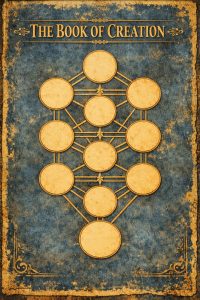
The process lasts ten days because each spiritual vessel is
revealed in ten degrees called Sefirot.
On the Day of Atonement, which is the tenth day of the
inquiries, when it is clear to the creature that he hasn’t any
power of bestowal toward the Creator, he can pray, fast and ask
from the bottom of his heart to be endowed with life. The
meaning of spiritual life is the ability to resemble the Creator
and delight Him, but in order to receive that life he needs to
be corrected.
At that point the creature begins to receive the lights that are
called the ”surrounding lights”. These lights enable him to
gradually correct his vessel and acquire the ability to bestow.
During the four days between the Day of Atonement and Succoth
the creature gets a chance to begin the correction.
The building of the sukkah is a crucial stage in the
correction because the sukkah symbolizes one’s faith. Its thatch
defends from the heat of the sun, but it is made of waste, of
leaves and stalks that have no other use to man. The meaning is
that precisely those desires that man has decided that are
superfluous and useless now form his shield from the intensity
of the pleasure that comes to him. By giving up those wishes he
defends himself from excessive greed for self-indulgence. After
he has discovered his inability to bestow, he now receives the
strength to protect himself from his egoistical desires. The
danger is that if he is enslaved by those desires, he will
forget who gives them and will take the pleasure for himself.
The defense that he gets renders him the strength to believe in
the Creator and see His greatness, despite the tempting
pleasures he is faced with. For that reason we try to be as much
as possible inside the sukkah during the holiday and even sleep
in it.
The fact that he built and decorated the sukkah by himself
gives him the confidence that he can protect himself from his
excessive desires. That defense is the light of faith that fills
him with endless bliss.
But that defense is not enough to bring contentment to his
Maker. We must not forget that the Creator loves him and wants
to render him with pleasure and not prevent it from him.
Therefore he needs to learn how to receive pleasure, in order to
please the Creator. Now he needs a means by which he can receive
the pleasure. That means is the connection that he makes between
the citron, the palm branch, the myrtle and the willow.
The four varieties mark the four degrees of the will that one
discovers in the course of his spiritual work. Sometimes he
finds in it a good taste and a good scent, and he calls it a
citron; sometimes it has taste, but no scent, so he calls it a
palm branch; sometimes it is fragrant but tasteless and is thus
called myrtle, and when it has no taste and no scent he calls it
willow.
The ability to join all types of work in one direction, in order
to delight the Creator, gives the creature the ability to
receive genuine delight under any condition and under any
circumstances, because under any situation he remembers what he
lives and whom he works for. It is marked in Succoth by rocking
the palm branch and the encircling of the altar.
The seven days of Succoth mark the correction of his seven lower
sefirot, which must be unified and connected, until on the
eighth day the corrections are finished. That is why that that
day is called Shmini Atzeret (the stopping eighth).
On that day, after he has completed the corrections, the
creature gets to unite with his Creator and receive from Him the
true pleasure called Torah. The Torah is a means that gives the
creature the ability to bring endless delight to his Maker, just
as his Maker delights him, and unite with Him in everlasting
love.
Author: G. Shadmon
Translator: C. Ratz
Proofreading: J. Kersen
|