




One man’s search for answers to the deepest questions one can ask: “What am I living for?” and "What is the purpose of my life?"
The most important thing in life is to find the right path, so that one
does not err or live his life in vain. People cannot find this path
alone, but must be guided from on high. The Creator increases their
desires and goads them with suffering, enticing them towards all kinds
of pleasures. Human beings progress, abandoning one pursuit and
striving for another. Gradually, over countless eons, as individuals
and collectively, they approach the purpose of creation—recognition of
the Creator.
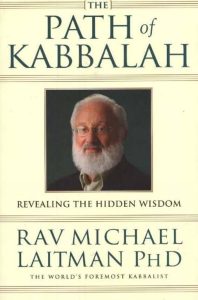
Moderator: Rav Michael Laitman an instructor of Kabbalah and a
student of Rabbi Ashlag founded the Kabbalistic Yeshiva Bnei Baruch and
wrote eleven books. He is also a scientist specializing in medical
cybernetics. No one remains indifferent to his lectures. People hear
answers to questions that have troubled them all their lives. And
suddenly feel an extraordinary closeness to the truth.
Rav Michael Laitman: If a person is always impelled by
suffering, he must eventually realize that there is a reason for all
this suffering. The reason is to hasten his asking “why am I
suffering?” And he is seeking an escape route.
We have instructions from Above telling us how to escape suffering.
The brief in simple explanation is to be found in the Kabbalah. People
suffer so they can reach the purpose of their creation, the purpose
towards which this constant suffering, impels them, year after year for
centuries, throughout all the incarnations of their souls past and
present. People suffer so that they can eventually achieve recognition
of the need for spiritual elevation. There is no solution in this
world, no way to escape suffering. The only way is to rise from this
world to the spiritual world. The Creator visits[sends?] suffering upon
human beings to raise them from this world to the spiritual world.
Moderator: We are not gathered here by chance. There is no
randomness in life. People with different destinies, characters and
occupations all strive for the same goals: officers in Afghanistan,
actors, teachers, writers, directors, programmers, journalists and
composers are on a quest and will not quit until they find the object
of their pursuit—the Creator. We all want to encounter the Creator and
know it can be done.
Rav Michael Laitman: It’s astounding. The Kabbalah has been
called arcane, a cult, something that must not be touched or even
approached. Kabbalists were always a small and separate group, but the
Kabbalah is actually the most vital knowledge of all and for all.
Everything that is in it is essential to human beings—answers to
questions: What am I living for? Why was I born? Why do I exist in this
world? Why does this world exist? What will happen when I leave this
world?
Moderator: We cannot escape these questions. Sooner or later
they catch up with us and demand answers. Sooner or later, say the
ancient books, all human beings will know the Kabbalah and find their
answers.
Rav Michael Laitman: What happened to me was both ordinary and
extraordinary. I always felt a certain lack of satisfaction with life.
It was so great that I could find no way to suppress it. I was very
comfortable; I had a successful business in Rechovot. One evening I
felt compelled to seek a teacher in Bnei Brak. This was the hand from
Above that guides us all, if we pay attention, leading us automatically
along the right path. That evening His hand guided me to Bnei Brak.
We got in the car on that dark, raining winter night in February
and drove from Rechovot to Bnei Brak. We got to Bnei Brak and didn’t
know where we were headed. If you know what it means to study Kabbalah
and what little respect is given by ordinary religious Jews, you’ll
understand that finding a Kabbalist in Bnei Brak is like… I don’t know
what to compare to. Nevertheless, I looked out into the darkness, in
the rain, opened the car window, and shouted towards a traditionally
dressed man across the street: ‘Where do they study Kabbalah here?’
Without batting an eyelash he said: “Turn left, there is a synagogue
past the orange grove.
Today when Kabbalah study is common an answer like that would come naturally, but in those days it was incredible.
The
group leader asked us who we are and where we came from. When he heard
I want to study Kabbalah he invited us in. They read something that I
did not understand from the Zohar. The lesson was over in ten minutes.
I wanted to go, but my friend said it was not nice to just leave these
sages. I didn’t care. If I didn’t find what I was looking for I didn’t
care about the sages.
Then the elderly man, who was sitting at the head of the table, again
asked who we are. I told him we want to study Kabbalah. He said: “You
can study here. I’ll assign you a teacher.” I was familiar with all
kinds of teachers and the methods. It’s hard to explain, you ask a
thousand questions and never get an answer, but now the teacher sits
himself down before us, opens a book, starts to read and begins
explaining easily, in a pleasant flowing conversation all those matters
that I had been asking about over the years.
It’s hard to describe my feeling, when after years of searching for
answers to troubling questions to make my life worth living, suddenly I
find a person who can give me the answers. As if he was reading my mind
as if throughout all those years, he had heard me asking questions and
the time for answers had come. It’s hard to explain that feeling.
Moderator: This is how Michael Laitman met his teacher Rabbi
Baruch Ashlag, son of the great Kabbalist Rabbi Yehuda Ashlag. Rabbi
Baruch was always closest to his father until the very end.
Rav: We only know one thing about the Creator—that He desires to
delight us. All that we learn, everything that has been created is
derived from this desire to create things to delight us.
Moderator: Then is He infinitely good?
Rav Michael Laitman: We’ll discuss that later. The question is
who can sense this goodness? What is its meaning to a person who cannot
feel it, but rather feels that he has been suffering throughout his
life? For this the Kabbalah has a simple suggestion. “Oh consider and
see that the Lord is good” —from Psalms. It sounds very simple, if you
want to feel good about yourself, to ascend to the height of full
enjoyment and knowledge, eternity, confidence, control and truth, you
need only one thing to consider and see the Creator. The Kabbalah
enables anyone to achieve this state.
Moderator: What do you have to do?
Rav Michael Laitman: All you have to do is want it.
The Rabbi
cannot spend too much time among people. At least once every few days
he must isolate himself. I would come to him at 4:00 a.m. and we’d go
to Tiberius, where we prepared ourselves for detachment from the
outside world. The first few times it was an astounding experience for
me. Even somewhat macabre, the entire world around me would change. I
suddenly feel that I am no longer myself, like a computer with new
software.
We’d come to Tiberius, arrange our belongings. You can see what the
place looks like today, but I can’t describe what it was like when the
Rabbi was here. It was the only spiritual center in this world. I am
not exaggerating nor I am been effusive in praise of my departed
teacher. Everyone has his own teacher or Rabbi. I say this out of my
recognition of the meaning of true spirituality and its place in the
world—then and now.
During the first few months after the Rabbi left us, I would come
here and feel that he was still among us. I was nourished by my
previous experiences here. The place exuded spirituality. I was
astounded that now, after a hiatus of less than a year, nothing remains
here. It’s desolate, total spiritual desolation. It’s appalling,
especially because it was so full of spirituality previously. Today,
it’s become just like the rest of the world.
The annuls of Kabbalah have known both high and low points. The
Kabbalah flourished in the fourth century CE, in Rabbi Shimon’s time. A
large group of his followers settled here. The wisdom was later
compiled in the Zohar. Zohar is exalted spirituality that descended
from Above. Twelve hundred years later it flourished again. The holy
Ari of Tzfat, within only a year and a half, established a group of
students—the greatest minds of the era.
Each generation has its own methods, its own Torah, Zohar, its Etz
Chaim (Tree of Life) in Kabbalah. Our generation, that needs spiritual
uplift so badly, has yielded great Kabbalist like Rabbi Yehuda Ashlag.
Moderator: Rabbi Yehuda Ashlag lived in our own time. Thanks to him, our generation has access to the Kabbalah.
Rav Michael Laitman: In his Introduction to the Talmud, Rabbi
Ashlag says that in three years a person can reach the highest level of
ultimate spirituality—the level of eternal knowledge, of absolute
comprehension, the level of eternal existence and happiness, of course.
The Kabbalah is an instruction book written for you by those who
have already been through all the spiritual stages. You internalize all
these instructions. And the spiritual uplift occurs accordingly. In
other words, nothing is more practical than the Kabbalah. Today, this
technique is available to all. Irrespective of sex, origin, color or
nationality, it belongs equally to all.
Moderator: What was the Rabbi like?
Rav Michael Laitman: He was full of vitality, until the
end. He had to know what he was living for every moment and how to use
every moment of his life, always had patience for everyone. His last
days were in late summer. As usual, we would go to the sea shore, but
he did not feel well. His breathing was labored and no doctor knew why.
The night after Rosh Hashana I took him to the hospital. That
evening he called me over and handed me his writings that I am now
publishing. He said: “This is for you, so you can work on it. Go home,
but come early to help me with my Teffilin (phylacteries). I went out
into the corridor where the other students were waiting. When they
asked me how he felt I said he didn’t look to good. Somehow, my
premonition was wrong, I went home.
The next morning, when I approached him, he managed to whisper only
a few words. I tried to revive him. First I thought he was asleep, but
when I realized I tried to resuscitate him. I called the doctor. They
tried to revive him with the electric shock and anything else, but
except for those few words and his final glance, I never received
anything else from him. But because we were so close spiritually, we
are continuing to work together towards the same goal just as we worked
together here.
The closest thing to a human being is his soul—his loftier,
stronger, more spiritual self. One becomes part of this loftiness and
is engulfed by it. Hence, there is only one way to reach the spiritual
world and that is to merge with it, so that the loftiness elevates you.
The Kabbalah says the Upper part of the lower world is to be found
in the lower part of the Upper world, a kind of merging. If part of me
has entered the lower part of that which is above me and my desires
blend with it, then it lifts me up as well and so I rise above my
level. And I may rise even higher than this loftiness. I can be
uplifted if I desire to merge with it. Spiritual uplift depends only on
one’s desire to coalesce, to use his own powers to merge with that
which is above him. If one does this, then the loftiness begins to
elevate him. The group, the Rabbi and the book are the only three
sources, but they certainly suffice for all human beings upon this
earth.
Moderator: We perceive together. Together we gain strength and will succeed.
Rav Michael Laitman: We are open to everyone who wishes to join us, ”Oh consider and see that the Lord is good.”
Humanity’s evolving and expanding egoism is leading people to Kabbalah
Free weekly updates, articles and videos.