



Description
Part 2 of a 2-part series that provides an overview of the history of the wisdom of Kabbalah.
Transcript
The History of Kabbalah, Part 2
What has been happening to Kabbalistic books during the history of
mankind? The book that was written by Adam ha Rishon was concealed, and
only a few of the generations, from Adam to Moses, were granted a
revelation of this source.
The book was handed over to us in its original form—clay tablets, or
pieces of skin that could have been stored in special boxes. After
that, the rest of the sources, like
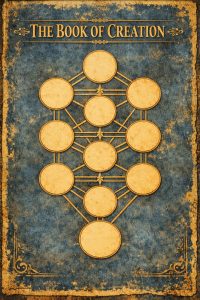
Sefer Yetzirah
(Book of Creation), written by Abraham, were concealed for many
centuries, and were very seldom revealed, except in certain times, to
certain Kabbalists.
Kabbalistic books, even the modern ones—and we will touch on this topic
later—have a very strange feature. They tend to disappear from the
sight of the human race, and then re-emerge in basements, archives, and
even tombs.
Since then, Moses has been the only one to gather 70 students and write
a book that has been widely spread, because that book, although
containing information about spiritual and higher worlds, had to be
written in a way that help people to see, read and follow it, on the
earthly, mundane, purely materialistic level. Because Moses generally
implied an observation to the spiritual laws, in a way that was
beneficial to the follower, attracting all the Lights of the entire
creation. But even the mechanical following of the commandments by a
man unaware of Kabbalah, and having no connection with the spiritual
world, makes a positive influence on his personal development and on
the development of the entire human race. That is why in such a
primitive encrypted form, and even though the reader may think that he
or she understands the Bible, it could exist and has been secretely
shared among the Kabbalists throughout history.
The
Book of Zohar by Rabbi Shimon had been concealed
during his life, following his order. It revealed itself after several
hundred years to the Kabbalists led by Moses de Leon, a well-known
Kabbalist who discovered
the Zohar in 800 CE, five-six hundred years after its creation.
The
Book of Zohar was found by pure chance. The sage
ordered simple and austere food and one of his students brought it to
him from the local market, covered in some sort of paper. He un-wrapped
the roll and discovered that the cover was actually an old manuscript.
He started studying the text and realized that it contained the
concealed mysteries of the world.
Immediately his students were sent to the market. They started digging
in trash, searching for the remaining pieces of the manuscript. It
turned out that there were many of them. The students gathered around
2900 pieces of the old book that some Arab found in a desert during his
journey from a district between the Euphrates and the Tiberias rivers,
to Israel. He brought these pieces with him to sell spices, using pages
of the old manuscript as wrapping. That is how pieces of some old books
were collected.
When the process of putting the pages together began, several
Kabbalists gathered together and united their efforts to classify, sort
and systematize what is now known as the
Book of Zohar.
Its first publisher was Rabbi de Leon. Some believe that he himself was
the author of the book, but he was only a publisher; he confirmed this
himself.
The
Book of Zohar, as we can tell by looking at those
separate pieces, once consisted of a great number of books that
represented not only a key to the book of Moses,
the Torah, but also keys to the books of all prophets and all sages.
The Zohar contained correct Kabbalistic and spiritual descriptions of all that is said in the
Mishnah and the
Talmud.
Unfortunately, all of these parts were lost except for the commentaries
on the Five Books of Moses. All that remains of them in
the Zohar are now only short abstracts, but this does not diminish the value of the
Book of Zohar because in the form in which it reaches us today, it constitutes a key that will help us unlock the spiritual world.
After Rabbi Moses de Leon, the
Book of Zohar was again
concealed for many centuries. Up until the medieval times, when it
emerged from time to time for certain Kabbalists, up to the era of the
Ari, sometime in the fifteenth century.
Along with
the Zohar, there were many books in the world
by other Kabbalists that the Ari used in his work. In other words,
based on a comprehensive set of Kabbalistic sources of his time, Ari
created a unified textbook for entering the spiritual world called Etz
Chaim, a book that is called the
Tree of Life. Life was represented as a fruit tree and the book tells us how to grow perfect, eternal fruits.
Our world is a place where souls of past generations are continuously
descending, only to dress in different bodies. That's why all the human
generations are mostly the same souls, or their combinations. I hope we
will be able to study it in greater detail in the future.
People that lived several thousand years ago are different from our
contemporaries because their souls are different. Our souls are similar
to theirs but they're more developed. Because of this they demand not
only higher technical development, but also a higher spiritual
development inside themselves.
In past generations, among the souls that descended from Above, there
were a few who wanted to unfold the Higher worlds. In our time, there
are thousands, or even millions of them. That means that mankind is
developing; it doesn't stand still because its souls ascend to a higher
stage of development after being enriched by previous life experience.
This process is cumulative—information is accumulating; spiritual
learning is accumulating; the so-called Reshimot, memories, are
accumulating—and all of this affects our soul.
Man, even a child that is just five years old, is cleverer than when we
were at that age in our previous generations. Looking at our kids, we
are amazed at the swiftness of their ability to comprehend information,
compared to us. For us it is new, for them it seems not. They were born
to absorb, comprehend, and live with it. For them it's natural because
they were born with it.
Kabbalistic books have been disappearing and re-emerging throughout
history. They can disappear for several centuries and then re-emerge
and then disappear again, only in order to somehow correct the progress
of mankind. In general, they exist to adjust its development, but their
final goal is to emerge and reveal themselves to everyone, as it is
said in the
Book of Zohar,
as it is said in the Prophets. People will take these books and use
them as an instruction to unfold the universe and gain eternal life.
Kabbalistic souls undergo special reincarnations. They descend not from
generation to generation like common people's souls; instead, they
suddenly emerge in our world in certain generations.
The soul of Adam ha Rishon was in Abraham. The same soul was in Moses,
Rabbi Shimon and the Ari and as you will see, also in the last
Kabbalist, our contemporary, Rabbi Ashlag. It is the same soul that
descends in every generation, where it can effectively correct and
influence the development of humankind.
The era of the Ari, if viewed from a spiritual perspective, is
associated with the completion of the first stage of the soul's
development; I would say with the end of their unconscious development
during which they were in an animalistic stage. I will remind you that
the era of the Ari took place in medieval Europe during dark and
barbaric times. The emergence of the Ari was a turning point in the
spiritual development of mankind. Starting from that moment, more and
more souls that induce a desire to learn and to understand in the
bodies they array are descending to our world. That's why the medieval
age ends with the Renaissance, further followed by the industrial
revolution. All of this is due to the kinds of souls that are
descending.
So, the Ari was granted permission, an ability to develop this method
that was in place since the first man in a way that it suited large
groups of people. Not only a few souls that descended to our world with
preset, internal, Kabbalistic features, but for the masses that were
ready for spiritual development, for ascendance. That's why all of the
books of the Ari are written from a different level, using a different
approach. They are guided by a common level of the soul's development
for that time, the time to which they belong to.
After the Ari, a great number of Kabbalists emerged; they used his
works. Tens, hundreds of Kabbalists in different countries in the
world—in Eastern Europe, Ukraine, Russia, Belarus and Poland—masses
were coming to Kabbalah, and based on that, a new non-Kabbalistic
movement emerged called
Hassidut.
In other words, people were starting to desire a small contact with
something higher, something spiritual. They started to wish to see in
their lives, in their actions, a presence of Higher Forces, higher
aims. And studying the books of the Ari lifts a man, every man, above
our world. As the Ari himself said, in the prefaces of his books that
starting from this generation and further, everyone who wishes, in
other words, everyone who feels a desire to reach the Higher Worlds,
can study his books.
Up until the time of the Ari, the indication that the permission to
study Kabbalistic books was given, was the appearance of a special
soul, the descent of a special soul, but from the time of the Ari and
on, as he writes, “Only a desire for the Higher worlds is necessary,”
and it's enough for him or her to start studying his books. This need
is enough, and no special soul is required—only man's desire and Ari's
method of reaching the Higher Worlds.
During the barbaric medieval period, a boy was growing up in Jerusalem, who later was given the name Ari;
Ari ha Kadosh (the Holy Ari). He accumulated all of the Kabbalistic lore of all the past generations, starting from
Adam ha Rishon.
Later, he reworked all of these and he presented them in a way that
helped all of the following generations connect with the spiritual
forces through his book.
The Ari was born in Jerusalem and then his parents moved to Egypt. He
lost his father when he was young and was raised by his uncle. At 35,
he moved to a small town in the north of Israel, Sefed and he founded
and ran his own
Yeshiva—a place where he studied with his students but it only lasted for a year and a half.
His first book was written by the young 27 or 28 year old Chaim Vital,
who recorded everything he heard from the Ari during that year and a
half. And from what he recorded, there have been published more than
twenty volumes of the Ari's wisdom. The Ari died, and in his last will
he assigned Chaim Vital as his successor in studying Kabbalah, in
sorting and in publishing his works.
The Ari's soul is special not only because it was a reincarnation of
all the previous Kabbalistic souls, but because his soul descended to
our world during a time when the combined development of human souls
approached its next period; when the entirety of humanity was demanding
spiritual development.
We already mentioned that from generation to generation the same souls
array into new bodies, that keep all the previous life experiences.
That's why every generation is wiser, more experienced than the
previous ones, not only for better development in this world, but also
for spiritual advancement. This caused, in part, the Renaissance
movement, the industrial revolution, and so on.
On the spiritual level, it is realized in a search for the meaning of
life. So this question is starting to develop in the souls that have
descended since the time of the Ari, it's beginning to hinder their
existence. It forces a person to research the origins of their life and
ultimately the spiritual world: Why does everything exist? Where do we
come from? We don't realize it or feel it, that's why the Ari took all
of the proceeding Kabbalah that was written before him—starting with
Adam, including the
Book of Zohar,
and all the Kabbalists that were before him—and created a brand new
method, specifically for the type of souls that yearned for ascendance.
Souls that were before the Ari could be divided into two categories:
animalistic souls—that gave man only the desire to live, breed and
exist in this world—and a few Kabbalistic souls that were secretly
studying the Higher worlds. These were the only two types that existed.
Starting from the time of the Ari, and further on, souls are descending
into our world that are not satisfied with animalistic existence, that
have already reached on mass, the level that makes them want to ascend
by themselves.
Before the Ari, there hadn't been a case where a soul had descended to
our world and existed here in an animalistic desire level and then all
of the sudden started to want to develop spiritually. Such a thing
didn't exist; there was either the soul of a common person or a
Kabbalistic soul.
The era of the Ari marked the end of an animalistic stage of the soul's
development in common people. These souls are starting to receive
inside themselves a desire to ascend spiritually on their own. That's
why they need more, that’s why we can say that the Ari, who created a
common method of exiting this world into the higher, spiritual one, is
the primary, the most important Kabbalist today. He writes in the
preface to his book, “Everyone, starting from my time, from the time I
created this method, everyone who wants, can study Kabbalah.”
“Everyone who wants”—this is a kind of test, a ticket to the spiritual
world. If you have a desire, everything else will follow. “Every human
being, he writes, woman, man, young, old, no matter who, can study
Kabbalah using my method, the first method for man to exit to the
spiritual world and reach the spiritual world.”
And truly, after the Ari, a stage of rapid growth of Kabbalah has began
because a great number, hundreds at least, of common souls that
descended to this world, started to desire, to ascend to the Higher
world.
I want to emphasize again that before the Ari, there were only two
kinds of stable souls that descended to our world—common souls that had
to exist within our world, and souls of Kabbalists that at a certain
moment, started to feel the spiritual world. Both types of souls were
standardized, stable, without any potential to change. Each of them had
initially received a certain spiritual level, either of our, or of the
spiritual world, and hence, their development was limited by it.
Since the Ari, souls that descend to our world have been common souls
like ours that have an ability to start ascending, to start gaining
knowledge of the Higher world, in other words, and to start a spiritual
development independently. There was no such thing prior to the Ari.
Starting with the Ari and onward, we are witnessing a final stage of
humankind's development, when all the souls have to go through a
spiritual Renaissance and reach their ultimate spiritual thriving, the
entrance to the spiritual world. That's why there was a continuing
development of Kabbalah in many countries, primarily in Eastern Europe,
for several hundreds of years after the Ari, until around the 1920's.
What do I mean by the development of Kabbalah? A lot of souls, without
Ari's method, would’ve continued to build households in our world. With
the help of this method, they started to develop spiritually and began
entering the spiritual world. A great number of Kabbalists emerged in
Eastern Europe during that time and became leaders of the many branches
of Judaism. Among them were several great Kabbalists,
Admorim, the first leader of the Lithuanian Jewish community; Gaon from Vilna, and others.
There were a great number of Kabbalistic groups in Eastern Europe, like the group of Kotzk. Every
Admor had
a small group of students around him. Ari also had a lot of students,
but only one of them, Chaim Vital continued to study following the
Ari's will.
Chaim Vital was a young man. He was only 28, and had been studying
under Ari's guidance for a year and a half. After Ari passed away, all
that was left were Chaim Vital's notes. Part of these notes were buried
with the Ari, while others were locked in a big chest in the Ari's
relative's house. Chaim Vital took a part of the remaining notes and
started to work on them. That became a foundation for the further
published books.
In the first generation after the Ari, Chaim Vital, and his son Shmuel
Vital after him, and his grandson, all of them, published books of the
Ari, to the extent that in the second and third generation, they dug up
the Ari's grave and retrieved the remaining of the Ari's scrolls that
made it possible to begin compiling the famous
Eight Gates, eight major books by the Ari.
Thus, we can see that none of the followers of the Ari had a full set
of his works. And even Chaim Vital, who did his best to preserve the
wisdom of the Ari in writing, didn't have the entire universe of
information that would have allowed him to build a unified and cohesive
method suitable for every type of soul. This method was developed by a
great Kabbalist of our time, almost by our contemporary, Rabbi Yehuda
Ashlag.
Rabbi Ashlag was born in Poland at the end of the 19th Century. In the
1920's, he moved from Poland to Jerusalem. After becoming a Rabbi in
one of the districts of Jerusalem, he started to write his famous
Kabbalistic manuscript,
Talmud Eser Sefirot
(The Teaching of the Ten Sefirot). He reasoned the name, by explaining
that the entire universe consists of ten parts, including spiritual
worlds, including our world, including all the souls, including
everything that exists in our and in Higher worlds. All of these in
general consist of ten parts and that's why his six-volume, ten
thousand page work is called, The Teaching of the Ten Sefirot.
It contains everything that was created by the Kabbalists before him,
everything that Adam, Abraham, Moshe, Rabbi Shimon bar Yochai in his
Book of Zohar; the Ari in his works with the help of his students. Baal HaSulam (Rabbi Ashlag) used all of it in his work,
Talmud Eser Sefirot,
a six-volume manuscript that includes all of the Kabbalah in a form
that is necessary specifically for our recently descended souls.
Using this method, using the six-volume manuscript, studying it
properly, under proper guidance, knowing how to go through it following
certain conditions, certain keys, certain approaches, we can unfold the
material—see it, learn it, and discover the spiritual world; start
feeling the world around us as it is. A student can't start feeling and
seeing using his five senses something that exists outside of them,
because of their inherent limitations and their insensitivity.
Baal HaSulam writes in the introduction to this work of his, that because he was allowed to write
Talmud Eser Sefirot,
everyone, every human being existing on earth that once descended to
this world, can reach the highest point of spiritual development. And
humankind will be able to achieve parity with the Highest Forces, will
be able to become like God, and will be able to comprehend, while
living in a body, all of the higher spiritual stages. That his body
won't be an obstacle between his soul and his present state of life, so
that there wouldn't be any difference for him whether he lives in a
body or not. He'd be able to live in different worlds and switch them
whenever he like. In essence, he will go beyond time and space, and
will reach the state of ultimate perfection. This became possible,
thanks to the method of Baal HaSulam; his method is given to everyone.
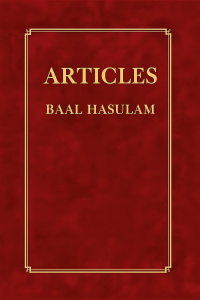
Baal HaSulam, (Yehuda Ashlag), who wrote
Talmud Eser Sefirot, also wrote commentaries on the works of the Ari, and a commentary on the
Book of Zohar.
He was able to do this because, as he explains, he is a reincarnation
of the same soul that goes from Adam, and as I already said, through
Abraham, Moshe, Rabbi Shimon, and Ari ha Kodesh, to him. That's why he
was able to take all of their works, combine them and present them to
us in a special way that is suitable for us. It's interesting that
despite the fact that Baal HaSulam lived in our time, his manuscripts
met the same fate as the
Book of Zohar. His writings were hidden in basements; parts of them were taken away, burned, and are, finally, emerging now.
I inherited part of these manuscripts—that are now being published by
me and my students—from my Rabbi, whom I should describe as the next
stage of Kabbalah development.
Rabbi Ashlag had a son, Baruch Ashlag, a first son who was born in
1906. Along with his parents, he, a teenager, moved to Jerusalem from
Poland. He worked at very simple jobs, as a shoe-maker and as a
contractor, never being insulted by any job because he realized that
it's only a means to maintain our existence in this world.
Rabbi Baruch Ashlag never held high positions, in spite of having
multiple offers. Although being a great sage of the Torah, he never
worked as a Rabbi. All of his life, he calmly followed his father in
the way of Kabbalah.
When his father, the great Kabbalist, Rabbi Yehuda Ashlag, died, Rabbi
Baruch inherited his place, his students, and continued his father's
mission of spreading Kabbalah; continued to publish the Zohar and other
manuscripts.
I came to my teacher, Rabbi Ashlag in 1979, 1980. For a long time
before that, I had been searching for a teacher, while studying with
several Kabbalists.
During the very first class with the Rabbi, I realized—I came a long
way and I knew what Kabbalah was about—that this was the place I had
been searching for, for twelve years. I stayed with my teacher until
the last day of his life, when he died in my arms.
Rabbi Baruch continued in the way of his father also in creating a
five-volume collection of articles, where he described all of the
possible conditions of a man attaining to the Higher world.
In other words, he took an ideal man and analyzed his every stage,
every step he makes toward the Higher world, towards feeling and
exploring it. He created a precise method of attaining the Higher
world, something that none had done before.
Rabbi Baruch's articles are unique for those desiring to enter the
spiritual world, to the extent that it's hard to imagine a world moving
towards attainment of the Higher world without them.
Along with that, Rabbi Ashlag left us certain writings of his father, which he called
Shamati,
in Hebrew, What I Heard, a fundamental work that describes various
combinations of all of the spiritual worlds, relative to a human soul;
relative to a man that explores them. In other words, in any condition,
if a man is feeling the spiritual world, if he even unconsciously
appears on a certain stage of connection with some Higher and unknown
forces, he can immediately find it in the articles, identify his
conditions and learn how to continue his spiritual ascent from that
point. The works of Baruch Ashlag are most important to us on a person
level, on our way to explore and discover the spiritual world.
After the death of my Rabbi, a group was formed, which is called, Bnei
Baruch, after Rabbi Baruch Ashlag, and it continues to study Kabbalah.
Everyone who wants to explore the Higher world, feel the entire
creation, understand why he or she is living, has a right, and that's
why we're here. Come to us, sit among us and continue the study.