
Hebrew  | Russian  |  German  |  French  |  Italian  |  Spanish  |  Portuguese  |  Dutch  |  Polish  |  Hungarian | Norwegian

SwedishFinnish  |  Turkish  |  Bulgarian  |  Romanian  |  Greek |  Arabic  |  Amharic  |  Yidish  |  Latvian  

 Farsi   |  Georgian  |  Estonian  |  Filipino  |  Lithuanian  |  Ukrainian    |  Croatian  |  Japanese 

kabbalah.infokabbalah.info homepage kabbalah.info
Education Center | Kabbalah TV | Kabbalah Blog | Kabbalah Music | Online Store | Press | Archive | Contact | About


The Secret of the Letters

Lesson 3

Whoever changes his name changes his luck


Each letter has its own character, its own temperament

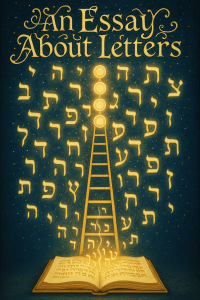
If you read the "article of the letters", you will find out how Rabbi Shimon, in a metaphorical and indirect way, includes in each letter its trait of character and its temperament.

He draws a kind of living system, showing us how each letter relates to us, works in us, behaves and activates us, and lastly, how it clings to us and how we are operated by it.

The world was created, not by chance, but with letters.

These are twenty seven patterns; twenty seven laws that operate within us if we know how to react properly to them. With these twenty seven letters inside of us, the wisdom of providence and supreme supervision will be revealed to us, and accordingly, we will be able to respond correctly.

To read letters means to acquire their attributes

Reading letters is not only the reading of a story. It is a knowing of how to acquire those twenty seven traits of character. When a person reads the words he triggers the inner power and sign for each letter. As he identifies the letter he puts his own internal letter on the external symbol. He becomes part of the text; he enters the sensation of the upper world joining the author in the same spiritual place in which the author wrote each and every letter of the book.

A person that acquires these twenty seven attributes or spiritual vessels can read the Zohar and cling to Rabbi Shimon.

He will have the same feelings, same emotions that Rabbi Shimon felt when he was writing the book. This is but one view of the whole subject.

On the other hand do not be confused and think that there is in the letters a force that they do not have. If I just write a letter, do not be mistaken and think that this letter is already holy, that there are powers in those lines, or in any scribble.

The strength or force is inside a man, who takes and builds out of his own attributes internal symbols. He takes a little from one attribute, a little from the other and so on. And in all he builds out of himself twenty seven forms of letters. After he builds the twenty seven letters out of his own natural attributes, he starts playing with them, like a Lego game and thus builds the order of his actions which are called words and sentences.

There is a direct path of letters from Alef to Tav, the one we are used to.

There is also a reversed order of letters - a returning order.

There are interchangeable letters, meaning we can replace one letter by another one. Alef, Ain, Kuf, Kaf etc.. This is a higher level of analysis, which can be used for seeing what forces act at different levels

There are letters that interchange according to gimatria: ten, hundred, and thousand, and so on.

In all, our letters are a result of two forms of impression.

1. The letter starts with a point. That point is either man's ego, the black in him, that which he brings into the upper light or an impression from the upper or the lower worlds, such as, excitement from reception or bestowal.

2. The other form is one that describes if the bestowal is towards the right, the left, upward or downward related to the point. This is how the letters are formed.

If we take the correct writing of a sofer stam (certified sacred scripture writer) we see that the letters are built from simple elements, a short vertical line, a long vertical line, it could be a long 'vav' which is also a 'daled', or a circle. That's almost it - that is the structure of the shapes of the letters.

For instance Het is built of a Zain and another Zain and the connection between them. Hey is a Daled with a Vav inside it. Alef is built of a Yud on top and a Daled at the bottom and so on and so forth.

The letters themselves are patterns - fixed and precise correlations of forces acting upon us. However, each letter is built from a totality of detailed forces acting upon it and particular to it.

At this point we will not go into the reasons why we interchange letters with other forms, or why the letters may go backwards or forward, we will discuss Gimatria.

Gimatria: Vessels and filling

Gimatria is another form of documentation by using numbers instead of letters.

Every letter has its corresponding numerical value. We thus discover another way of recording -a numerical way.

What does it give us? It gives us the backside: The depth and the intensity of the vessel that contains the filling and that is receiving excitement from the light.

Gimatria is simply another way to record information about the vessels themselves.

It is not information about the light that is filling them, but information about the body of the vessels.

As a general rule, with Gimatria we differentiate between the vessels, for instance Yud Hey Vav Hei. This spiritual form exists in every spiritual sensation; it is a skeleton of the vessel that includes the tip of the Yud and four additional parts - in all: KETER, HOCHMA, BINAH, ZEIR ANPIN, MALCHUT and its filling. The filling can be by different sorts of light: Yud, Alef, or Hei, which means OR HOCHMA (light of wisdom) or OR HASADIM (light of mercy).

Whether it is regarding TZIMZUM ALEPH (first contraction) or TZIMZUM BET (second contraction), the name of the vessel is its essence or definition: a skeleton that never changes but in which lights change.

So Gimatria includes the vessel itself - which is fixed with its four parts that are four letters, five including the tip of the Yud: KETER, HOCHMA, BINA, ZEIR ANPIN, MALCHUT, and the lights that fill it.

The sum of the lights that fill the vessel in addition to the vessel itself is called a "name".

This is how the names of all the levels and situations (impressions) in spirituality are built. What is an impression or a situation in spirituality?

A person that investigates the spiritual world becomes a vessel, an emotional vessel, a measuring vessel, that gets filled with spiritual light. He also becomes the name of HAVAYAH, KUTZO SHEL YUD, YUD, HEI, VAV, HEI, and the light that fills him. Together this is called "SHEM ADAM" or "the name of a man".

So if we take for example the name of SHIMON, and we figure out the Gimatria of his name, we will find out on which spiritual level he is.

Whoever changes his name changes his luck?

The names that we are using are names that were given until the destruction of the temple to people according to the root of their soul and according to the spiritual level they should have aspired to attain. So until the destruction of the temple, names were given that were fit properly to each individual, that explained the essence of each person.

At that time people not only felt, but actually lived their external and upper reality.

With the destruction of the temple, people fell from their spiritual level which was "Love your neighbor as yourself " to a level called "Hatred in vain".

They lost the connection with the upper worlds.

So today names people are given have no correlation with the internality of man.

A few traditions remained, like changing the name of a sick person, adding another name to his. It does not mean anything today.

We are not called by our real names.

We will accomplish nothing by adding names to existing ones because we do not know the essence of the names.

A person, who wants to change his luck (fate), or change his forces, has to change his inner attributes by the light that influences him or activates him. By doing this he moves to a completely different situation, a different spiritual space, allowing a changing of his name.

Today we are not in a situation that enables us to do this, since we are not in the same spiritual space as people were in at those days. What is left of it is only a tradition, and the sole benefit now is merely a psychological one for those who believe in these benefits.

Man's name - a man that investigates spirituality becomes like a vessel (Kli) that is filled with the light.

Names are a very special thing and we should safeguard them. In the Torah it says that Israel were worthy of getting out of Egypt because they didn't change their names.

The meaning of this is that each one of them corrected his attributes according to his own potential so that there was a general correction of all the people.

By the merit of not changing their names and progressing spiritually, according to their own names, they were worthy of getting out of the land of Egypt and elevating to a higher spiritual level.

So when people ask me which name to give a newborn I advise to give original names because each one of them has a connection to upper forces, to the spiritual world.

It is not important which name it is, choose any one you like, today there is no meaning in this since we are below that spiritual level.

Still, in order to link us to the twenty seven sources of the lights it still is worthy to give original Jewish names. We can explain more in detail about letters but this is in summary what I wanted to say for now.

Question: Does changing a name generate any problem?

In our times whoever changes his name is actually doing nothing. But if he is named by an original Jewish name, he is still under the influence of the twenty seven spiritual sources that affect us. What name exactly, today it is not important.

We could be more precise and call a person according to his spiritual source, but today it is irrelevant because we are not linked to the sources on an individual basis. We do not have such corrections. Whoever goes out to the spiritual worlds acquires names according to the spiritual levels he attains.

Question: What is an "original Jewish name"?

These are names that are found in the Bible, or that are common among the Jewish people. There are also names that 'are not so good', but that are still original. We are not supposed to connect ourselves to them but only to good sources. These other names have within them "the names of the evils", that are the counter forces. Although there is no harm in them, they are forces that go against the unity. They are intended to sort the actions, but still we do not use them.

Question: What is the meaning of the letter Hey that was added to the name of our forefather ABRAHAM that used to be called ABRAM?

This is the attribute of BINAH that was added to him. The first Hey was added to him when he started working with the three lines. MALCHUT united with BINAH. The Zohar explains it.


The website kabbalah.info is maintained by
the
"Bnei Baruch" group of kabbalists

Copyright © 1996-2010. Bnei Baruch. All rights reserved.