



|
People in this world are all ordinary
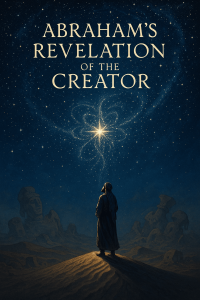
people. But to one Persian named Abram (and later Abraham), the
Creator revealed Himself , and it is that revelation that made him
special. He became a “Yehudi” (Jewish), from the word “Yechudi”
(single-unique), that is he and the Creator became one. Who then is
this Abraham? He is a man who was endowed with a spiritual spark, a
sensation of the Creator. But other than that he was an ordinary
person.
There is no sanctity to any organ in our body. Thus it matters not
if a dysfunctional heart is replaced with a human heart or a pig’s
heart. Our organs are just as material as any animal’s. They are not
sacred, not connected with the Creator.
There is no difference between a Jew and a Gentile, other than that
spark of the Creator found in the Jew. That means that if that spark
exists in a person's heart , that person is named Jewish. If it
vanishes, the Jew again becomes a Gentile. The latter, however, is
an impossible situation, because sanctity always increases and never
decreases. It is a spiritual law, by which everything is brought
closer to the Creator.
The exodus to the spiritual world is a slow process. At first, a man
is captive of the desires of this world. Gradually, man realizes the
aimlessness of his physical existence, that if there isn’t that
spark, man is just one of the mill..
The Haggadah writes: “At first, our fathers worshiped alien gods”.
Worshiping an alien god (heathenism) is a state possible only after
one has made contact with the Creator, has become aware of the
opposition between his attributes and the Creator’s and has chosen
to act against the Creator’s will. Thus, heathenism is already a
certain degree of awareness, of ability to operate beyond one’s
birth nature.
Indeed our fathers worshiped alien gods, but then the Creator
revealed Himself to them, and the light that came with it was
accepted as an order to migrate from Mesopotamia to the Land of
Israel. Thus we see that in this world too, one moves from place to
place, following one’s inner will, following one’s heart.
Kabbalists write that we can live in the Land of Israel, provided we
match its spiritual level. Ohterwise we’ll be exiled from here just
like before. The Creator has brought our bodies back, but it remains
our duty to make the inner return to the spiritual state called the
Land of Israel, to be worthy of its land, that is all we need!
Abraham the Patriarch is a testimony to that. Once he became a Jew,
God told him: “Get thee out of thy country, and from thy kindred,
and from thy father's house, to the land that I will show thee”. And
Abraham moved (inwardly) to the Land of Israel: he began to develop
spiritual vessels, vessels of bestowal.
But to achieve unity with the Creator, it takes more than the
ability to give (to bestow in order to bestow), it takes the ability
to receive in order to bestow, through vessels of reception,
corrected by the aim to bestow to the Creator. But where will one
take these vessels, these desires? When one is in the Land of Israel
and wants to bestow to the Creator, one finds he has nothing to give
Him, one becomes hungry, hungry for bestowal.
Then one exiles to Egypt. But why, what for? Because giving up our
desires to receive goes against our very human nature. Indeed none
can comprehend it. No other method, but the Kabbalah, uses it
because this act opposes human nature. All other methods stem from
our innate nature and aim at making our life comfortable, pleasant,
all but the Kabbalah which was granted to Abraham along with the
sublime revelation of the Creator.
Is there really that much work in Egypt?
From above, man is confused, hungered (both physically and
spiritually). material goals take precedence, so that one may
realize how superior spirit is to matter. One is given spiritual
delight in material acts. But the true taste of material pleasure
remains only for the wise (those who aspire to wisdom, who ascend to
the spirit so as to live true desires), for it is them who must
confront the greatest pleasures.
When one progresses in one’s studies, one sees oneself as more and
more corrupt. Ever worse desires are awakened in him. Precisely that
is the exile to Egypt, when one who aspires to climb up the ladder
to the spirit falls under the rule of the will to receive.
That’s why it is said that Josef’s brothers visited him in Egypt in
hiding. The exile to Egypt occurs when one loses one’s vessels of
bestowal , when they fall under the rule of the vessels of
reception. This state lasts quite a while during one’s progression
in spirituality.
When one begins to study, one is in high spirits, carefree. But
after a few months things change. Spirituality is not as tempting as
it was, material disturbances appear and one feels that he will
never see the gates of Heaven open.
Why does this happen?
Because the vessels of reception must be developed , a screen
(masach) has to be attained and spread across the desires of Egypt.
True, one has one’s vessels of bestowal, but they’re concealed .
When the labor in Egypt begins, one longs for spirituality, but the
more one longs for it, the more one finds it’s unattainable.
The time of “slavery in Egypt” lasts as long as one senses that he
is really a slave, until a new king rises, one who hasn’t known
Josef. One feels his inner Pharaoh’s rule over him, leading him
against the Creator.
But if the will to receive allows me to enjoy, what’s wrong with
that? How is its rule harmful to me?
If I want something more than the satisfaction of desires, for
instance, if I want to contact the Creator, but I realize that
material pleasures drive away from Him, I begin to perceive them as
an obstacle, as something evil that goes against me.
Then, a battle starts within me. I begin to wonder whether ‘I’ is
the one who wants to cling to the Creator, or is the ‘I’ the one who
seeks material delight? Who then is my ‘I’?
A war breaks out between both desires: on the one hand Moses and
Aaron and on the other, Pharaoh. One cannot tell who overcomes whom,
because Pharaoh’s magicians perform the same miracles as the
Creator. Therefore, the escape from nature’s rule is only possible
after the Creator strikes ten times ( the 10 plagues of Egypt).
For my neutral ‘I’ to sense where the light stems from , it needs to
feel the ten strikes - just how the Pharaoh inside me is opposite to
the Creator - so that I may detach from it, that I may reach a state
where Pharaoh himself will say: Go! You’ve brought me enough pain !
The ten strikes show man that Pharaoh’s rule is a hateful thing,
intolerable.Then man himself wants to escape from it . Wants, but
can’t! Therefore, for the escape from Pharaoh to succeed , certain
external conditions are required . There must be haste, concealment
and the darkness of the night.
Only than can man collect his desires of bestowal ,separate them
from his own will to receive and hide from it. The escape takes
place at night, when the spiritual light is out.It takes faith above
reason, going against his own judgment to escape his nature.
It says: “If you’ve labored and found, then believe". That means
that one has put in enough labor for the Creator to be revealed ,
but is unaware that this labor is sufficient to exit this world and
enter the upper world. The exit from our nature is a sudden event.
Man has no control over this process, he simply runs! He walks on
land, between the walls of the Red Sea, the barrier, and enters…
into a desert. So what has he gained by it? Man enters Egypt with a
spark of the Creator, with a longing for the spirit and exits it
with empty vessels of reception - the sensation of a desert.
It is said that Israel left with "jewels of silver and jewels of
gold and garments". That means that man has now corrupt desires to
receive and he must now begin to work with them and mend them. For
as long as these vessels belong to Egypt, they will only give him
the sensation of darkness, of a desert. But when he mends them and
uses them correctly, he’ll receive through them the upper light.
Thus man enters the desert. He is not yet in the Land of Israel. Now
he needs the light in order to distinguish how much each attribute
is worthy of use for his progression in the spiritual world. The
reception of this light is called “the reception of the Torah”.
A person exiting this world into the spiritual one, begins to work
in three lines. A left, a right and a middle line. We must realize,
that we are not the ones doing work, it’s the Creator’s, it is God’s
work. We must accept His work on us! Everything has been created in
its perfect state, but the creature can only assess perfection from
its opposite. That’s why man must experience all the imperfect
states. Man’s work is a process of self-awareness; awareness of the
work the Creator is doing on him.
There is a world and within it there is a soul. The contact with the
Creator is composed of three parts: Olam (a world), Shanah (a year),
Neshama (a soul). Shanah is the extent of contact between Olam and
Neshama. The word Olam stems from the word He’elem (concealment).
That means that Olam is the extent of the concealment of the
Creator.
Is it possible to attain spiritual results by performing physical
acts?
Everything man does is because he wants to. The rock too, which has
no movement, wants to maintain its shape. The plant wants to grow.
It longs for the light and grows toward it.
Man’s will is always expressed by a certain act.. That is why each
movement any animal performs is exactly the movement it must
perform.
Although each will is expressed in the outer , man is not always
aware of his desires. From outside, one cannot understand the
purpose of another’s acts. That is why the science that studies
intentions is called “The Wisdom of the Hidden” - for no one knows
what’s in your heart, often not even yourself . But as always, the
outer form indicates the inner will.
We are not yet in spiritual worlds and can’t join other souls to our
screen. So in the meantime, out work is mainly on the level of this
world, in spreading the wisdom of Kabbalah. This act is a totally
spiritual one. Through it, one helps others join this path - through
physical acts; one aids the spreading of spirituality in this world.
Translator: C. Ratz
Editor: C. Marce |