




|
First Talk: Perceiving the Desires
How can a person perceive the desire? In order for a person to know what he
wants he must first try it, since by doing so it leaves a pleasurable
perception or taste inside of him. The pleasure was sensed and now it’s gone,
at which point the person aspires towards it. This is what the real
Kli must consist of. Meaning, the light has filled it in the past, and
the Kli has tasted the entire force of the sensation of pleasure from
the light’s presence. Then the light disappeared and now the Kli
passionately longs to feel the taste of the light once again.
Now we will look at the way in which the soul is constructed and the reason
why we need to work with it. The soul is the only thing created. Through
its five filters, the soul receives the visual, auditory, olfactory, gustatory
and tactile sensations inside of itself. The support behind these five sense
organs is similar to a computer program. It translates that which is located
outside into a language that we can understand, namely: pleasure and pain. We
perceive whether something is good or bad in the most central point of our
soul.
If the computer is running on a natural program then its program is designed
to satisfy the egoistic intake of good and bad. However, if it is running on
the altruistic program then the notions of good and bad are not evaluated
relative to itself; rather they are evaluated relative to what is outside of
it, and this is the light or the Creator.
Now we see that there are two programming possibilities for the soul’s
evaluations and choices: a) egoistically, for its own sake,
or b) altruistically, for the sake of the Creator. After all,
besides the Creator and the creation, or the light/pleasure and the
desire/vessel, nothing else exists in the universe.
In the natural process, a person is born with the egoistic program. Therefore,
on the “backboard” of our consciousness or brain, a reverse image is imprinted
or projected egoistically. This image is called “our world”.
We do not perceive anything other than the light. However, if the light goes
through the egoistic processing, then it manifests in us as “our world”. Our
egoistic desire performs its processing, adding obstacles by selecting
everything good and discarding everything bad. This is the organism’s
self-preservation program, and if we did not have it then our picture of the
world would be a totally different one. Without it, the picture would become
imprinted on the front side of the soul and it would show a person everything
that exists on the outside in an objective way, rather than what is on the
inside, subjectively and with a benefit for itself. That which is on the
outside is called “the light” or “the Creator”.
In order to reprogram the computer from the egoistic to the altruistic
program, there exists the Science of Kabbalah, which helps us to receive the
external image that exists genuinely, without the egoistic coating. We will be
able to feel the genuine universe that is outside of us. This state is called
“unification with the light”, when there are no obstacles between the soul and
the light.
This is slightly reminiscent of what people feel when they are in the state of
clinical death and they have become partially separated from the egoistic body
(or the animal organism). They see the light ahead of them and they aspire
towards it, but they are unable to reach the light because they have not yet
ridden themselves of the spiritual egoism. Since a person can only rid himself
of it together with the animal egoism of the body, thus all of the work takes
place over the course of one life or several lives in the egoistic body.
We can rid ourselves of spiritual egoism very easily if we know what obstacles
egoism adds to our internal computer. All information enters through five
filters, called the “five parts of Malchut”, or “five parts of
egoism’s governance”. These five channels process all information from outside,
converting it to information that suits egoism by separating what is good for
the egoism from what is bad. All signals pass through a specific width of
filters (Aviut), which is different in every person.
The more reincarnations our soul goes through, the bigger its Aviut
becomes. Meaning, the person becomes coarser, more goal-oriented, and more
ready for correction. On the other hand, those who are less egoistically
developed do not need very much, as they are satisfied by little. Hence, a
big egoist is ready for correction because he feels a greater necessity to
fill himself with the light.
How does the need to correct the computer program arise? It arises due to the
Aviut’s development in a person to it maximum size. This happens over
many reincarnations or lives in our world. Not only man’s life but animals,
plants, and inanimate nature as well. All of nature, except man, ascends
together with him and depends on man’s state.
Once a person’s Aviut has developed to its maximum size, it causes a
maximum difference between the light and the image he perceives. This results
in an inner switch turning on, giving a person the feeling that he can no
longer fulfill himself with anything now or in the future.
When this signal takes place, a person stops looking for something inside of
himself or on the “backboard” of his soul, and instead he aspires to perceive
the outside. He turns to various philosophies and methodologies, until he
finally comes to Kabbalah. This is specifically where he is able to find what
he has been looking-for for so long.
Kabbalah is the methodology that changes those filters. It does not remove
them, but only rebuilds or re-tunes them from the egoistic intention to
receive pleasures into the altruistic intention to give pleasure. More
precisely, the altruistic intention is to receive pleasure for the sake of
bestowal, since everything is relative to the Creator. Meaning, we have
nothing to give to Him except to receive pleasure for His sake.
This way, the same filters can be used to receive, but only for the sake of
the light or the Creator. Then, the information entering from the outside will
not be distorted in any way. Rather, it will appear to us in just the way it
exists in reality, or on the outside. When this happens, the entire program of
creation comes to an end, since the program now allows us to exist without any
obstacles for our “ego”. That is, to exist, perceive and live in the genuine
universe. All the pleasures of our world, which humanity has perceived and
will perceive in the future, are only a 1/600,000th piece of the pleasure
contained in the smallest possible light (Nefesh).
Even a single corrected soul, fully receiving the entire light without limit,
is located in front of all of the souls. It observes everything until the
information or pleasure enters into all of the other souls.
The Aviut is placed in a person at his soul’s first descent or
incarnation into this world. However, Kabbalah is able to develop it dozens
of percent, shortening his number of lives or descents into this world. That
is, it is able to accelerate the process of a person’s ripening for the
assimilation of the spiritual realm.
Human suffering is the external expression of what is missing. Suffering does
not disappear, but Kabbalah replaces the animal suffering with the spiritual.
This is the suffering due to the lack of the spiritual perception. This
qualitative change in suffering leads to the rebuilding of the internal
Kli or the rebuilding of the soul. Corresponding to the aspiration,
the perception of the light develops. The result: what naturally would have
occurred to us over the course of several generations, now occurs in several
years.
You may ask: “why is it sometimes impossible to ask and formulate a question?”
It happens because a person does not feel what we are talking about inside
him. If it has not become revealed in him yet then he does not respond to what
he is hearing.
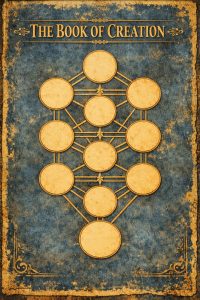
The structure of the soul is the following: The light that emanates from the
Creator creates the desire to take pleasure in it. This desire is called
Malchut. Before Malchut, the light passes through nine
stages as it changes, until it finally becomes suitable to create
Malchut. The nine stages the light goes through are called
Keter, Chochma, Bina, Chesed, Gvura, Tifferet, Netzah, Hod and
Yesod. Then it builds the final stage, which is called
Malchut. The six stages from Hesed until Yesod are
called Zeir Anpin.
In total there are ten Sefirot, that is: nine levels of the light
plus one Malchut, which is the desire to receive. Malchut
is the soul or the real creation, which feels that it wants to receive and to
take pleasure in the light. Malchut begins to receive the light and,
along with the light, it receives the light’s properties. Even in our world,
we know that any influence on us creates our own reflection inside of us. The
same thing happens in Malchut when it receives the light from the
nine upper Sefirot.
We see that a single egoistic structure, Malchut, has acquired nine
more additional altruistic attributes of the light in itself, by receiving the
light from the nine Sefirot of the light. The external information of
the light does not become distorted as it passes through the nine altruistic
attributes of Malchut, since there are no egoistic barriers. This
light only becomes slightly smaller. It decreases in order for the soul to
become optimally filled by it and also to prevent it from becoming overfilled,
which would cause suffering as well.
However, there is one more part in Malchut that has received
altruistic attributes from the light and has become equivalent to it in its
desire to bestow, which is not the tenth part. Further, there is one more
additional part in Malchut that is completely unable to perceive the
light’s attribute, and therefore cannot change. This part is called
“Lev a-Even” or “the stone heart (see the drawing).
Our work consists in leaving this part of Malchut behind, which is
called our “I”; to stop working with it because it will always remain
egoistic, until the end of correction and the arrival of the Mashiach.
Therefore, it is necessary to perform a restriction (Tzimtzum Alef)
on this part of Malchut; That is, not to use it in any way.
Malchut, or the tenth Sefira, is that part of
Malchut that received the light’s attributes and was able to feel the
attributes of the light that had filled it. Therefore, it is able to change –
it has to gradually transform and to begin to act in the same way as the
light. In order to effectively drive the light’s attributes into the
Malchut, the action called “Shvira” is performed, meaning
the breaking or the blow. As a consequence of this action, the attributes of
the first nine Sefirot penetrate into Malchut.
But it is insufficient only to understand that the light’s attributes and
those of Malchut are opposite to each other. The Malchut has
to act the same way as the light does; it needs to become equivalent to the
nine Sefirot. However, how can it do this if the light does not enter
inside of it at all? To achieve this goal, the breaking (Shvirat) of
the Kelim takes place, or the breaking of the desires. This is done
by way of the “blow of the light”, which goes through all nine Sefirot
and enters Malchut. Now, Malchut is mixed and intertwined
with all of the other nine Sefirot. This is called “Shvirat
HaKelim” or the sinful downfall.
After the Shvirat Kelim took place, four kinds of desires were formed.
These are: a) the purely altruistic desires that were present
in the first nine Sefirot, b) the altruistic desires
that have become mixed with the egoistic desires, c) the
egoistic desires that have become mixed with the altruistic, and
d) the purely egoistic desires. This way, two kinds of
desires, the purely altruistic and the purely egoistic, having fallen during
the Shvirat Kelim and having mixed with each other, have now turned
into two more kinds of mixed desires.
Only now does it finally become possible to create a soul in which
Malchut is corrected in the same way as the first nine
Sefirot are. This is because any egoistic desire now contains a spark
of altruism. With this, a special kind of a force is needed, namely the force
of correction. This force causes each altruistic spark to become the prevailing
part of the desire, capable of correcting the whole egoistic desire.
How does this happen? We take the corresponding book on Kabbalah, written by a
Kabbalist who has already corrected himself in correspondence with the light.
When a person reads this kind of a book, what takes place is the transmission
of the instructions about how to build the inner Kli inside of
oneself, in correspondence with the light. By reading the lines in the book,
even without understanding what we have read, we nevertheless attract the
surrounding light to ourselves, which gradually cleanses and corrects our
desires.
Studying under the clear direction of a teacher-Kabbalist, while in a group of
people who want to reach the goal of creation or equivalence to the Creator,
is bound to be effective!
Studying Kabbalah also explains the order in which the parts of our soul will
become corrected, if we direct our desire correspondingly to the corrected
desires of the Kabbalist who wrote the book.
As a person corrects himself, he gradually begins to feel that his desires are
broken. He learns to differentiate them, sort them out according to the
quality and quantity, combine them in a specific order, and gather them. This
path is a long one, but it is special and interesting. A person begins to
elucidate new attributes in himself, perceiving that he is the creation and
becoming aware of his connection to the Creator and to the other parts of the
universe. What takes place is the understanding of how our whole external
system is constructed and how the upper governance works.
The Creator’s goal for us is to first begin having control over ourselves and
then over the whole world, therefore replacing the Creator. In our world we
chase after particular manifestations of the light, such as the pleasure we
get from knowledge, power, sex, food and children.
When the light comes and fills us completely and boundlessly, it is immediately
perceived as complete perfection and pleasure. There are no desires left in a
person. The process of becoming filled by the light is gradual, and it is
called “Sulam” or ‘ladder’. Baal HaSulam wrote about this, and it is
called so in honor of the system of spiritual ascent which he worked out called
“Sulam” in his commentaries “Sulam” on the book of “Zohar”.
The Creator created one collective soul called Adam, which broke into 600,000
parts, each of which consists of four desires. A person’s task consists in
correcting not only himself, but also his part in the collective soul. Each
soul must correct its relation to all of the 600,000 souls, for this is how it
corrects itself; since every other soul, in turn, consists of 600,000 parts,
and the nine first Sefirot enter into each one of them.
The souls are able to become corrected only through the bodies, and the bodies
become corrected in the group by way of various mechanical actions, directed
at the achievement of a single goal. There are two such mechanical actions:
a) studying, and b) doing common work for
the sake of the soul’s spiritual correction.
A person does not have the ability to correct his desires, since the light
created them. It is only necessary to change the direction in which these
desires act, or, to what end does he want to fulfill these desires. If I
temporarily do not fulfill one of my desires, then it will come back to me
later in a more distorted form.
We need to work on how to correctly use this desire. We cannot starve or
torture ourselves, or run away from something. What needs to be corrected is
the intention with which we use our desires. If we do this, then we will see
that all of our desires are necessary for us in order to reach our goal. This
is why they say that the person who is more egoistic has big desires. Another
thing said is that since the fall of the Temple, only Kabbalists still have a
taste for the earthly pleasures.
|