




|
Eighteenth Talk: Reward and Punishment
Can a person really say when he deserves a reward and when – a punishment? For
instance, a piece of a balcony falls down, killing a man passing by; a natural
disaster occurs, etc. Is there anyone we should blame or punish? Or, let’s
say, a child breaks something. We can punish or even beat him, but we will
discipline a child according to our animal perception of reward and punishment,
that is, will transfer our perception and attitude to him. That’s how it was
in Russia. If one did not acknowledge the communists they could even kill him.
They had established their law and their justice, their understanding of good
and bad. But indeed, there must be a direct objective system of reward and
punishment, not for the benefit of this system’s authors, but for the benefit
of its observers.
It is not possible to give a precise and complete explanation of the concepts
of reward and punishment. The correct system should teach something to a
human, besides the mere existence of such a system. But in any case, a human
cannot be objective; he doesn’t know what really stands behind all of his
actions. Because our vessels are not corrected, our actions run counter to the
purpose of creation. From the Creator’s point of view, there is no reward or
punishment. He does not possess such a desire that a human would act one way
and not the other. The Creator has a task to lead man to a special inner state
so that the man could receive from the Creator all the good and all the
enjoyment that are set aside for a man as a result of achieving the purpose of
creation. The Creator does not aim at punishing or encouraging a person for
his past deeds; He constantly leads the person toward the purpose of creation.
Who is subject to punishment and reward; a child, or an adult? Starting with
what level of consciousness? A person, growing up in this world, acquires the
properties and qualities of this world, obeys its laws. If we knew a person as
the Creator knows him we could predict his behavior in every situation. And
then, where is the free choice of a man, and free of what? Is he free from the
natural property that the Creator embedded into him, or from his environment?
Where is the part in which a man will be free both from his nature and from the
environment? If we knew this then it would be possible to designate punishment
or reward for certain manifestations of his free will. This would be because
all the steps he makes would be his personal steps based upon his free choice;
free from both nature and the outside influence.
A man should understand that at each of his steps, at each of his actions, the
Creator teaches him, sharpens his perception, and directs him to the path
towards the purpose of creation. If a person starts seeing that then reward
and punishment will acquire special direction and meaning, according to the
stated goal. The person will determine everything that happens with him or
comes to him, both good and bad, as a reward. And the ‘bad’ will be perceived
not as suffering and pain but as a sign of teaching. All the perceptions will
be only positive. Hence, such classification as reward and punishment simply
do not exist; everything displays only positive and benevolent ways in which
the Creator treats the creations.
However, a person does not immediately understand and sense the Creator, but
rather goes through various concealments of the Creator. First, through the
double concealment, then through the single one, then comes the revelation of
the Creator. Finally, there is the comprehension of eternity, perfection and
infinite love for the One Who always treats man and the whole of mankind with
constant love and the desire to give the utmost enjoyment.
Let’s talk about Yom Kippur. This is the day when the building of a
spiritual vessel is completed. We know that the whole reality includes only
the Light and the vessel. The Light is the Creator, and the vessel is a
creation, a soul, Malchut. The light stays at absolute rest and does
not change. The only intent of the Light is to give enjoyment, that is, to
bring a person to the feeling of eternal and infinite enjoyment.
Look at the whole process of building a spiritual vessel, from its lowest
state, in which we find ourselves now, to the highest sublime, eternal and
perfect state. This whole process is denoted by the Ten Days of Repentance.
During these ten days, starting from the first day of Rosh ha-Shana
until Yom Kippur a soul that has nothing in it besides the desire to
enjoy, starts gradually acquiring the properties of Light. The desire to enjoy
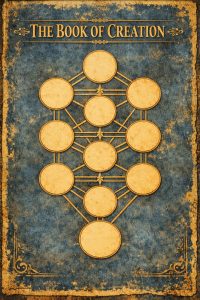
receives ten changes, ten Sefirot, which underlie the correction of
souls.
During these ten days, the soul becomes completely corrected and ready for the
reception of Light. On the tenth day of repentance, Yom Kippur, it is
not allowed to show any desire to receive and enjoy, and in our world it is
expressed in prohibition of food, drink, and other limitations on the day of
the fast. On that day, the last correction takes place.
After Yom Kippur, a completely corrected vessel starts preparation for
the reception of Light. The reception of Light corresponds to the seven days
of Succoth, which includes fulfillment of commandments with the four species;
Lulav, Etrog, and other things, which are necessary to attract the
Light to the vessel. And finally, this whole process is crowned with the
beautiful holiday of Simchat Torah, when all of the Creator’s Light
fills the prepared vessel completely. The Torah symbolizes the Light of the
Torah, and Simcha means reception of Light for the sake of the
Creator.
In the spiritual, such correction does not necessarily take place during this
specific period; it may happen any time when necessary. In our world, however,
we follow the calendar dates.
|
|