




Nigunim
Melodies of Baal HaSulam, RABASH, and Baal HaSulam’s Teacher from Pursov
- Listen to various arrangements of the Nigunim of Baal HaSulam, RABASH, and Baal HaSulam’s Teacher from Pursov.
- Learn about the deep significance behind the Nigunim and their role in expressing spiritual states.
- Download, stream, and access the complete Nigunim in a variety of formats from a range of platforms.
Introduction to the Nigunim —Melodies of Baal HaSulam, RABASH, and Baal HaSulam’s Teacher from Pursov
Kabbalist Yehuda Ashlag (Baal HaSulam), renowned as the greatest Kabbalist of the 20th century, in addition to writing several Kabbalistic texts, also wrote songs and composed melodies as expressions of his spiritual attainments.
His music comes to us directly from the spiritual worlds and has deep emotional connections with the rises and falls a Kabbalist experiences in coming into contact with spirituality. Many of his melodies are composed based on passages from The Zohar and other Kabbalah texts, such as “Bnei Heichala” (words by the ARI), “Tzadik ke Tamar Ifrach,” “Chasal Seder Pesach,” “LeHagid ba Boker Hasdecha,” and “Kel Mistater.”
Baal HaSulam wanted his students to sing Kabbalistic melodies rather than the melodies they were used to singing. So he took melodies from his teacher Rav Admor from Pursov and created some himself. He taught these to his students. Baal HaSulam’s son and disciple, Kabbalist Baruch Ashlag (RABASH), often sang these melodies his father and teacher composed, and he composed melodies as well.
Various arrangements of these melodies, including recordings of RABASH singing some of them, are available for you to hear. English translations of the texts that the melodies are based on and explanations of the meaning behind the melodies are provided.

What Is Most Important about Kabbalistic Nigunim (Melodies)?
What is most important about these Nigunim is not the musical notes themselves but the many subtle nuances that exist between them. We learn that there are Taamim (flavors), Nekudot (diacritics or marksabove, under, or within letters), Tagin (crowns on top of letters), and Otiot (letters). What are letters? Letters are exactly the finest nuances formed at the end of the vessel’s impression from the light. They are impressions of Reshimot (spiritual records or data) that depart from the spiritual vessel and re-enter it. This short impression inside and outside in the departing light is called “a letter.” It is a symbol that contains the most information about the spiritual vessel.
It is the same with sounds. When we play these sounds, these Nigunim (melodies), there is a major difference between one who knows and one who is ignorant, between the one who plays correctly and the one who plays pleasantly. This difference is in the extent to which one understands where the important nuances are. The sounds are not of utmost importance. The importance is in the tiniest symbols, for instance, how the sound begins and ends rather than the sound itself.
Regrettably, few are currently able to express these correctly. Kabbalist Dr. Michael Laitman spoke to this point with the example of his dear student who played violin who once told him, “I’m ready to play only on the condition that you will hold my hand.” Dr. Laitman mentioned that this expressed a correct approach to playing these lofty Nigunim.


Listen to the Nigunim
Original recordings of Kabbalist Baruch Shalom HaLevi Ashlag (RABASH) singing Baal HaSulam’s melodies
Concert of Baal HaSulam’s melodies in modern arrangements by the band
“Bnei Baruch.”
Classical arrangements of the complete melodies of Baal HaSulam, RABASH, and Baal HaSulam’s Teacher from Pursov.
Live, small ensemble performances of the melodies of Baal HaSulam, RABASH, and Baal HaSulam’s Teacher from Pursov.
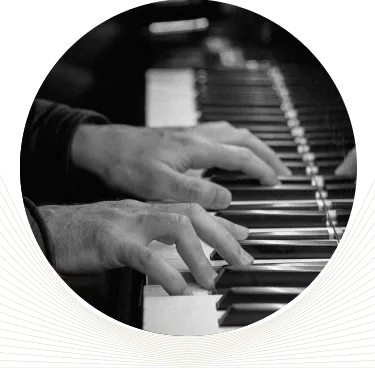
Solo piano arrangements of the complete melodies of Baal HaSulam, RABASH, and Baal HaSulam’s teacher from Pursov.


Selected melodies of Baal HaSulam and Baal HaSulam’s Teacher from Pursov, arranged for guitar.
Baal HaSulam’s melodies in smooth, easy listening instrumental arrangements.
Baal HaSulam’s melodies in jazz/fusion arrangements.
Acid jazz, electronica, metal, funk and ambient versions of Baal HaSulam’s melodies.
Midi versions of melodies by Baal HaSulam and RABASH.


The Words and Meaning of Each Nigun
“La Menatzeach al Shoshanim”
(“To the Leader Upon Lilies”)
My heart is astir with a good theme; I say, “My works are for a king; my tongue is a pen of an expert scribe.”
You are more handsome than [other] men; charm is poured into your lips. Therefore, God blessed you forever.
Gird a sword on your thigh, O mighty one, your majesty and your glory.
And your glory is that you will pass and ride for the sake of truth and righteous humility, and it will instruct you so that your right hand shall perform awesome things.
Your arrows are sharpened, nations shall fall under you, in the heart of the king’s enemies.
Your throne, O judge, [will exist] forever and ever; the scepter of equity is the scepter of your kingdom.
Your loved righteousness and you hated wickedness; therefore God, your God, anointed you with the oil of joy from among your peers.
Myrrh and aloes and cassia are all your garments; more than ivory palaces, those palaces that are Mine will cause you to rejoice.
The daughters of kinds will visit you, the queen will stand at your right [bedecked] with golden jewelry from Ophir.
Hearken, daughter, and see, and incline your ear, and forget your people and your father’s house.
And the King shall desire your beauty, for He is your Lord, and prostrate yourself to Him.
And the daughter of Tyre shall seek your presence and tribute, those who are the richest of the people.
All honor [awaits] the King’s daughter who is within; her raiment is superior to settings of gold.
With embroidered garments, she will be brought to the King; and virgins in her train who are her companions will be brought to You.
They shall be brought with joy and exultation; they shall come forth into the King’s palace.
Instead of your forefathers will be your sons; you shall appoint them as prices throughout the land.
I will mention Your name in every generation; therefore peoples shall thank You forever and ever. (Psalm 45)
A lily is Malchut that contains all vessels, all desires, our entire life. “A lily among the thorns” means using all of Malchut’s vessels and desires in the higher nature of bestowal in resemblance with the Creator.
We can only reach this state via the thorns, which are various discernments, disturbances, and scrutinies. We then become victors, as it is written, “What is a victor to the sons of Korach?” A victor achieves and learns the song of love.
It is solely from Malchut, the innermost point in the heart, that we start feeling the Creator, a feeling of unification and true love. It comes at the end of the spiritual path. Until then, we undergo revelations of hatred, fear, confusion, doubts, dependence, and every complaint we could possibly imagine. Then we turn to the Creator and blame Him for the myriad negative revelations. Afterward, everything opens up to us, and we can view the entire picture. Finally we praise the Creator, connect with, adhere to, and love Him.
Then we say to the Creator, ”My heart has acquired a good thing.” There is only one good thing in the world: adhesion with the Creator—the quality of love, bestowal, and connection. We are initially created in a form opposite to the Creator, as egoists, who only consider our self-benefit that want to exploit the world and the force of the Creator for our own needs.
During the process of our spiritual work and progressing in our desire to discover the truth, we eventually experience a revelation of our opposite form to the Creator, which is called “the revelation of evil.” When the forces of evil, the Klipot (shells, peels), surface in ways that we can control, we reach a state of goodness in the fullest spiritual meaning of the term. As it is written, “My heart has acquired a good thing.”
How does our “heart acquire a good thing”? On this point it is written, “I say my deeds are for the King.” That is, everything within us becomes directed at the King, who is the Creator, the quality of love, bestowal, and connection. At which point, we praise not ourselves, but the Creator, because we discover that by attaining the Creator’s quality of love, bestowal, and connection, we thereby understand such a quality, and we ourselves then ascend to its levels.
Then it is written about us that “You are more beautiful than any man.” This is because we become heroes and the entire creation that the Creator created is below us. We grab hold of it in order to work in the same form of bestowal as the Creator.
“La Menatzeach al Shoshanim” (“To the Leader Upon Lilies”) is a song that can only be sung by those who have indeed reached the end of the spiritual path. My teacher RABASH used to sing it sometimes when he was alone in Tiberias. I would hear him singing it from the adjacent room during long winter nights. Singing “La Menatzeach al Shoshanim” would bring RABASH to a special state. I saw how deeply absorbed inside himself he was while he was singing it, how detached he was from the corporeal reality, and how attached he was to the forces, levels, and states that the flowing song depicts—those of love, friendship, and unity with
the Creator.
“Misod Chachamim”
(“From the Foundation of the Wise”)
From the foundation of the wise and discerning,
And from the one who teaches understanding to those who comprehend,
I will open my mouth in prayer and supplication,
To plead and seek favor before the King of all kings and the Lord of all lords.
(Prayers of the Days of Repentance)
“Misod Chachamim” means “from the foundation of the wise.” The wise are the sages who have spiritual attainment and who teach that in order to approach and attain the purpose of life, which is adhesion with the Creator, the upper force of love and bestowal that created and sustains us, we need guidance from those who have attained those degrees themselves.
In the wisdom of Kabbalah, learning from sages makes up two of the three means needed to spiritually advance, namely:
- Books — written by those sages
- Teacher — a Kabbalist with spiritual attainment who can guide their students to spiritual attainment.
- Supportive Environment — friends, i.e., others who share a desire to spiritually advance to connect with, and to provide and receive spiritual support.
“Hine ke Chomer”
(“Like Clay in the Hands of the Potter”)
For behold, like clay in the hand of the potter, at his will, he expands, and at his will, he contracts, so are we in Your hand, Preserver of kindness.
Look upon the covenant, and do not turn to the inclination.
For behold, like a stone in the hand of the sculptor, at his will, he holds, and at his will, he shatters, so are we in Your hand, Giver of life and death.
Look upon the covenant, and do not turn to the inclination.
For behold, like an axe in the hand of the woodworker, at his will, he brings close to the fire, and at his will, he separates, so are we in Your hand, Supporter of the poor and destitute.
Look upon the covenant, and do not turn to the inclination.
For behold, like the helm in the hand of the sailor, at his will, he grasps, and at his will, he lets go, so are we in Your hand, Good and forgiving God.
Look upon the covenant, and do not turn to the inclination.
For behold, like glass in the hand of the glazier, at his will, he celebrates, and at his will, he melts, so are we in Your hand, Remover of willful and unintentional transgressions.
Look upon the covenant, and do not turn to the inclination.
For behold, like fabric in the hand of the embroiderer, at his will, he straightens, and at his will, he bends, so are we in Your hand, Zealous and avenging God.
Look upon the covenant, and do not turn to the inclination.
For behold, like silver in the hand of the refiner, at his will, he alloys, and at his will, he purifies, so are we in Your hand, Provider of healing and sustenance.
Look upon the covenant, and do not turn to the inclination.
(Yom Kippur liturgical poem)
“Hine ke Chomer” (“Like clay in the hands of the potter”) refers to a verse from Jeremiah 18:6 where it is written, “says the Lord. Behold, as clay in the potter’s hand, so are you in My hand, O house of Israel.” This means the Creator surrounds us completely and we are the outcomes of His influence on us.
Baal HaSulam refers to this verse in his article “The Freedom,” where he writes that “we are at the hands of the four factors, as clay in the hands of a potter.” He describes how the Creator operates on us through four factors, which can be summarized as:
- Source — Our genetic makeup, like a plant’s seed, contains inherent characteristics that we cannot change.
- Source’s development — Just as a seed follows a programmed growth process, we also develop according to a natural timeline that dictates our physical, intellectual, and emotional progress.
- External factors directly influencing the source’s development — Environmental conditions, such as soil and sunlight for a plant, or family, culture, and education for a person, are essential for realizing inner potential.
- External factors indirectly influencing the source’s development — Unexpected external influences, like natural disasters for plants and people, or major accidents and financial windfalls for people, can disrupt or alter the natural development process.
While we are at the hands of these four factors like clay in the hands of a potter, we learn that there is a certain point where we can exercise our free choice. Baal HaSulam elaborates on that point in “The Freedom.”
“Bnei Heichala”
(“Sons of the King’s Palace”)
O sons of the palace, who yearn to behold the radiance of
Zeir Anpin,
Be present here at this banquet, where the King is engraved.
Desire to rejoice together in this gathering among the watchers and all the wings.
Rejoice now, in this moment, which is one of favor and free
of wrath.
Draw near to Me and behold My might, where there are no harsh judgments.
Only those who are worthy may enter, while the impudent dogs are barred.
Behold, the Ancient of Days has prepared a feast for those who are fit to pass.
His will is revealed, nullifying all husks.
He will weigh them in their measure, and they shall be hidden within the rocks.
For now, in the time of the afternoon offering, in the joy of Zeir Anpin.
(Kabbalist Isaac Luria [The ARI])
“Bnei Heichala” means “the sons of King’s Palace,” who are those who desire to reach the palace of the King. The King’s palace is Bina, the quality of bestowal, which is the upper force, the Creator. The sons are those who yearn to resemble the King in their qualities, to become like the Creator. The word for “son” in Hebrew (“Ben”) derives from the word for “understanding” (“Havana”). They yearn to understand the King (the Creator), and through their understanding, come closer to Him and feel Him.
Therefore, Bnei Heichala are the souls that aspire to attain the state of uniting with the King in His palace. In order to do so, they are ready to undergo the entire system of corrections, to change themselves from beginning until the end, from the nature in which they were created to the nature of the King, as it is written: “Returned the sons of Israel to the height of their God.” This is what this song is about.
When we reach such a state and become Bnei Heichala, it is called the “end of correction” (Gmar Tikkun). This is why we sing this song during Mincha (evening prayer) on Shabbat. Shabbat symbolizes the ascents during which this entire world rises to the upper world completely and then we all enter the King’s palace.
This is how it will be at the end of humanity’s development, at the end of correction. However, there are souls that already attain this state today. It is expressed in three ascents of the worlds on Shabbat. Those who undergo their individual correction who study Kabbalah feel three ascents on Shabbat. The first ascent is in the evening, during the onset of Shabbat; the second is the next day on Shabbat morning; and the third, the biggest ascent during Mincha, at the end of the day, is when Shabbat ends. Then, during this highest state, we sing the song Bnei Heichala.
The lyrics of this song were written by Kabbalist Isaac Luria (the ARI), and the melody is composed by Baal HaSulam. For this reason, due to the unification of the ARI and Baal HaSulam in one composition, we who enter this song reach the highest ascent that a Kabbalist can experience before the general end of correction when the entire world rises to that very palace.
It is thus a very elevated song, like an anthem of that ascent. This state, so far, is being attained only by those who study Kabbalah, and later, we expect, all of humankind will
attain it.
“Kaddish”
(“Holy”)
May His great Name be magnified and sanctified in the world that He created according to His will.
May He establish His kingship, bring forth His redemption, and hasten the coming of His Messiah.
In your lifetime and in your days, and in the lifetime of all the House of Israel, swiftly and soon, and say: Amen.
May His great Name be blessed forever and to all eternity.
May His great Name be blessed, praised, glorified, exalted, uplifted, honored, elevated, and extolled, the Name of the Holy One, Blessed be He, beyond all blessings and songs, praises and consolations that are uttered in the world, and say: Amen.
May the prayers and supplications of all the House of Israel be accepted before their Father in Heaven, and say: Amen.
May there be abundant peace from Heaven, and good life upon us and upon all Israel, and say: Amen.
May He who makes peace in His high places make peace upon us and upon all His people Israel, and say: Amen.
(Kaddish Titkabel, Sephardic)
“Kaddish” comes from the word “Kadosh,” which means “holy.” “Holiness” in the wisdom of Kabbalah means bestowal, or in other words, the quality of the upper force that we come to know and attain by our acquisition of that quality.
“Kaddish” is a prayer recited in Aramaic as part of the Jewish prayer service. The central theme of the “Kaddish” is the magnification and sanctification of God’s name.
“Azamer Beshvachin”
(“I Will Sing in Praises”)
To enter into the gates of the orchard of apples, which
are sacred.
We shall now prepare for her a new table, and a good lamp, which shines upon our heads.
Right and left, and between them is the bride, who walks adorned, with numbers and garments.
Her husband embraces her, in her foundation, He brings her comfort, breaking her trials.
The cries and sorrows are abolished and ceased, but new faces, and spirits with souls.
Great joy will come, and for one it will be two, light will reach her, with abundant blessings.
Let the groomsmen approach, and make corrections, to increase provisions, and fish with their whispers.
To create new souls and spirits, in twos, in threes, and in threes of sevens.
Seventy adornments for her, and the king above, who crowns all, with the holiest of holies.
Signed and sealed within all the worlds, but the Ancient of Days, is not stopped.
Let His will be before Him, to dwell upon His people, to delight in His name, with sweetness and honey.
Prepare the southern lamp, the hidden one, and a table with bread, set in the north.
With wine in the cup, and myrtle branches, for the bride and groom, to strengthen the weak.
Let us make crowns for them with precious words, with seventy adornments, placed upon fifty.
The Shechina will be crowned with six kinds of bread on the side, connected with hooks, and gathered provisions.
Ceased and forgiven, the distanced impurities, the heavy burdens, and all harmful tools.
(Kabbalist Isaac Luria [The ARI])
The poem by the ARI is traditionally sung during the songs of Shabbat evening (Friday night). The initials of each stanza in Hebrew form the signature: “I am Yitzchak Luria, son of Shlomo.”
There are three periods of spiritual ascension that each correspond to a special Nigun (melody), which embodies the entire symbolism and totality of the qualities of that state: the first, second, and third.
The first state is that of infinite admiration, praise, and the revelation of an entirely new world, which is absolutely unlike ours. Therefore, the song is called “The Praise of Greatness.”
These are words of admiration, indescribable fullness, and unlimited perception that embraces one who starts feeling the upper force of love, bestowal, and connection fill their lives, their entire being, for the first time.
When we ascend to each of these steps—the first, the second, and the third—the merger, connection, contact, and mutual penetration with the upper force, this understanding is referred to as a feast. That is, it is the enjoyment of what the upper force has prepared and now presents before a person.
Thus, the very first feast, the first reception on the first step to the Creator, is symbolized or depicted by the song “Azamer Beshvachin.”
“Asader LeSeudata”
(“I Will Prepare the Feast”)
I will prepare the feast, at the dawn of Shabbat. And I shall now invite the Ancient Holy One. Light shall dwell within it, in the Great Sanctification. And with good wine, the soul shall rejoice. He will send us His beauty, and we shall behold His honor. And He will reveal to us His hidden secrets, whispered. He will uncover the reasons, from the twelve loaves, Which exist in the heavens, fragile and substantial. The bundle above, the house of all life, And the power shall increase, and rise to the top. Happy are the harvesters of the field, in speech and voice. And they will speak words, sweet as honey. Before the Master of the worlds, with hidden words. They will reveal sayings, and declare something new. To adorn the table, with a precious secret. Deep and hidden, and not an empty matter. And these words will ascend to the heavens. And there, who resides? Isn’t it that very sun? Greater shall it become, beyond the level. And He shall take His mate, who had been separated.
(Kabbalist Isaac Luria [The ARI])
“Asader LeSeudata” is a poem written by the ARI that is traditionally sung during the Shabbat morning songs. The initials of each stanza in Hebrew form the name of the ARI: “I am Yitzchak Luria (Ashkenazi).”
Every ascension we undergo on the spiritual path is another special reception from the upper force of love, bestowal, and connection, or in other words, another revelation of the Creator. Each of these steps is likened to a feast that has been prepared by the Creator and offered to a person.
While “Azamer Beshvachin” refers to the first revelation of the Creator, “Asader LeSeudata” refers to what one sings on their second step. It refers to praising the Creator and the connection with Him in a more conscious way when one can see the actions they can apply to be included in the connection with the Creator.
Upon ascending to the second level, which means having passed through the entire period of one’s spiritual adolescence, a person’s soul naturally strives further toward its complete understanding and fulfillment with the light of infinity and perfection. In other words, “Asader LeSeudata” is a Nigun of one whose desire for spirituality awakened, and after a very long path of preparing for spiritual work has reached a state where they cross the Machsom (barrier between this world and the spiritual world), and enter the spiritual world.
In the journey up the spiritual worlds, we traverse the degrees of the worlds of BYA (Beria, Yetzira, and Assiya) up to Atzilut, and acquire the vessels of bestowal of Gadlut (adulthood), where we reach the Rosh of Atzilut, where our soul becomes ready and welcome to receive the light of Ein Sof (infinity), and can receive in order to bestow. At that stage, we become filled with the light that is called “the feast of the righteous.”
After we feel the preparations that we have been through and the components of the spiritual work at this exalted state, we praise the forces we felt and through which we rose to this high degree, and invite them to a feast. In other words, the myriad forces we have experienced in our spiritual journey participate in a major Zivug (coupling) of adhesion with the upper force, the Creator, where we and the Creator unite in our inner vessels. At this point we invite the upper levels who used to take care of us while we were in a state of Katnut (smallness, infancy) on the spiritual path, Zeir Anpin and Malchut of Atzilut, both of which give birth to the soul. They previously controlled us and helped us grow spiritually. They led us from one spiritual state to another, from darkness to light, in which we come to acquire myriad spiritual discernments and grow wiser until we grow up to a state of Gadlut (adulthood). At that stage, we grow above our desire to receive and are able to control it and work with it in order to bestow.
Now that we are in a state of the greatest and loftiest unity with the Creator, we sing this Nigun, “Asader LeSeudata” (“I Will Prepare the Feast”). For this high meal of Shabbat, a next world, an end of correction (Gmar Tikkun), we use all the means, elements, and forces, both internal and external, us together with our entire soul and all the worlds that have brought us to this state. At this time, we enter into a single unity with the Creator, in one vessel, in the feast of the righteous.
“Tzadik ke Tamar Ifrach”
(“The Righteous Person Will Flourish Like the Palm Tree”)
The righteous one flourishes like the palm; as a cedar in Lebanon he grows.
Planted in the house of the Lord, in the courts of our God they will flourish.
They will grow in old age; fat and fresh they will be.
To declare that the Lord is upright, my rock in Whom there is no injustice.
(Psalm 92)
There are two states in every song. One is the state of the vessel, the soul, that we have worked on, corrected, and then attained delight and excitement, from which we now sing.
This is why in “Tzadik ke Tamar Ifrach” there is a sensation of the previous state when we lacked fulfillment, suffered, and searched, and that we reached the state in which we know that this is how it was supposed to be, because a righteous person comes to justify the entire process through which they passed.
Thus, the rapture that comes from previously being in the outermost oppositeness of sensing ourselves as very distant from the Creator, and now entering the palace of the King, the upper world, bursts out in our present state in the form of a melody, from within the sensation that fills us.
This sensation encompasses two opposite states: our previous, most distanced state that seemed hopelessly far from the upper, spiritual one, and the present state where we have reached adhesion with the Creator.
In essence, “Tzadik ke Tamar Ifrach” is special because we are grateful, not for our state, but for our ability to be righteous, and justify the Creator in everything we went through on our path. We now see the causality and the pressing necessity of all the states that we passed through. We understand that they were all arranged for us from above so that we could attain this elevated state.
“Yedid Nefesh”
(“Beloved of the Soul”)
Beloved of the soul, Compassionate Father!
Draw Your servant to Your will.
Your servant will hurry like a hart, will bow before
Your majesty.
To him Your friendship will be sweeter than the dripping of the honeycomb and any taste.
Majestic, Beautiful Radiance of the universe!
My soul pines for Your love.
Please O God, heal her now showing her the pleasantness of Your radiance.
Then she will be strengthened and healed and eternal gladness will be hers.
All-worthy One, may Your mercy be aroused and please take pity on the son of Your beloved.
Because it is so very long that I have yearned intensely to see the splendor of strength.
These my heart desires, and please take pity and do not conceal Yourself.
Please be revealed and spread upon me, my Beloved, the shelter of Your peace.
Illuminate the land with Your glory, we shall rejoice and be glad in You.
Make haste, do love, for the time has come, and pardon us as in days of old.
(Elazar ben Moshe Azikri)
“Yedid Nefesh” (“Beloved of My Soul”) is a prayer song written by Elazar ben Moshe Azikri, a Kabbalist who lived in Safed (in Hebrew “Tzfat”) a city in northern Israel known for its Kabbalistic inhabitants between 1533 and 1600. Over time, the song was gradually incorporated into prayers that were commonly sung.
Yedid Nefesh expresses man’s complete devotion to the Creator. The purpose of our lives is to reach adhesion with the Creator, which means that we enter into a state of complete love and bestowal in our connections, which become vitalized by the positive unifying force of nature—the Creator. Such an action will grant us intentions that lead us to the corrections of the spiritual states that this prayer describes.
In the wisdom of Kabbalah, we say that we spiritually progress until “our mouth and our heart (desires) become a single whole,” so that our lips will not speak against the wishes of our heart. The Creator awaits only the sincerity of our desires so as to fulfill them at once and bring us closer to Him.
“March” is a key Nigun that connects students, friends on the spiritual path, who share a common desire for spirituality.
It is an instrumental Nigun with a triumphant, upbeat, and optimistic feel. Until today, it is one of the most common Nigunim sung by the Bnei Baruch group that studies with Kabbalist Dr. Michael Laitman.
On the spiritual path it is important to begin from the right line with raising the importance of spirituality and the importance of the spiritual state of uniting with one another in order to draw the unifying spiritual quality of love and bestowal in this connection. By doing so, we imagine and inspire each other with the idea of our spiritual state as a single soul in order to increase the desire to enter that state, and then we proceed to attract that state to ourselves. This is called “attracting the surrounding light,” which is the spiritual force that operates on us to spiritually develop us.
“March” is often used to revitalize, reawaken, and re-inspire those advancing on the spiritual path with everything positive about it, that we are happy to have been given an opportunity to march on the spiritual path to attain the highest possible state as a single soul.
“Mizmor le David”
(“A Psalm for David”)
The Lord is my shepherd, I shall not be in want.
He makes me lie down in green pastures, he leads me beside quiet waters,
He restores my soul. He guides me in paths of righteousness for his name’s sake.
Even though I walk through the valley of the shadow of death, I will fear no evil, for you are with me; your rod and your staff, they comfort me.
You prepare a table before me in the presence of my enemies. You anoint my head with oil; my cup overflows.
Surely goodness and love will follow me all the days of my life, and I will dwell in the house of the Lord forever.
(Psalm 23)
“Mizmor le David” (“A Psalm for David”) is the 23rd Psalm of King David, who is both renowned as a great Kabbalist and is also an expression of the spiritual quality of Malchut. The Hebrew word “Malchut” translates to “Kingdom,” and it is why King David was called the “King of Israel.” Such a kingdom is not one that is held with power and force. Rather, it is a quality that fills human desires.
King David’s Psalms were written as expressions of gratitude that come from closeness and connection with the Creator, the upper force of love and bestowal. A person on the spiritual path can find a lot of benefit in reading these Psalms as an addition to the core study materials. This is because they can help awaken emotions of connection and closeness to the Creator. This psalm specifically expresses the great confidence that comes from a person’s connection with the Creator.
A Nigun (melody or tune) is the expression of emotions without words. On one hand it is more abstract, and on the other hand it is sharper and more focused. If the words and the melody in a song operate together, then the words are made of the letters, and the letters form sentences in a direct plea, a process that begins and ends, while the melody that is added to the words adds Taamim (flavors) in the plea.
In a melody without words, we need to also express the missing words with the melody itself. We know that there are the discernments in the vessels of Taamim, Nekudot, Tagin, and Otiot (letters) in the melody itself. In writing, we also see Nekudot and letters, but Taamim and Tagin are only used in special circumstances. They are internal additions that express the internal condition of the vessel, of our feeling, of how we construct our attitude.
There is a melody that goes over the words and in many cases changes the essence of the words. In many cases, we can sing the same words happily or we can sing them sadly and each time the same words will have a totally different meaning. This means that the melody expresses one’s attitude to what the words say. Therefore, there are Taamim, Nekudot Tagin, and Otiot of which the Taamim express our attitude to what we sing.
”Chasal Seder Pesach”
The order of Passover is concluded according to its law, in all its ordinances and statutes.
Just as we have merited to arrange it, so may we merit to perform it.
Pure One who dwells in the heights, raise up the congregation of the people who are counted.
Soon lead the planted saplings, redeemed to Zion with joy.
(Passover Haggadah)
“Chasal Seder Pesach” expresses our state in the beginning of our spiritual path. We are full of energy, we are ready for this journey, and we know that the process of correction lies ahead of us until we correct ourselves to receive the light, the Torah.
However, in the Exodus from Egypt, the state in which we rise above our egoistic nature, we already see a full guarantee that, with the help from above, we have the strength and we are able to, in all that is prepared for us, pass these 49 gates, corrections, the so-called Lag ba Omer (the 33rd day of Omer), in the middle and all the days of Omer in order to come to the reception of the Torah. The state of the reception of the Torah is Shavuot. It is then that our entire vessel will be ready for the 50th gate, and we will be worthy of receiving the spiritual light.
Chasal Seder Pesach is a fairly simple song. It particularly symbolizes our readiness to go and pass all the Sefirot of Omer, the entire correction of the vessels that we must perform in each Sefira, in each of these 49 states.
“Nigun from Pursov”
“There is a very unique and rare Nigun, which we do not usually sing. In over 25 years, I remember us only singing it a few times, because we sing it at very special, internal, intimate, and critical moments. It is not a Nigun of RABASH. It is also not a Nigun of Baal HaSulam.
“Baal HaSulam heard it from his teacher, the Rav Admor from Pursov, and that is what we call it, The Nigun of the Rav Admor from Pursov.’ We also do not know from where the Rav from Pursov received the Nigun. It seemingly comes from an ancient source.
“It is a complicated Nigun. I have never heard anything more profound or loftier. Therefore, we do not usually use this Nigun, but it seems that now, this moment of connection has taken place between us, and we will sing it together.
“It does not matter if you have not heard it before. We now, however, need to gather as one heart, with one throat, all of us—to simply dissolve, for us each to lose ourselves in it, and then we might be able to succeed.”
These were the words of Yitzchak Smagin, a long-time Kabbalah student who was speaking at a cultural event on the second night of the World Kabbalah Convention in September, 2024. It was a very special moment when a powerful and warm global connection was being experienced by thousands of the convention’s participants. Following this speech, the hall full of thousands of spiritually-inspired participants proceeded to sing this Nigun together.
“The Nigun from Pursov” is another wordless Nigun that spans large ranges and expresses a deep yearning for spiritual unity and connection with the Creator.
“Singing evokes blessings from above, until it becomes manifested in all lower worlds. Rav Elazar said: ‘Those who aspire shall sing praises unto spiritual heights, unto the upper ones and lower ones, fastening all the worlds with the tie of faith.’ It is said about this deed, ‘Those who aspire to the Creator will sing this song.’ ‘Will sing’ in particular, and not ‘sings,’ since it will happen in the future. For singing should resound in Malchut, singing praises to its height, Zeir Anpin. And by this, Malchut itself rises to Zeir Anpin. This is what The Book of Zohar narrates to us about that time.”
– (Zohar for All, “VaYelech”)
“Chamol al Maaseicha”
(“Have Compassion on Your Creation”)
Have compassion on Your creations, and rejoice in
Your works.
And let those who seek refuge in You say, in Your righteousness,Your burdened ones.
Exalted is the Master over all His works, for those who sanctify You, You have sanctified with Your holiness.
It is fitting for the Holy One to be adorned with glory from those who are sanctified.
(Piyyut from the Chazzan’s Repetition in the Musaf Prayer of the Days of Repentance)
A person asks for forgiveness and pardon. As usual, in spiritual work there are two opposite conditions. For those who are at the level of an angel, at the final stage of correction, there is but one force, “There is none else beside Him.” For those who are at a state of unconsciousness, at the level of this world, there is also only one force, which is expressed as “If I am not for me, then who is for me?”
In relation to those who are on the path from this world to the world of Ein Sof, the two forces become revealed at any given time: the force of the created being and the force of the Creator, which operate together. On one hand the Creator apparently arranges everything, but on the other hand it depends on the created being.
When we reach the state where “If I am not for me, then who is for me?” and “There is none else besides Him” converge and become one in us, then we reach a real prayer that is composed of two opposing discernments, and we feel that we cannot decide.
How can it be that the Creator controls everything in us, that “There is none else besides Him,” yet on the other hand we still have the feeling that we exist outside the Creator’s control and can turn to Him and can consolidate our attitude toward adhesion? We can compare this to a state where we find ourselves at the age of forty or fifty, when we already know a lot about life, yet at the same time, we feel like a fetus in its mother’s womb, which does not know anything and cannot discern anything. Then we have only one request: after all of our efforts, all the labor we have put into adhering with You, test us and see if we are on the right path.
“Kel Mistater”
(“The Creator Is Hiding”)
God who is concealed in the finest secrecy, the intellect hidden from all thought. Cause of all causes, crowned with the supreme crown, a crown shall be given to You, O Lord.
In the beginning, Your ancient Torah, Your inscrutable wisdom is inscribed. From nothing it is found, yet it remains hidden, the beginning of wisdom is the fear of the Lord.
Broad rivers, streams of faith, deep waters drawn forth by a man of understanding. Its outcomes are fifty gates of insight, the Lord preserves the faithful.
The great God—before You, all eyes are lifted, abundant in kindness, great is Your mercy upon the heavens. God of Abraham, remember Your servant, I will recall the kindness of the Lord, the praises of the Lord.
Lofty One, adorned with might and strength, who brings forth light from that which has no change. The Fear of Isaac, illuminate our judgments, You are mighty forever, O Lord.
Who is like You, O God, who performs wonders?
Mighty One of Jacob, awesome in praises. The glory of Israel, who hears prayers, for the Lord listens to the poor.
O Ye, may the merit of the forefathers protect us, the Eternal One of Israel, redeem us from our troubles. Lift us from the pit of exile, and raise us, to forever serve in the work of the House of the Lord.
From right and left, the prophets drew their sustenance, eternity and splendor emerge from them. Jachin and Boaz are named, and all Your children are taught of the Lord.
The foundation of the righteous is concealed in seven, a sign of the covenant that endures forever. From the source of blessing, the righteous is the foundation of the world, righteous are You, O Lord.
Please, soon establish the kingdom of David and Solomon, with the crown that his mother adorned him. The Congregation of Israel is called the bride with delight, a crown of splendor in the hand of the Lord.
Mighty One who unites the ten Sefirot as one, and separates the Chief, who does not see lights. Their sapphire forms shine together, may my song be brought near before You, O Lord.
(Zemirot for the Third Meal)
“Kel Mistater” is a song that we sing toward the end of Shabbat, at the end of the day when we already approach the exit, the end of Shabbat. The end of Shabbat is the time when the Shechina that comes to us during the spiritual ascent starts purposefully abandoning us, leaving us in darkness, in lack of fulfillment, so that all that we received on Shabbat serves as the driving energy for an independent attainment of what we received as a gift on Shabbat.
Shabbat is called “a gift.” As it is written in the Torah, the Creator said, “A good gift have I for Israel and Shabbat is her name. Go and tell them.” (Talmud, Shabbat 10b) Shabbat is truly a gift. Why? A gift is something that is not given to us as a reward, for we have not labored for it. A gift is given out of love.
So it is with Shabbat. The upper force called “Shabbat” comes from above. Of course, it comes to a Kabbalist, to a person who desires to come closer to the Creator, one who devotes himself to spiritual progress, and not to a regular person. The upper force extends from above and we are inevitably awakened by it. We experience various sensations, phenomena that we do not yet deserve according to our vessel, but which are given to us as a gift.
We are granted our ascent, our revelation, but after some time this sensation begins to wane and end. Then we say, “Kel Mistater” (“the Creator is hiding”). In other words, “You, the Creator, have revealed Yourself to me in the state ofShabbat as a gift, and now you drift away from me again in your hiding. I understand that this is necessary so that I can come closer and reveal You even on ‘low’ days, meaning at the time of Your concealment, on weekdays, when I am in the state of weekdays separated from sanctity. But I must ensure that all days of the week connect to the degree of Shabbat.” This is the song of a person who has experienced the Creator.
This song expresses the sensations of all ten Sefirot—Keter, Hochma, Bina, Hesed, Gevurah, Tifferet, Netzach, Hod, Yesod, and Malchut—and this is because if we attain these sensations, we then perceive the Creator’s qualities in them, and now, as we head into concealment and the Creator distances Himself, we know exactly what we need to attain by ourselves. This is already inscribed in us as Reshimot (spiritual records), and we acquired the strength for this from being given the state of Shabbat. Now, during the week, we elevate ourselves to the level of the previous Shabbat, and later, when the following Shabbat comes, it will be an even greater gift for us. This continues until all these Shabbats unite into the level of the end of correction (Gmar Tikkun).
“Ki Hilatzta Nafshi”
(“Thank You for Saving My Soul”)
For You have rescued my soul from death, my eye from tears, and my foot from stumbling.
(Psalm 116:8)
“Ki Hilatzta Nafshi” are words from Psalms. These are the words that King David used to express the state he felt as he ascended in his attainment to the state of the complete correction of his entire soul. He turned to the upper force, the Creator, with these words: “Ki Hilatzta Nafshi,” which literally mean “Because You saved my soul,” but which can be understood in terms of King David’s gratitude to the Creator, i.e., “Thank you for saving my soul.”
The melody to this song was composed by Kabbalist Baruch Shalom HaLevi Ashlag (RABASH), the son and disciple of Baal HaSulam, and the teacher of Kabbalist Dr. Michael Laitman. He sang this song in the presence of Dr. Laitman on several occasions.
This melody might sound sad to us, but the truth is that it is not sad. Rather, it is tender, and it expresses the feeling of someone who entered the quality of Bina, i.e., the Creator’s quality of bestowal, where there are no cries and everything rests in peace. Through this melody, RABASH expresses the entrance into this state as he undoubtedly sees that all of his vessels, his entire soul, all of his desires, submit to the upper force and begin to live in it. “Ki Hilatzta Nafshi” is a short song about serene peace, about a person who enters the presence of the upper force and remains there in the state of absolute eternal rest.
“Yaale Tachnuneinu”
(“Raise Our Pleas”)
May our supplication rise in the evening, and may our cry come in the morning, and may our song be seen until evening.
May our voice rise in the evening, and may our righteousness come in the morning, and may our redemption be seen until evening.
May our affliction rise in the evening, and may our forgiveness come in the morning, and may our lament be seen until evening.
May our refuge rise in the evening, and may His mercy come in the morning, and may our atonement be seen
until evening.
May our salvation rise in the evening, and may our purity come in the morning, and may our grace be seen
until evening.
May our remembrance rise in the evening, and may our testimony come in the morning, and may our splendor be seen until evening.
May our knocking rise in the evening, and may our joy come in the morning, and may our request be seen until evening.
May our groaning rise in the evening, and may it reach You in the morning, and may You be revealed to us until evening.
(Piyyut Recited in the Evening Prayer of Yom Kippur)
“Pleas” mean the prayer of the many. “Many” means when we discover that we are still composed of different forces that are not in a state of adhesion with the Creator. When we judge, feel, and clarify them one by one, we reach a state where we raise MAN, a request, a plea, for the upper force to come and correct these different opposing forces inside us and give us one desire and intention. We plead to feel one flow and one desire in these incredibly different and opposite forces so that they will lead us to our source.
In states of either morning or night, in states when the upper force shines and does not shine on us, we plead that our prayer will be whole until it is answered and all the requests and desires unite in us, and all of our vessels become one great vessel in which we can reach adhesion with the Creator.
We sing “Yaale Tachnuneinu” on Yom Kippur in a state when the empty vessels are revealed. From these pleas, as we raise requests for correction, we receive the reforming light from above, and when the vessel becomes corrected, it reaches a state where it is filled with the light of love and adhesion.
When the lower ones begin their life by song, their spiritual ascend to the soul’s root, the upper ones add them power in order for the lower ones to attain the upper light of wisdom that has reached and became revealed in ZON of the World of Atzilut and in the angels preceding it. This way, the lower ones increase the powers and luminescence of the wisdom in the upper realms. (Zohar for All, “Shemot”)
“Lehagid ba Boker Hasdecha”
(“To Proclaim Your Mercy in the Morning”)
To proclaim Your mercy in the morning and Your faith
at night.
(Psalms 92:3)
“Lehagid ba Boker Hasdecha” expresses states of spiritual awakening and renewal that we experience. In our world, when we fall asleep, we essentially lose awareness and disconnect from the world, from life. We enter a state of being detached from life, and are left only with what is called “Kista de Chayuta,” a level of minimal life in us when we are not sure whether or not we will rise after sleep. So why do we rise? All of a sudden, we receive some awakening from within, and then we wake up and again continue our life on a new day. But this state in which we disconnect from reality and enter into dreams is very special. Similar states also exist in spirituality, and it is because everything that exists in corporeality is the result of spirituality.
This is why in spirituality there are also states called “day,” “evening,” and “morning,” only that in spirituality they all happen because we ourselves create “day,” “night,” and the many times; we put ourselves through these myriad states by ourselves. If we do not take ourselves through these states, if we do not push ourselves, do not advance, then time does not pass, for there is no time in spirituality. There are only actions, cause and effect.
So until we “go to sleep,” in the spiritual sense, meaning, until we disconnect from the spiritual reality and put ourselves into drowsiness and disconnection from the spiritual reality—the Creator, the upper forces—a question arises: “What will make us wake up?” This is why we perform special corrections whereby we prepare the desire to “rise” inside us. If we prepare ourselves correctly, the upper light comes against these desires and awakens us, just as the sun awakens us in the mornings. However, without the light that comes from above, we are unable to wake up.
This is why after we “rose in the morning,” after we awaken again for spiritual ascent (which is what “rise” means in the spiritual sense), we praise the upper force, the Creator, who awakened us and gave us the awakening for reaching the goal of creation, which are corrections: sublime, eternal, and perfect states. Then we sing, “Proclaim Your mercy in the morning” because this is truly mercy from above that awakens us.
“Krivu Li”
(“Draw Close to Me”)
Open for me the gates of righteousness; I shall enter them and thank God.
This is the Lord’s gate; the righteous shall enter therein.
I shall thank You, because You answered me, and You were
my salvation.
The stone that the builders rejected became a cornerstone.
This was from the Lord; it is wondrous in our eyes.
This is the day the Lord made; we shall exult and
rejoice thereon.
(Psalms 118:19-25)
“Krivu Li” is a call that comes from the Creator to a person that awakens them to draw closer. This awakening comes to us in many ways. Sometimes it surfaces directly when we feel an awakening. At other times, it is felt in an opposite manner, as a feeling of repulsion from the goal. In other words, one time it is a good, beautiful feeling, like a bright happy morning, and another time it can be the opposite, like some kind of a fall, a descent, an unclear state, which could even be critical.
This is also an awakening as long as we feel that we are in a certain kind of motion. Even if we feel that we are not part of God, Godliness, or spirituality, we still feel a certain kind of a relationship, as it is written in the Torah that Pharaoh is the one who brought the people of Israel closer to our Father in Heaven (to the Creator).
There are cases where the evil force brings us to advance more than the good force. The Creator, who always desires us to draw closer to Him, awakens us according to what we are ready for. We should thus listen to the Creator, at any given moment, saying, “Krivu Li” (“Draw Close to Me”), no matter what situation we are in.
“As said already, those who sing praises at night raise, by their singing, all whose soul sings that song. When the lower ones begin life by song, the upper ones help the lower ones with power, so that the lower ones realize and attain what the mortals are not able to attain. Earth and heavens, Zeir Anpin and Nukva, rise by this power, thanks to this singing.” (Zohar for All, “Shemot”)
“Waltz” is a very special melody. It has all the characteristics of a waltz corresponding to classical tradition. This melody does not belong to Baal HaSulam, although it did come to us through him. He heard it from his rav, Rav Admor from Pursov, who taught him. Baal HaSulam lived in Warsaw, just like his parents. There was a small village close to Warsaw, Pursov, and in this village lived the Rabbi from Pursov. This is how he was called and how we know him. He was a Kabbalist.
Baal HaSulam went along with his father who studied with the Rabbi from Pursov. Gradually, as Baal HaSulam grew up, the Rabbi from Pursov started to draw him closer to himself. The Rav explained to him and slowly introduced Baal HaSulam to the inner part of the Torah; not the Gemara, the Pentateuch, and all the regular books, but the inner part of the Torah, the science of Kabbalah.
Through him, Baal HaSulam attained the revelation of the Creator, attained spirituality, and became a Kabbalist. Baal HaSulam was very close to him for a period of time, but later started to discover that he had surpassed his teacher’s level. Baal HaSulam then left him and headed to the Land of Israel. This is what RABASH, the oldest son of Baal HaSulam, told Kabbalist Dr. Michael Laitman. That is, this melody came from the Rabbi from Pursov, passed on to Baal HaSulam, from him to Dr. Laitman’s teacher, the RABASH, who heard it from him. We receive this melody through Dr. Laitman, the teacher and founder of the Bnei Baruch Kabbalah Education & Research Institute.