
The Tree
of Life
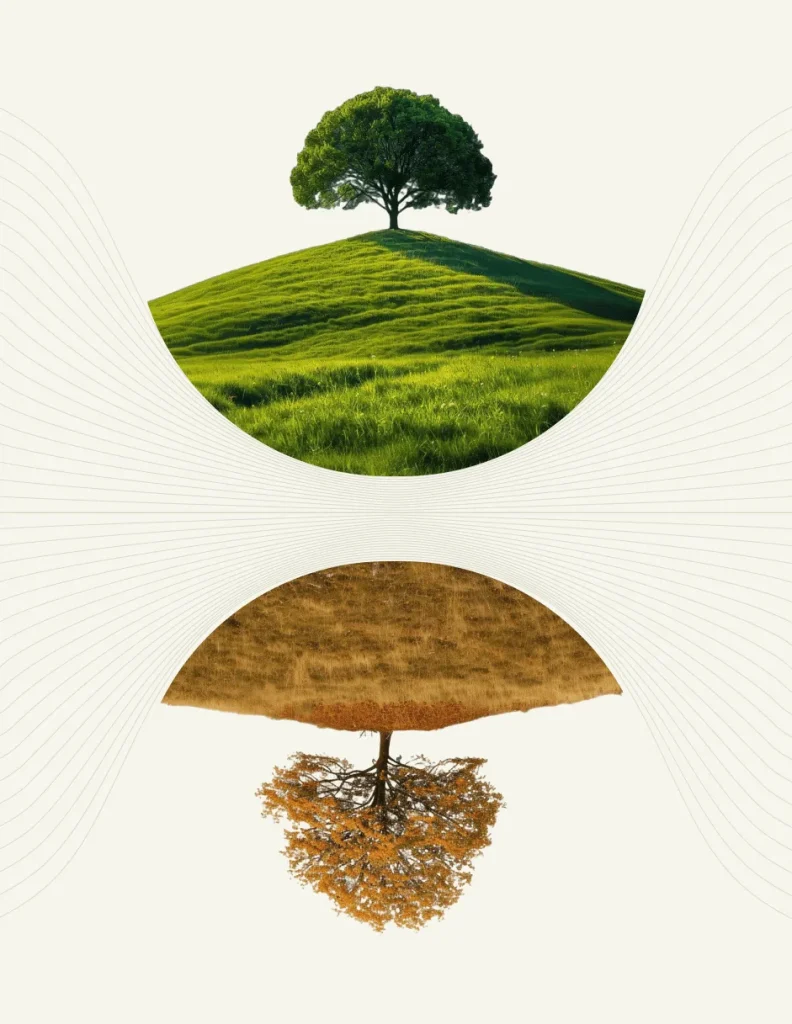
- The Tree of Life symbolizes the structure of the spiritual reality, which is attainable via spiritual correction of egoistic desires to altruistic ones.
- The Tree of Life consists of ten Sefirot, which are spiritual qualities, not corporeal attributes or material forms.
- Misconceptions about the Tree of Life arise from corporeal misinterpretations; Kabbalistic texts, however, use coded language describing purely spiritual forces.
As there are many misconceptions about the wisdom of Kabbalah and The Zohar, so too it continues with the Tree of Life. Since the Tree of Life describes a structure of the spiritual, upper reality, then other than what Kabbalists themselves explain about the Tree of Life, the myriad concoctions that humanity has compiled about it are completely incorrect. This page’s aim is to shatter these misconceptions and unlock the power and meaning of the Tree of Life as understood through the wisdom of Kabbalah.
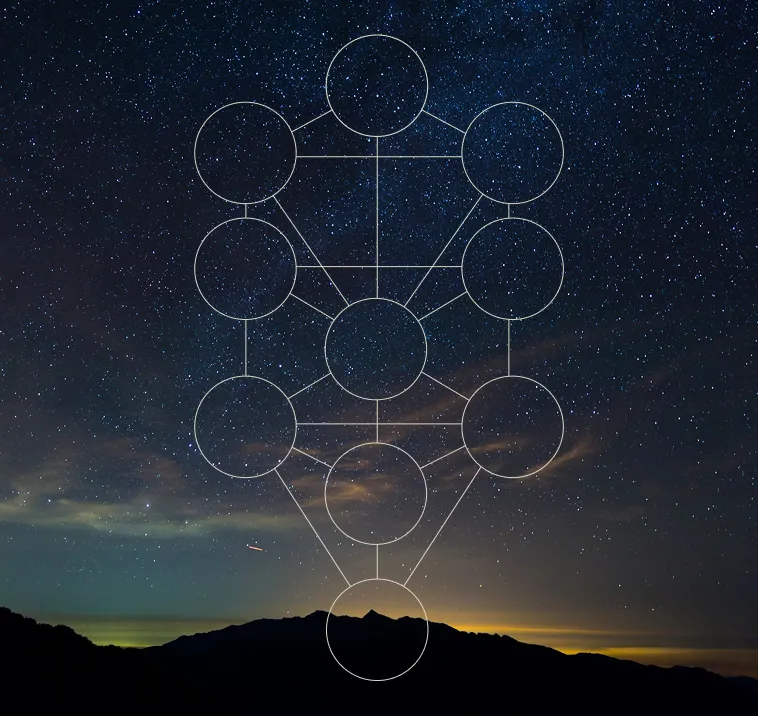
The term “Tree of Life” appears in the Bible, albeit briefly. You might have encountered the popular symbol often associated with the Tree of Life, which is actually a representation of the ten Sefirot. Many different philosophies, including those outside of Kabbalah, have interpretations of the Tree of Life, but we will focus on its authentic meaning within Kabbalistic sources.
What Is the Tree of Life?
We will start with an explanation that might seem unclear at first, but as we explore its background and context, it will become more comprehensible: The Tree of Life signifies the correction of altruistic desires above (Keter) and the refinement of egoistic desires below (Malchut) with the intention to bestow throughout the entire structure of Adam HaRishon.
Origins and Evolution of the Concept of the Tree of Life
The first known Kabbalist, Adam HaRishon, is the foundational figure in understanding the Tree of Life. Unlike the biblical Adam from the story of Adam and Eve, Adam HaRishon was a person who attained the degree of “Adam, ” i.e., he rose from the animate to the human level of consciousness (“Adam” being the word for “human” in Hebrew). Approximately 5,780 years ago, he wrote the first Kabbalistic book, The Angel Raziel. This book, written in code, describes a system of interconnected souls and their relationships. However, Adam does not directly reference the Tree of Life.
Moving forward, approximately 3,800 years ago, Abraham wrote Sefer Yetzira (The Book of Creation). This book was groundbreaking as it introduced the structure of the ten Sefirot—ten illuminations that form the framework of the Tree of Life. Like Adam’s work, Sefer Yetzira is written in code, meaning its meaning is hidden from those who have no spiritual attainment.
The Language of Kabbalah
The concept of code is integral to understanding Kabbalistic texts. These texts are not meant to be interpreted literally. For example, in computer programming, code describes what appears on the screen in a way that only those familiar with the programming language can decipher. Similarly, Kabbalistic texts use the language of branches, where physical terms point to spiritual objects or forces. This approach ensures that Kabbalistic wisdom remains accessible only to those who study it with the correct intention, i.e., to rise above the animate level of existence and attain the human level, where the upper force of love, bestowal, and connection dwells in its entirety.
“Kabbalists have found a set and annotated vocabulary, sufficient to create an excellent spoken language. It enables them to converse with one another of the dealings in the Spiritual Roots in the Upper Worlds by merely mentioning the lower, tangible branch in this world that is well defined to our corporeal senses. The listeners understand the Upper Root to which this corporeal branch points because it is related to it, being its imprint.”
– Kabbalist Yehuda Ashlag (Baal HaSulam), Kabbalah.”


Historical Milestones in the Tree of Life
- Moses (3,200 Years Ago): Moses’ writings in the Torah reference the Tree of Life three times. The Torah is written in the language of branches, pointing to spiritual forces rather than literal interpretations of the stories.
- Rabbi Shimon Bar Yochai (RASHBI, 1,800 Years Ago): RASHBI, along with his students, wrote The Book of Zohar. This monumental text describes humanity’s interaction with the upper force and spiritual light. Although groundbreaking, The Zohar was hidden for centuries until it was rediscovered in the 16th century. Both The Zohar itself and Kabbalist Yehuda Ashlag (Baal HaSulam) mention how it was written mainly for use by people in our generation and onward.
- The ARI (Kabbalist Isaac Luria, 16th Century): Kabbalist Isaac Luria, known as the ARI, revolutionized Kabbalistic teachings and coined the term “Tree of Life” in his work of the same name (“Etz Chaim” in Hebrew). He presented a systematic and scientific explanation of creation and human development, making Kabbalah more accessible to those with the desire to understand it.
- Baal HaSulam (Kabbalist Yehuda Ashlag, 20th Century): Kabbalist Yehuda Ashlag, known as Baal HaSulam, further simplified and elaborated on the ARI’s writings in his seminal work The Study of the Ten Sefirot. His writings make the wisdom of Kabbalah accessible to contemporary humanity.
The Structure of the
Tree of Life
The Tree of Life is composed of ten Sefirot, each representing a specific spiritual state or attribute. The word “Sefira” originates from the Hebrew word for “sapphire, ”indicating something luminous or radiant. Each Sefira represents a corrected state, meaning it can receive light with the intention of bestowal.
- Keter
- Hochma
- Bina
- Hesed
- Gevura
- Tifferet
- Netzah
- Hod
- Yesod
- Malchut
Misconceptions About the
Tree of Life
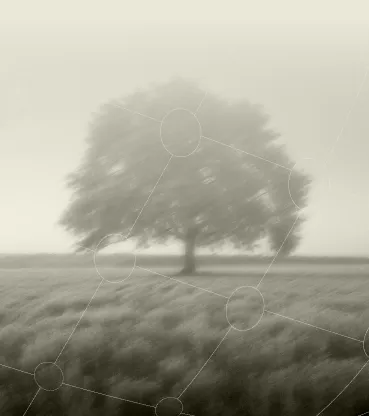
One of the most significant misconceptions is the corporealization or materialization of the Tree of Life. Many images that were not created by Kabbalists depict the Tree of Life superimposed on the human body, leading to a materialistic interpretation of what is entirely a spiritual structure. The Tree of Life speaks only of the interaction between spiritual forces, not physical entities.
Kabbalist Dr. Michael Laitman, the teacher and founder at the Bnei Baruch Kabbalah Education & Research Institute, has often explained how toward the beginning of his Kabbalah studies, he approached his teacher, Kabbalist Baruch Ashlag (RABASH), with one such image. RABASH immediately shunned it away and tightly shut his eyes, angrily telling Dr. Laitman never to ever show him such an image. This example serves to show just how seriously Kabbalists treat the approach to spirituality, aiming to keep it pure from any form of corporealization or materialization up to a point of fearing any such impure mixture. It is also the reason for us choosing not to show such an image on our own website or in any of our materials.
Another common misunderstanding relates to colors associated with the Sefirot. While each Sefira is linked to a specific color in Kabbalistic texts, these colors are not meant to imply physical properties. Instead, they symbolize different qualities of spiritual light.
Attainment of the
Tree of Life
Every person has the potential to realize the Tree of Life within themselves. This potential is referred to as the “point in the heart, ” a desire for spirituality or “spiritual seed” that can grow and develop into the full structure of the ten Sefirot. Through the method of Kabbalah, we learn how to correct our egoistic desires (represented by Malchut) and align with altruistic intentions (Keter).
The correction process involves using a “Masach” (screen), a mechanism that enables us to reject light that cannot be received with the intention to bestow. This process parallels the idea of refining a picture—adding more detail and clarity as one’s spiritual understanding deepens.
Introduction to the Ten Sefirot
While the term “Tree of Life” originates from the work of the great Kabbalist, the ARI (Kabbalist Isaac Luria), who lived in the 16th century. His book, Etz Chaim (“Tree of Life”), systematically detailed the spiritual worlds and their structure, presenting this wisdom as a clear and defined manual for spiritual development. Although the structure of the Ten Sefirot appears in earlier texts, such as The Angel Raziel by Adam HaRishon, Sefer Yetzira by Abraham, and the Torah, the ARI’s work marked the first time this knowledge was fully accessible to the masses.
The ten Sefirot, derived from the Hebrew word “Sapir” (meaning “sapphire” or “illumination”), are reality’s building blocks. Each Sefira represents a specific spiritual quality. Importantly, these Sefirot do not refer to physical objects but to inner qualities
and intentions.
The ten Sefirot are fractal in nature. Just as a fractal exhibits self-similarity, where each part
reflects the whole, the Sefirot replicate this structure endlessly. Each Sefira contains within it the full structure of the ten Sefirot. This recursive pattern mirrors the interconnectedness of all creation, from the smallest to the largest scales.
Breakdown of the Sefirot
The following three upper Sefirot—Keter, Hochma, and Bina—are called GAR, which is an abbreviation for “Gimel Rishonot” meaning “the first three.” They are the root qualities of the spiritual structure, containing the potential of all subsequent development.
Keter is the Sefira of the thought of creation: the Creator’s will to create a created being and fill it with endless delight. It includes the intention to bring creation to its eternal, complete, and perfect state. It is the highest and most abstract Sefira of them all.
Hochma is the Sefira that contains the light of the purpose of creation, the reception of pleasure and delight in its completeness. The light of Hochma is destined to fill the entirety of creation, but it requires the correction of Bina to do so.
Bina is the Sefira that contains the light of the correction of creation. Its quality is pure bestowal and the kind of pleasure it feels is the light of Hassadim (mercy).
The remaining seven Sefirot are the practical aspects of the spiritual structure, representing the work required to achieve spiritual correction. These are often referred to as ZAT, which is an abbreviation for “Zayin Tachtonot” or “the lower seven.”
Hesed is the Sefira of unbounded giving. It is considered Abraham’s quality as it is the
foundation of bestowal toward the created beings, i.e., the first step in the soul’s construction.
Gevura is the Sefira of overcoming. It is considered Isaac’s quality—a quality that restrains and refines the will to receive, balancing the unbounded bestowal of Hesed.
Tifferet is the Sefira that contains the place of our free choice (namely, the “middle third of Tifferet”). It is called “the middle line.” It balances Hesed and Gevura, amplifying the qualities of giving and receiving, harmonizing them into a complete structure.
Netzah is the Sefira that acts as a connector, linking the upper and lower forces.
Hod is the Sefira that is associated with Aaron and the practical implementation of the soul’s connection. It reflects the awakening of a spiritual desire to connect with the upper force.
Yesod is the Sefira that corresponds to Joseph and the quality of unifying all the Sefirot above. It serves as the channel for transferring spiritual abundance to Malchut.
Malchut is the Sefira of the full desire to receive all the delight that the Creator wished to give. It is represented by King David, and is the final receiver of all spiritual light. Through Malchut, the correction of creation can take place up until its completion.
While GAR, the upper three Sefirot, contain the root and thought of creation, the ZAT, the lower seven Sefirot, are where the practical work of the correction of creation takes place. Malchut, the lowest Sefira, is the place where the purpose of creation—to receive in order to bestow—becomes realized. Through the integration of the ten Sefirot, we align ourselves with the Creator’s thought and intent toward the creation He created, and we then experience the highest, eternal, and perfect levels of awareness, fulfillment, and connection in reality.
The Tree of Life is the blueprint of spiritual reality, encompassing everything in creation and explaining the purpose of the human being’s creation in this world. Through the wisdom of Kabbalah, humanity is given the tools to unlock the spiritual structure of the Tree of Life, align with the upper force, and achieve a state of ultimate harmony, eternity, and perfection. By understanding its origins, structure, and purpose, we can begin to connect with the immense wisdom contained in the Tree of Life.
The Tree of Life - Poem by the ARI
Behold that before the emanations were emanated and the creatures were created,
The upper simple light had filled the whole existence.
And there was no vacancy, such as an empty atmosphere, a hollow, or a pit,
But all was filled with simple, boundless light.
And there was no such part as head, or tail,
But everything was simple, smooth light, balanced evenly and equally,
And it was called the Endless Light.
And when upon His simple will, came the desire to create the world and
emanate the emanations,
To bring to light the perfection of His deeds, His names, His appellations,
Which was the cause of the creation of the worlds,
He then restricted Himself, in the middle,
Precisely in the center,
He restricted the light.
And the light drew far off to the sides around that middle point.
And there remained an empty space, a vacuum
Circling the middle point.
And the restriction had been uniform
Around the empty point,
So that the space
Was evenly circled around it.
There, after the restriction,
Having formed a vacuum and a space
Precisely in the middle of the endless light,
A place was formed,
Where the emanated and the created might reside.
Then from the Endless Light a single line hung down,
Lowered down into that space.
And through that line, He emanated, created, formed, and
Made all the worlds.
Before these four worlds came to be
There was one infinite, one name, in wondrous, hidden unity,
And even In the angles closest to Him
There is no force and no attainment in the endless,
As there is no mind that can perceive Him,
For He has no place, no boundary, no name.